
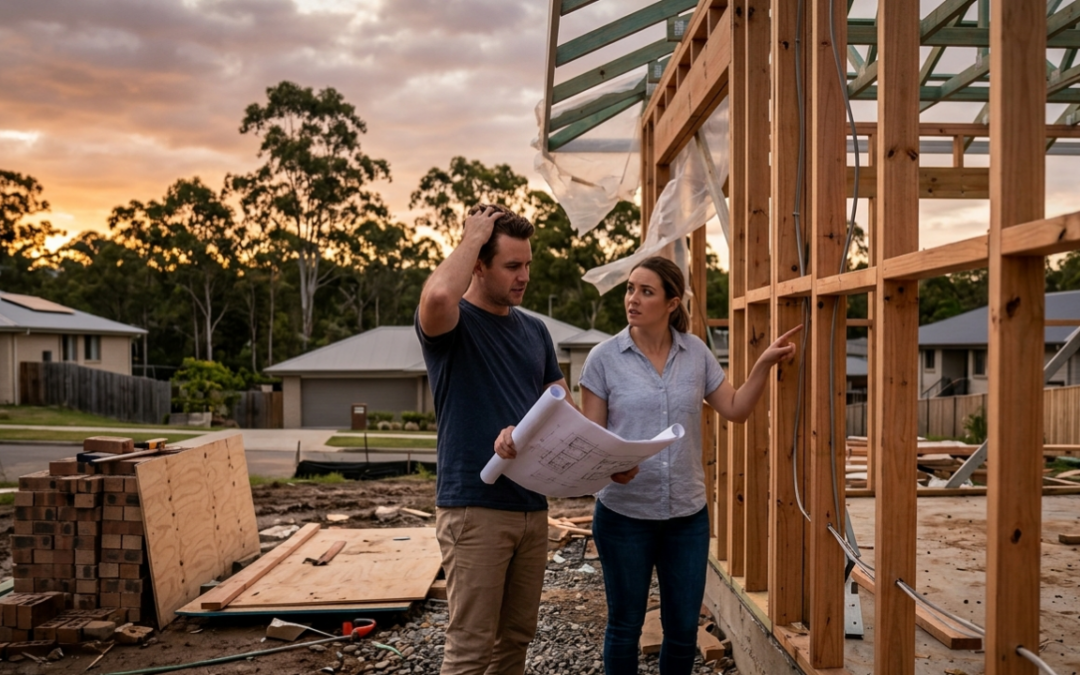
They visit a few display homes. They get some quotes. They compare the numbers. They look at a few designs and decide which ones appeal. And then they make a decision based on a combination of price, aesthetic preference, and gut feeling about the sales consultant they spent an hour with.
And then, somewhere between six months and two years later, they discover that the things they should have paid more attention to were not the things they focused on at all.
Not the base price — the full cost picture. Not the display home presentation — the quality of actual completed homes. Not the sales consultant’s manner — the communication style of the project manager and site supervisor who will actually be managing their build. Not the headline features — the specific inclusions and exclusions that determine what the contract actually delivers.
This is not because these buyers were careless or unintelligent. It is because nobody told them what to look for, and the things that matter most in a builder are not the things that are easiest to see during the selection process.
If you are currently choosing between builders — whether Granton Homes is part of that comparison or not — here is what to actually pay attention to.
The Base Price Is a Starting Point, Not a Destination
Every builder conversation starts with price because price is concrete, comparable, and easy to understand. The problem is that the base price of a home is the starting point of what the project will cost, not the end point — and using it as the primary basis for comparison between builders can lead to decisions that look sensible upfront and feel wrong within months.
The base price covers construction of the home to a standard specification. What that specification includes, how comprehensive it is, and what is explicitly or implicitly excluded varies significantly between builders. A builder with a lower base price and a more limited inclusions specification may be more expensive in total than a builder with a higher base price and more comprehensive inclusions, once the upgrades needed to reach an equivalent standard are costed.
Beyond the inclusions, the costs that sit outside the construction contract — site preparation, approvals, connections, landscaping, driveway, fencing, window furnishings — need to be in the budget regardless of which builder is chosen. Builders who make these costs visible and help buyers understand them from the beginning are doing buyers a genuine service. Builders who allow buyers to plan around the base price without providing a clear picture of the full cost are setting them up for a difficult discovery process.
When you are comparing builders, the question worth asking of each is not “what is your base price?” but “what is a realistic total for a project like mine, including everything from site assessment through to moving into a finished home?” The answer tells you far more than the headline number, and the willingness to answer it honestly tells you something about the builder.
The Inclusions List — Read It Properly Before You Love the Builder
The inclusions list is the document that defines what the builder is contractually obligated to deliver. It is also one of the most consistently unread documents in the entire home building process.
This is understandable. Inclusions lists are long, detailed, and written in a way that does not prioritise easy reading. They are given to buyers at a point in the process when the excitement of choosing a home design is at its peak and the patience for fine print is at its lowest.
But the inclusions list is genuinely important — because it determines what you are actually getting for the price you are paying, and the gap between what buyers assume is included and what is actually included is one of the most reliable sources of unpleasant financial surprises in the building process.
The display home is almost always fitted with upgraded finishes — better than standard flooring, stone benchtops rather than laminate, premium tapware, higher-quality appliances. This is deliberate and legitimate — the display home exists to show what is achievable. But it creates an expectation gap that only becomes apparent during the selections process when buyers discover that what they saw is not what the base price delivers.
Before you become emotionally committed to a builder, ask for the inclusions list and spend the time to go through it specifically. For the key categories — flooring, kitchen surfaces, tapware, appliances, tiles — ask what the base specification actually looks like. Not what the display shows. What comes standard.
With that information, you can make a realistic estimate of your upgrade costs and include them in your budget before the selections process rather than discovering them during it. Granton Homes provides detailed inclusions documentation and is transparent about what is and is not included in their base pricing. Apply the same scrutiny to every builder you are evaluating.
Communication — The Factor That Determines the Experience
Ask people who have had genuinely good building experiences what made the difference, and the answer is almost always some version of the same thing: the builder kept them informed, was honest when things changed or problems arose, and treated them like a valued client throughout the process rather than a sale that had been closed.
Ask people who have had bad building experiences what went wrong, and the answer is often the same from the other direction: they were left in the dark about what was happening, got inconsistent or evasive responses when they asked questions, and felt like an inconvenience rather than a client once the contract was signed.
The quality of communication during a build is one of the most significant determinants of the experience — possibly the most significant, more so than the quality of the finished home for many people — and yet most buyers spend almost no time assessing it before choosing a builder.
The reason is that the communication you experience during the sales process is not representative of the communication you will experience during the build. Sales consultants are selected and trained to be engaging, responsive, and helpful. The project management team, site supervisors, and administration staff who will be your actual contacts once construction begins are different people with different communication styles and different pressures on their time.
The way to get useful information about a builder’s communication is through past clients rather than through the sales experience. When you speak to references — which you should do, specifically and thoroughly — ask not just whether they are happy with their home but whether they felt well-informed throughout the process. Did updates come proactively or did they have to chase? When something changed or a problem arose, were they told promptly and honestly or did they find out later? Did they feel like the builder cared about their experience, or like the project was just another job on the schedule?
Granton Homes structures their client communication specifically because they recognise how much it matters to the experience. Regular updates, clear explanations of what is happening and what comes next, prompt and honest responses when questions are raised — these are the things that make the difference between a build that is stressful and one that is manageable. Asking past clients whether this description matches their experience is the most reliable way to verify it.
The Site Supervisor — The Person Who Actually Builds Your Home
Here is something that does not come up in most builder selection conversations but probably should.
The sales consultant you spend the most time with during the selection process will have a limited role once construction begins. The person who will actually determine the day-to-day quality of your build — the trades that are on site, the sequencing of work, the quality checks that happen at each stage, the site-level decisions that affect both the outcome and the schedule — is the site supervisor.
The site supervisor is responsible for managing the construction on the ground. They coordinate the trades, manage the site programme, make the daily decisions that keep the build moving, and ensure that what is specified in the plans and contract is what gets built. The quality of their experience, their attention to detail, their communication with the client, and their willingness to catch and correct problems rather than let them proceed are among the most significant determinants of the final quality of the home.
Most first-time buyers never ask about the site supervisor during the selection process. They do not ask who it will be, what their experience is, how many projects they are managing simultaneously, or how they typically communicate with clients during the build.
These are worth asking. A builder who is confident in their site management team will answer these questions directly and with specifics. One who is vague or deflects the question is telling you something.
For established builders like Granton Homes, the site supervision team is part of the overall quality commitment — the same attention to detail and quality standards that go into the design and inclusions goes into who is managing the construction on the ground. But asking specifically about how site supervision works and how it connects to the client experience is a legitimate and useful part of the evaluation.
Timeline Expectations — The Gap Between Hope and Reality
Most first-time builders have a timeline expectation that is too optimistic, and the frustration of that expectation repeatedly not being met is one of the most consistent sources of negative experience through the build.
The realistic timeline for a custom home build in Australia — from first conversation to moving in — is twelve to twenty-four months. The factors that determine where in that range a specific project falls are the complexity of the design, the approval pathway, the site conditions, the scale of the project, and the degree to which decisions are made completely before construction starts rather than changed during it.
Delays happen in almost every build. Weather affects external stages. Trades are not always available exactly when needed. Materials have lead times that are not always predictable. Approval processes take the time they take. These are not the builder’s failure — they are the normal uncertainties of coordinating a complex project with many independent variables.
A builder who gives you a realistic timeline range and commits to communicating proactively when things shift is more valuable than one who gives you an optimistic completion date to win your business and then manages the subsequent disappointment as the date slips.
Ask builders specifically about their typical timelines and about how they handle communication when delays occur. Ask past clients whether the timeline they were given at the start was realistic and whether they were kept informed when things changed. The answers tell you something specific about whether the builder is honest in their projections and responsible in their communication.
Reviews — How to Actually Use Them
Online reviews are useful but limited, and using them well requires understanding their limitations.
The most obvious limitation is selection bias. People who are very satisfied and people who are very dissatisfied are much more likely to write reviews than people whose experience was adequate but unremarkable. The resulting review landscape is skewed towards the extremes and does not reflect the typical experience.
The second limitation is specificity. A negative review that says “communication was poor” tells you something. A negative review that says “this builder is terrible” tells you almost nothing useful. When reading reviews, look for specific descriptions of what actually happened — what the problem was, how the builder responded, how it was resolved — rather than general expressions of satisfaction or dissatisfaction.
The third limitation is recency. A builder’s operation five years ago may be meaningfully different from their operation today — better or worse, depending on changes in their team, their scale, and their processes. Reviews from two or more years ago are less relevant than recent ones.
The most useful approach to reviews is to use them as a starting point for questions rather than as a definitive assessment. If multiple reviews mention communication as an issue, ask about communication specifically in your conversations with the builder and in your reference conversations with past clients. If reviews are consistently positive about design quality but mixed about post-handover responsiveness, ask past clients specifically about what happened when they raised issues after moving in.
Granton Homes has a history of client relationships that reflects their commitment to quality and communication. Reading their reviews through the lens of these principles — looking for specific patterns in feedback and using those patterns to inform specific questions — gives you more useful information than any summary judgment.
Long-Term Quality Versus Short-Term Cost
The economics of build quality are not immediately obvious but become clear over time.
A home built to a higher standard with better materials costs more upfront. It also requires less maintenance, fewer repairs, and less significant intervention over the years that follow. The finishes that hold up over a decade of use rather than showing wear within a few years. The fixtures that perform consistently rather than developing problems and needing replacement. The structural elements that remain sound rather than developing issues that require costly remediation.
The total cost of ownership — upfront cost plus ongoing maintenance and repair over the life of the building — is often lower for a higher-quality build than for a cheaper one, despite the higher upfront investment. The savings from choosing the lower-cost builder get absorbed, and then exceeded, by the higher ongoing costs of maintaining a home that was not built as well.
There is also a property value dimension. A well-built, well-maintained home in good condition is a more valuable asset than one that has been built to minimum standards and shows its age. The premium paid for quality during construction is typically reflected in the property’s value when the time comes to sell.
The practical implication is that the question to ask when comparing builders is not “which one is cheaper?” but “which one offers the best combination of quality, communication, and value for what the total investment will be over the life of the home?” These are different questions with sometimes different answers.
Design Flexibility — What It Actually Looks Like in Practice
The way different builders handle design flexibility varies significantly, and the differences matter most when your needs do not fit neatly within a standard offering.
Some builders work from a fixed catalogue of designs with limited modification available. The floor plans are what they are, the specification is largely set, and the customisation is at the level of finish selection rather than genuine design modification. For buyers whose needs are well served by an existing design, this is efficient and cost-effective. For buyers whose site, lifestyle, or household configuration requires something different, it is a constraint.
Other builders — including Granton Homes — approach design as a genuinely collaborative process where the home is developed around the client’s specific needs and site rather than selected from a catalogue. The floor plan can be modified or developed from scratch. The design can respond to the specific orientation and characteristics of the block. The specific needs of the household — the home office that needs acoustic separation, the kitchen configured for serious cooking, the master suite positioned for morning light — can be built into the design from the beginning.
The value of this flexibility is not equal for all buyers. If your needs are well met by an existing design, the additional cost and time of a fully custom process may not be justified. If your needs require genuine customisation to serve you well, the flexibility to design specifically for those needs is worth a meaningful premium.
When evaluating builders, understand specifically what flexibility is available at what cost. Not “we can customise your home” in a general sense, but specifically — can the floor plan be substantially modified, or only at the level of internal configuration? Can rooms be added or removed, or only moved? Can the external design be developed around your site’s specific orientation and characteristics?
Comparing Builders Properly — The Process That Produces Good Decisions
The comparison process that most first-time buyers go through — comparing quotes without understanding what each includes, comparing display homes without seeing completed work, comparing promises without verifying them through past client references — produces decisions that are superficially informed and fundamentally incomplete.
The comparison process that actually produces good decisions is more effortful and produces much better outcomes.
Verify licences before investing significant time with any builder. It is a five-minute step that confirms basic legitimacy.
Get detailed inclusions lists and compare them specifically — not just the headline numbers, but what each builder actually delivers for that number.
Visit completed homes, not just display homes. See the quality of the work in real conditions rather than staged ones.
Speak to past clients specifically, asking about the process rather than just the outcome. Ask about communication, about how problems were handled, about whether the final cost aligned with the initial expectation.
Understand the contract type and terms for each builder. A fixed-price contract and a cost-plus arrangement have very different risk profiles. Contract provisions about variations, delays, and disputes matter and should be understood before signing.
And compare the total realistic cost — not the base price — for equivalent levels of quality and specification. Two quotes that look very different in headline terms may look much more similar once the inclusions are normalised and the likely upgrade costs are added.
Granton Homes is part of this comparison process for many buyers, and the evidence of their work — the quality of their completed homes, the experience of their past clients, the transparency of their pricing and inclusions — is something they are comfortable having examined carefully. Apply the same rigour to every builder in your comparison.
The Decision That Sets Everything Else Up
The builder decision is the one that, more than any other, determines the quality of the home you will live in and the quality of the experience of getting there.
A good decision here — made carefully, based on real evidence rather than surface impressions, with attention to the factors that actually matter rather than the ones that are easiest to see — sets everything else up well. A poor decision here is difficult to recover from, because the consequences play out over the entire duration of the build and beyond.
Take the time the decision deserves. Ask the questions that need to be asked. Verify the things that should be verified. Compare on the dimensions that actually matter. The home you build is the product of this decision, and the time invested in making it well is returned many times over in the years of living in a home that genuinely meets your expectations.