
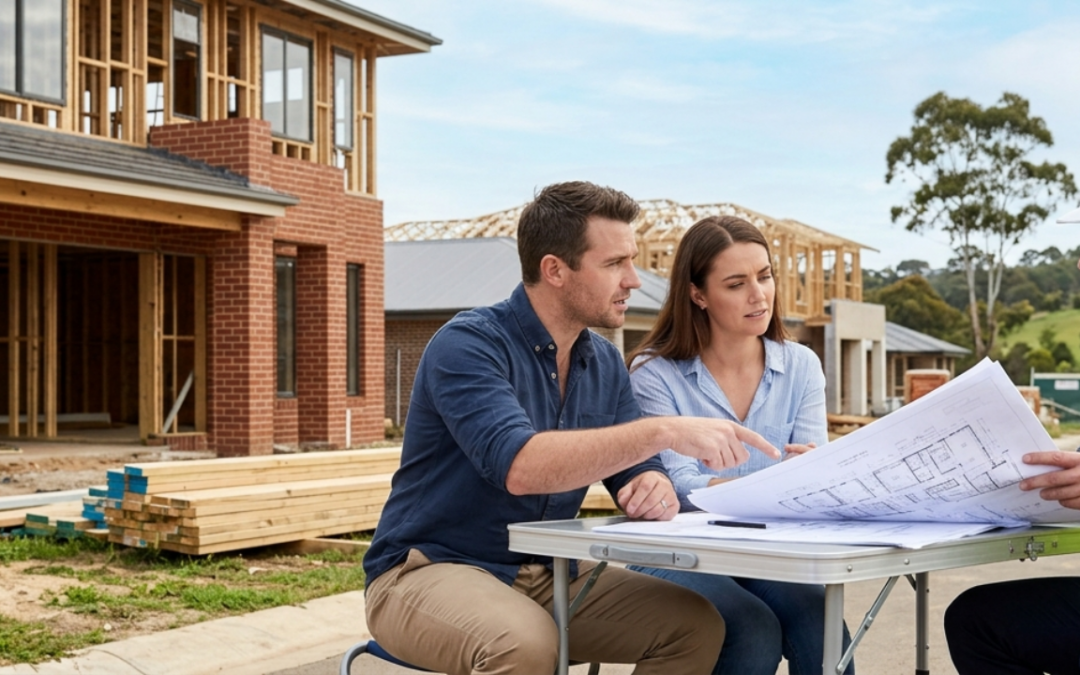
The moment you sign a home building contract is the moment the relationship with your builder changes fundamentally. Before the signature, you are a prospective client. You have leverage. You can walk away. You can push for clarity on anything that is unclear. You can ask the same question three different ways until you get an answer you actually understand. The builder wants your business and that creates an incentive for them to be responsive, transparent, and helpful.
After the signature, the dynamic shifts. You are now contractually committed. Changes are formal processes with cost implications. Questions that seemed reasonable before signing can start to feel like they are creating friction. The leverage you had evaporates the moment the pen leaves the page.
This is why the period immediately before signing a contract is the most valuable window in the entire home building process. It is the time when asking hard questions costs nothing and the information you gain from those questions is genuinely actionable. You can take what you learn and use it to negotiate, to clarify, to insist on changes to the contract, or to walk away if what you discover does not meet your expectations. Most first-time builders use this window to review the headline numbers and check the design looks right. The questions below are the ones that get to the substance of what you are actually committing to.
Before the Questions — The Document Itself
Before getting into specific questions, spend the time to actually read the contract. All of it. Not a skim, not a scan for the important pages — all of it.
This takes time. Building contracts are long and detailed and not written for pleasure. But the contract is the document that defines your rights and obligations for the next one to two years and potentially beyond if warranty issues arise. The time to understand what it says is before you are bound by it, not after.
If anything is unclear — a clause you do not understand, a provision that seems unusual, a definition that could be read multiple ways — write it down as a question rather than glossing over it. The list of questions you generate from reading the contract carefully is the foundation of the conversation you need to have before signing.
For a build of any significant value, having a solicitor review the contract before you sign is a sensible investment. Not because you expect problems, but because a professional who reads building contracts regularly will notice things that a first-time buyer will not, and the cost of the review is trivial relative to the financial commitment the contract represents. Now, the questions that every buyer should ask before signing.
Question One — What Exactly Does This Price Include?
This is the question that more than any other determines whether you understand what you are actually committing to.
The price in the contract covers a defined scope of work and a defined specification. Everything within that scope and specification is included. Everything outside it is not — regardless of what you assumed, what you saw in the display home, or what was implied in early conversations.
The inclusions list is the document that defines the specification. It should be detailed enough to specify the materials, brands, and quality levels for every significant element of the home — flooring type and brand, kitchen benchtop material and finish, tapware brand and range, appliances brand and model, tile specification for each wet area, lighting specification, and so on.
Read it carefully and specifically. For every category that matters to you, compare the specification to what you saw in the display home. Where the display home shows a higher specification than the inclusions list provides, that is an upgrade — something you will pay extra for during the selections process if you want it.
Ask your builder to walk you through the inclusions list and specifically identify the items that are most commonly upgraded. Understanding where the base specification typically diverges from buyer expectations — before the selections process creates pressure to make upgrade decisions quickly — allows you to budget for those upgrades rather than discovering them as surprises.
This question often leads to a more honest conversation than anything else you can ask, because it requires the builder to be specific rather than general about what the price covers.
Question Two — What Additional Costs Should I Expect Beyond This Contract?
The contract covers the construction of the home. It does not cover everything that making the home liveable actually requires.
The costs that sit outside a typical construction contract are real and consistent enough that you should ask about each of them specifically rather than assuming they are all included or all excluded.
Site preparation costs — soil testing, cut and fill, retaining walls if the slope requires them, any excavation beyond the standard, rock removal if encountered — are often handled as a separate item or as a preliminary that is included but capped, with excess costs charged additionally. Understanding the basis on which site costs will be handled, and what happens if the site assessment reveals conditions that require more work than anticipated, is important before you commit.
Council and certifier approval fees are sometimes included in the builder’s documentation fee and sometimes charged separately. Confirm specifically whether they are in the contract price or additional.
Utility connections — electricity, water, sewer, gas, telecommunications — involve connection fees to the relevant providers that are almost always the owner’s responsibility rather than the builder’s. In established areas these costs are predictable and modest. In developing areas they can be higher and less predictable. Confirm what connections are needed and get a realistic estimate of the connection costs for your specific address.
Items explicitly excluded from the contract — this is worth asking for as a list rather than trying to infer from the inclusions list what is missing. Typical exclusions include driveway, fencing, landscaping, clothesline, letterbox, window furnishings, and outdoor structures. Confirm the complete list of exclusions rather than discovering each one individually as handover approaches.
Question Three — Can You Show Me the Detailed Inclusions List, and Can We Go Through It Together?
This is related to the first question but goes further — you are not just asking to receive the document but to have it explained item by item by someone who can answer questions about it in real time.
The value of going through the inclusions list with your builder rather than just reading it alone is that it gives you the opportunity to ask about specific items as they come up. What brand is the standard tapware? Is there a sample or example of the standard flooring available to see? What is the warranty on the standard appliances? What does “standard tile allowance” mean in practice — what range is available at that allowance level?
These are questions that would require back-and-forth if asked in writing but can be addressed quickly in a conversation. The answers give you a concrete picture of what the base specification actually looks like rather than a document description that may mean different things to you and to the builder.
This conversation also reveals whether the builder’s team understands their own inclusions specification in detail. A team that can answer questions about specific items confidently and accurately knows their product. One that is vague or has to check on everything repeatedly is telling you something about the depth of knowledge you can expect from them when more complex questions arise during the build.
Question Four — What Level of Design Flexibility Is Available, and at What Point Does That Flexibility End?
If you are building with a custom builder like Granton Homes, design flexibility is one of the primary reasons for choosing them over a volume builder. But even custom builders have limits to what can be changed and when.
Understanding those limits before you sign rather than discovering them during the design or construction process saves the frustration of wanting something that turns out not to be possible.
Before signing, ask specifically what can be changed and what cannot in the floor plan. Can rooms be added or removed? Can the facade style be significantly modified? Can the layout be substantially rearranged, or only adjusted within an existing structure? What is the process for making design changes and what is the cost basis for any design work associated with changes?
Also ask about the timeline for design decisions. At what point in the process do floor plan decisions become fixed? When do selections decisions need to be made? What happens if you want to change something after the construction drawings are complete? Understanding these timelines helps you allocate your attention and decision-making effort appropriately rather than discovering that you are past the point of change when you try to make a modification.
Question Five — Who Is My Primary Contact During the Build, and How Does Communication Work?
The sales consultant who has been your main point of contact through the research and selection process is typically not the person who manages your build once construction begins. Understanding who will be managing your project — and how they communicate — before you sign is more useful than discovering it after.
Ask specifically who your project manager will be, who the site supervisor is for your build, and how you contact each of them. Are updates provided on a set schedule — weekly, fortnightly — or on an ad-hoc basis? What channel is used for routine updates — email, phone, an app? Who do you contact if you have a question or concern, and what is the expected response time?
Ask also how the handoff between the sales and construction teams works. What information is transferred about your project and your preferences, and is there a formal handover process or do you start from scratch with the new contacts?
A builder who has clear, specific answers to these questions has thought about the client experience during the build rather than just during the sale. Granton Homes has a structured approach to client communication throughout the build process — ask for the specifics of how that works rather than accepting a general assurance.
Question Six — What Is the Realistic Timeline, and How Is It Constructed?
Every building contract includes a projected timeline. The questions worth asking are about the basis for that timeline and what the realistic range is — not just the optimistic projection.
Ask when construction will actually start — not when it is anticipated to start, but what the specific trigger is. Often there is a period between contract signing and construction commencement during which approvals are obtained and pre-construction documentation is completed. Understanding what happens during this period and how long it typically takes sets realistic expectations for when you will see activity on your site.
Ask about the construction stages and how long each stage typically takes. Understanding the sequence helps you know what to expect at each visit to the site and what the significant milestones are.
Ask what factors most commonly cause delays for projects similar to yours, and what the typical magnitude of those delays is. A builder who is honest that most projects run a month or two longer than the projected completion date is providing useful information. One who insists that delays never happen is not being realistic.
Ask what the total range of completion dates looks like based on their experience — not just the projected date but the realistic window within which the project will most likely complete. Planning your living arrangements and financial commitments around the outer edge of that window rather than the optimistic end produces a much better experience when normal delays occur.
Question Seven — What Happens When Delays Occur, and Are There Financial Consequences?
This question is about the specific contract provisions for delays rather than just a general conversation about how long builds take.
Ask whether the contract includes a provision for delayed completion — specifically, whether there is a mechanism for you to claim compensation if the builder fails to complete by the contracted completion date. In NSW, the Home Building Act provides certain protections in this area, but the specific contract terms matter.
Ask also whether there are provisions that allow the builder to extend the completion date for specified reasons — weather events, government delays, material shortages — without penalty. Understanding what events allow the timeline to be extended unilaterally, and what recourse you have if the extension is unreasonable, is important before you are in the situation of dealing with a delay.
The practical implication for your own planning is that you should maintain flexibility in your living and financial arrangements for the full range of possible completion dates rather than planning around the projected date as if it were certain. A rental lease that ends on the projected completion date with no flexibility is a plan that assumes perfect execution of a complex, weather-dependent, multi-party process. Building in the flexibility to extend if needed costs relatively little to arrange in advance and avoids significant stress if the timeline shifts.
Question Eight — What Warranties Cover This Home and for How Long?
In NSW, statutory warranty protections for newly built homes are provided by the Home Building Act. These include two years of warranty for minor defects and six years for major structural defects. Understanding these provisions and how they apply to your specific build is worth doing before you sign rather than after.
Beyond the statutory minimums, ask what specific warranties the builder provides. Are there manufacturer warranties on specific appliances and fixtures that are included in the package? Is there a builder’s maintenance period during which minor issues arising after handover will be attended to? What is the process for raising warranty claims, and what response time should you expect?
Ask also what the builder’s approach is to defect rectification at handover and in the period immediately following. What is the process for the Practical Completion Inspection? How are items on the defects list tracked and closed out? Who is responsible for warranty issues once the project manager moves on to other projects?
These questions signal that you are taking the quality of the finished home seriously and expect the builder to take their warranty obligations seriously as well. A builder who has clear, specific answers to these questions has thought about post-handover client relationships. One who is vague or dismissive is also telling you something.
Question Nine — Can I See Completed Homes and Speak With Past Clients Before I Sign?
This is the request that gets deferred most often by buyers who feel awkward making it or who are already emotionally committed to the builder and do not want to discover something that might change their decision.
It should not be deferred. It should be made before any contract is signed, and the response to it tells you something significant about the builder’s confidence in their own work.
A builder who readily arranges for you to see completed homes and provides references for past clients is showing you something important — they are not worried about what you will find. A builder who deflects, makes excuses about client privacy, or is vague about completed projects is also showing you something.
When you visit completed homes, look at specific quality indicators rather than general impressions — the grout lines, the paint finish, the joinery operation, the way materials meet at edges and transitions. These details reveal the standard of workmanship more reliably than the overall visual impact of the home.
When you speak with past clients, ask about the process rather than just the outcome. How was communication during the build? Were they kept informed? When problems arose, were they told promptly and honestly? Did the final cost align with the initial expectation? Would they choose the same builder again knowing what they know now?
The information from these conversations is the most reliable evidence available about what building with this builder will actually be like, and it is available before you commit if you ask for it.
Question Ten — How Are Changes After Signing Handled, and What Will They Cost?
A variation is any change to the agreed scope of work after the contract is signed. Understanding how variations work — the process, the cost basis, and the timeline implications — before you are in a situation where you need one is far better than discovering the process under pressure.
Ask how a variation is formally initiated. Is it a written request? A conversation that is then documented? What is the turnaround time for a variation quote? What happens to the construction schedule while a variation is being assessed?
Ask about the cost basis for variations. Are they priced at cost plus a standard margin? Are there administrative fees for processing variations? Are there minimum variation amounts? Understanding the cost basis helps you assess whether a variation you are considering is worth the cost or whether you would have been better served to make the decision during the design phase when it was free.
Ask about the volume of variations typically requested on similar projects and what they typically cost in total. This gives you a sense of what is normal and helps you set a realistic expectation for the variations cost you might incur even with the best planning.
The underlying message of this question — that you understand variations exist and that you are thinking about how to minimise them through good decision-making during the design phase — demonstrates the kind of client engagement that experienced builders appreciate. It also sets up a productive conversation about the importance of thorough design phase decision-making, which directly reduces both variation costs and construction delays.
After the Questions — What to Do With the Answers
The questions above will generate a significant amount of information. Some of it will confirm that the contract you are being asked to sign is straightforward and fair. Some of it may reveal things that need clarification or change before you sign.
For anything that needs clarification, get the clarification in writing rather than relying on a verbal assurance. A verbal commitment that contradicts the written contract has no legal standing. If the builder tells you something is included that is not in the inclusions list, ask for the list to be updated rather than accepting the assurance.
For anything that needs to change in the contract itself — a clause that is unreasonable, a provision that does not reflect what was agreed, a definition that is too broad — negotiate the change before signing rather than accepting an assurance that it will not be an issue. Contracts say what they say, and “we would never enforce that clause” is worth considerably less than a contract that does not have the clause.
And if the information you gather through these questions reveals something significant that changes your assessment of the builder or the contract — something that was not apparent before you asked — use the window you still have to make a different decision. Before signing, you can walk away. After signing, the cost of walking away is dramatically higher.
The questions in this guide are designed to close the information gap between what you know when you sign and what you need to know to sign confidently. Use them fully, in the window when using them is free, and the decision you make at the end will be one you can stand behind.