
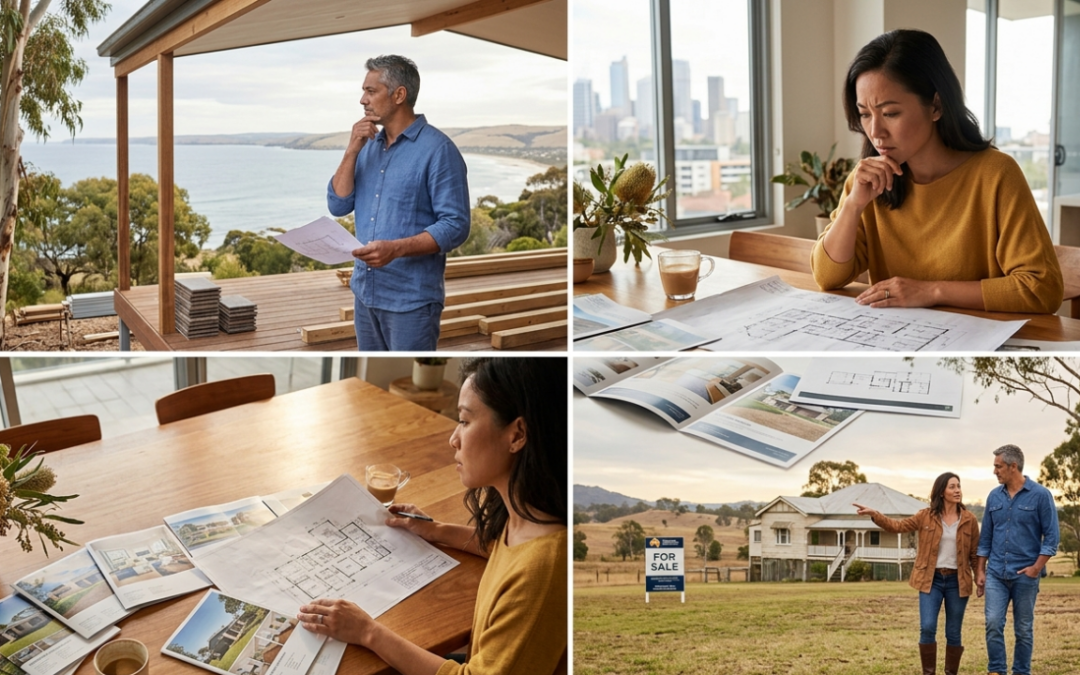
A few years ago, the home buying and building process moved fairly quickly for many Australians. You found something you liked, chose your layout and upgrades, and got the ball rolling. There was not a great deal of extended deliberation involved for most people. When something felt right, they moved forward.
But in 2026, that experience looks quite different. More buyers are slowing the process down significantly. They are comparing more carefully, asking harder questions, and giving themselves considerably more time before committing to anything. And when you understand what is driving that change, it makes complete sense.
People Are Asking Better Questions Before Committing
A home is not a decision that gets reversed easily. For most Australians, it is the single largest financial commitment they will ever make — one that will shape their finances and their daily life for many years to come. That reality is sitting more heavily with buyers today, and it is changing how they approach the process.
Rather than moving quickly on something that feels exciting in the moment, more people are pausing and working through questions that actually matter. Will this layout still suit my life in five or ten years if things change? Can I genuinely manage these repayments comfortably for the long haul, not just right now when everything feels manageable? Does this home actually fit the way I live day to day, or does it just look good? Am I making this choice because it genuinely meets my needs, or because it matches something I saw online and wanted to replicate?
These are more honest questions than the ones that used to drive most home decisions. And taking the time to answer them properly tends to lead to outcomes people feel genuinely satisfied with for a very long time.
Rising Costs Are Encouraging More Careful Thinking
A significant part of why buyers are slowing down comes down to financial reality. The cost of building and buying in Australia right now is not something people can afford to approach casually. Most are very aware of what a long-term financial commitment actually means for their everyday life — and they are being appropriately careful because of it.
Mortgage repayments have increased with rising interest rates. Construction costs have gone up. Utility bills are higher. Day-to-day living expenses have risen across the board. All of that creates a financial environment where rushing into a major decision feels considerably riskier than it once did.
More buyers are responding by focusing on what will genuinely feel comfortable to own and live in over the long term — manageable expenses, practical living arrangements, and financial stability — rather than on what looks most impressive right now.
Visiting Homes in Person Changes Everything
One thing that consistently shifts buyer priorities is the experience of physically visiting display homes rather than relying solely on online research. Photos and videos can tell you a lot about a home — but they cannot tell you everything. And what they leave out often turns out to matter quite a lot.
Many buyers go into display home visits expecting to be most impressed by the luxury features and design details. What they often find is that their attention ends up somewhere quite different. How natural light fills the main living areas throughout the day. Whether the layout flows in a way that feels intuitive and easy to move through. How much practical storage there actually is and whether it is positioned usefully. How settled and comfortable the space simply feels to stand in.
These are the details that shape daily life in a home. And experiencing them in person — rather than through carefully curated online content — tends to permanently change what buyers look for as they continue their search.
Comfort Is Becoming More Important Than Making an Impression
There has also been a meaningful shift in what people are actually trying to achieve with their home. The focus on creating something that looks impressive — something that signals success and keeps up with what is popular — is gradually being replaced by something more personal and more sustaining.
More Australians are recognising that oversized homes, expensive interiors, and trend-focused upgrades do not automatically create happiness. They can create maintenance demands, financial pressure, and a sense of always needing to keep up — but genuine long-term comfort and enjoyment is a different thing entirely.
Practical homes — ones that are appropriately sized, well-designed for daily use, and financially manageable — often feel far better to actually live in. They are easier to maintain. They cost less to run. They feel calm and organised rather than overwhelming. And they allow people to enjoy their home rather than constantly managing it. That is the kind of home more Australians are actively seeking out.
Social Media Is Losing Some of Its Grip
Social media has been a powerful force in shaping how people think about homes over recent years. Luxury home tours, designer renovation reveals, perfectly styled interiors — the content is everywhere, and it creates a strong sense of what a home is supposed to look like and feel like.
But a growing number of Australians are starting to see through the polish. They are recognising that what gets shared online is always a curated highlight — the best possible version of a space on its best possible day. It does not show the ongoing cost of maintaining something that elaborate. It does not show the practical compromises made to achieve the visual effect. It does not show what it is actually like to live in that space on an ordinary weekday when nothing is staged or styled.
As that awareness grows, buyers are making more grounded decisions — ones based on what will genuinely serve their real life rather than what matches an image they absorbed from a feed.
Simpler Living Is Starting to Feel More Appealing
Something broader is also shifting in terms of what people actually value. The pressure of constantly chasing more — more space, more features, more upgrades — is being recognised for what it often is. A cycle that creates stress and dissatisfaction rather than genuine improvement in quality of life.
More Australians are actively choosing to step off that cycle. They are prioritising peace of mind over impressiveness. They are looking for homes that feel organised and calm rather than demanding and overwhelming. They want properties that support their daily routines rather than complicate them — and that remain financially comfortable to own without stretching every resource to the limit.
That is a healthier way to think about home ownership. And it is becoming increasingly visible in the kinds of decisions buyers are making across Australia.
What People Are Working Hard to Avoid
Buyers today tend to go into the process with a clearer sense of the mistakes they want to steer clear of. They are making conscious efforts not to rush decisions just because excitement or external pressure is pushing them forward. They are questioning upgrades carefully rather than adding them automatically because they looked good in a display home. They are being more disciplined about how much their choices are shaped by trends and social media rather than their own genuine needs and circumstances. And they are keeping long-term living costs firmly in their thinking rather than focusing only on the upfront decision.
That kind of self-awareness consistently leads to better outcomes — homes that serve people well not just in the first flush of excitement but across the full reality of living in them every day.
What Australian Buyers Are Actually Looking for in 2026
When you look honestly at what is driving home decisions across Australia right now, a consistent picture emerges. Homes that feel practical and genuinely easy to live in. Spaces that support daily routines rather than add complexity to them. Designs that bring calm rather than pressure. Properties that remain financially comfortable and genuinely liveable over many years to come.
That is the standard more buyers are measuring their decisions against. It is more personal, more honest, and far more useful than trying to build or buy the most impressive home possible.
Final Thought
The way Australians approach home decisions is changing in a way that is genuinely positive. The rush to move quickly, the pressure to create something perfect, the tendency to let trends and social media do the thinking — all of it is being replaced by something more patient, more thoughtful, and more grounded in what actually matters.
Taking more time before finalising a decision of this scale is not overthinking. It is treating something important with the care it deserves. And the buyers who approach things that way consistently end up in homes that feel right — not just on the day they move in, but year after year as real life settles fully in.
Because the best home is not the most expensive one or the trendiest one. It is the one that fits your life well, feels genuinely comfortable every day, and gives you peace of mind rather than taking it away.
That is what Granton Homes is committed to helping every client achieve. Building homes that are designed around real life, real comfort, and long-term liveability — because when a home genuinely fits the way you live, everything else falls into place.