
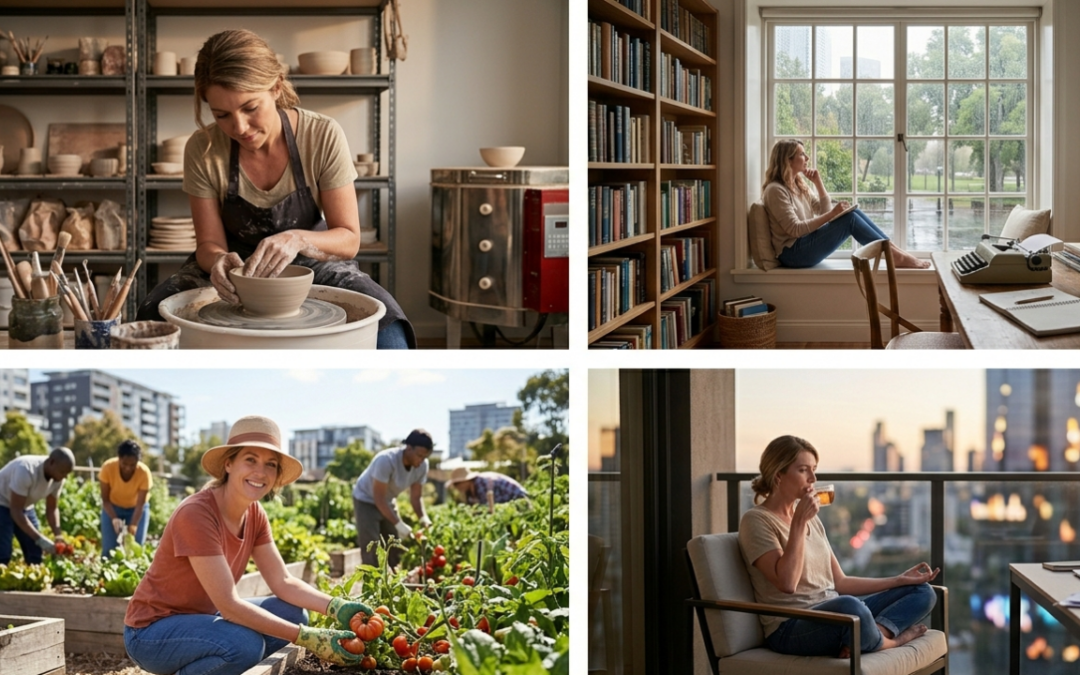
Location has been the dominant factor in home buying conversations for as long as most people can remember. It matters, the saying goes, above everything else. And there is genuine truth in that — where a home sits in relation to schools, workplaces, transport, and community does shape daily life in real and lasting ways.
But something has been quietly shifting in how Australians think about what makes a home truly right for them. Location is still part of the conversation. But it is no longer the whole conversation. More buyers are stepping back and asking a broader and more personal question before committing to anything.
Will this home actually support the lifestyle I want to live?
That question is changing how people search, what they prioritise when they compare, and ultimately which homes they choose.
A Home Is Where Real Life Happens
It is worth being honest about what a home actually is in the context of a person’s daily existence. It is not just a place to sleep between other activities. It is the place where mornings begin — where the household comes to life and prepares for the day ahead. It is where evenings wind down after everything else has happened. It is where family time occurs, where meals are shared, where work gets done for those who are home-based, where rest and recovery happen, where the ordinary moments accumulate into something that feels like a life.
That is a lot for a building to do. And it means the question of whether a home fits your daily routine is not a secondary consideration — it is arguably the most important one.
A home that looks beautiful in photos but does not actually suit the way the household lives will never quite feel right, no matter how impressive the finishes are. A home that is designed or chosen with genuine attention to how the family actually moves through its days has a very different quality to it — one that is hard to define precisely but immediately felt once you are living in it.
How Daily Life Has Changed What Homes Need to Do
The way Australians live at home today looks quite different from how they lived even ten years ago. The changes are real, they are significant, and they have meaningful implications for what a home needs to provide.
Remote work has shifted from an exception to a normal feature of many households’ weekly reality. More time is spent inside the home across all members of the family — working, studying, exercising, relaxing, and managing life’s administrative demands. The line between the professional and personal that once mapped neatly onto different physical spaces has blurred considerably and shows no sign of sharpening again.
Convenience has become a more conscious priority as schedules have become more complex and time has become more precious. Flexibility has become genuinely important as the ways people use their homes have multiplied and continue to change.
All of that means a home today needs to do more than it once did — and needs to do it well across a greater range of activities and circumstances. Practical living is not a secondary consideration anymore. For many buyers, it is the central one.
What Functional Spaces Actually Mean in Practice
The demand for functionality in home design has grown considerably in recent years, and it shows up in very practical ways when you look at what buyers are paying the most attention to.
The kitchen is one of the clearest examples. It is consistently the busiest room in most homes — the place where a disproportionate amount of daily activity happens, from rushed weekday mornings to weekend cooking to the informal social gathering that seems to happen naturally around food preparation. A kitchen that is genuinely practical — that has good workflow, adequate storage, sensible placement of appliances, and enough counter space to actually work in — makes daily life feel meaningfully easier. A kitchen that looks stunning but does not work well creates daily friction that compounds over time in ways that are hard to fully appreciate until you are living with it.
Flexible rooms are another practical consideration getting more serious attention. A household’s needs change over time in ways that are not always predictable, and a room that can genuinely serve different purposes as those needs evolve — a home office that can transition to a guest bedroom, a study that adapts as children grow, a living space that can be configured differently at different stages — provides a form of long-term value that a rigidly single-purpose room simply cannot.
And living areas — the spaces where families spend most of their time together — are increasingly being evaluated not just on how they look but on how genuinely comfortable and usable they are. Appearance matters. But usability and comfort matter more, and they are what people live with every day.
The Quiet Power of Natural Light
Ask homeowners who are genuinely happy in their homes what they love most, and natural light comes up with remarkable consistency. It is one of those features that is surprisingly easy to overlook during a search process and surprisingly powerful in its effect on how a home feels to live in every day.
Spaces with good natural light feel more open and more generous than spaces of identical size without it. They feel warmer and more welcoming. They create a positive atmosphere throughout the day in a way that is hard to achieve artificially regardless of how much is invested in lighting systems. The main living areas of a home that receives good natural light throughout the day feel genuinely pleasant to spend extended time in — and that pleasantness is felt morning after morning, year after year.
Getting natural light right is largely a matter of decisions made early in the design process — how the home is oriented, where windows are placed, how living areas are positioned relative to where light enters at different times of day. These decisions can be made thoughtfully and cost nothing extra when addressed at the right stage. They become considerably harder and more expensive to address after the home is built. It is one of the clearest examples of why early design decisions have such a lasting and compounding effect on long-term satisfaction.
Why Storage Transforms the Experience of Living Somewhere
Storage is genuinely one of the most underrated features in home buying — underrated during the search process and deeply, consistently appreciated once daily life has fully settled in.
The explanation for this pattern is straightforward and experiential. A home without enough well-placed storage becomes progressively harder to manage as real household life accumulates its inevitable collection of possessions, equipment, and practical requirements. The kitchen bench becomes permanently cluttered because there is nowhere else for things to go. The bedroom wardrobe is always overflowing. The garage becomes a place where things go to be forgotten because there is no organisation system to support it. The laundry feels cramped and inefficient.
All of that creates a low-level but persistent friction in daily life. It makes the home feel harder to manage than it needs to be. It affects how calm and organised the space feels to be in. And it is remarkably easy to underestimate during an inspection — and remarkably hard to ignore once you are living with it every day.
Conversely, a home where storage has been genuinely thought through and well-executed stays on top of itself with comparatively little effort. It feels more organised, more calm, and simply more comfortable to live in. That difference is felt quietly but consistently across every ordinary day for as long as the family lives there.
Why Simple Homes Often Deliver More
The assumption that more features, more upgrades, and greater complexity automatically produce a better home is one that experience consistently challenges. The homes that people find most genuinely enjoyable to live in over the long term are very often not the most elaborate ones.
Simple, well-designed homes are easier to maintain without maintenance becoming an ongoing drain on time, money, and energy. They are easier to keep organised because they are not generating more complexity and clutter than the household can comfortably handle. They feel calmer and less demanding to live in. They allow the people inside them to actually enjoy the space rather than constantly managing the demands of a home that is larger or more complicated than their life genuinely requires.
That is not settling for less. It is understanding clearly what actually creates a good living experience — and choosing accordingly. In a world where most households are already managing significant demands across multiple areas of life, a home that reduces the overall burden rather than adding to it has genuine and lasting value.
Thinking About the Future During the Search
One of the qualities most consistently shared by buyers who end up deeply satisfied with their homes years down the track is that they were thinking about the future as well as the present when they made their decision. They were not just asking what the home needs to do right now. They were asking what it will need to do as life moves forward — and whether it would keep meeting those evolving needs well.
Will this work if the family grows or changes? Can it accommodate shifting work arrangements as remote and hybrid work continues to be part of daily life? Does it offer enough flexibility to remain genuinely suitable across different life stages rather than fitting perfectly for the present moment and becoming limiting as that moment passes?
These are better questions than the ones that used to drive most home decisions. They take more time and more honest self-reflection to work through. But they consistently produce better answers — and homes that people are glad to be living in not just in the first year but across the full reality of the years that follow.
The Quality That the Best Homes Have in Common
There is a quality that shows up consistently in the homes people love most deeply and most lastingly — and it is surprisingly hard to describe in a feature list or a specification sheet. It is a sense of effortlessness. The feeling that everything simply works. The layout makes sense without having to think about it. The rooms feel comfortable without requiring effort to be in. Daily routines flow through the space naturally rather than being complicated by it. Nothing feels forced or inconvenient or slightly wrong.
That quality does not come from the most impressive kitchen or the most elaborate upgrade package. It comes from thoughtful design decisions made with genuine attention to how real people actually live — decisions that add up, quietly and cumulatively, into a home that feels right in a way that is immediately felt but hard to point to in any single feature.
It is the difference between a home that looked good at the start and a home that keeps feeling good across everything that follows.
Final Thought
A home is more than a building with rooms and a roof. It is the place where real life unfolds every day — where routines form, where comfort is found, where the ordinary moments of daily existence accumulate into something that feels meaningful. That is what a home is really for. And it is worth choosing one with that truth fully in mind.
The best homes are not always the biggest or the most elaborately featured. They are the ones that make life feel easier, more comfortable, and more genuinely enjoyable — that support the lifestyle being lived inside them rather than competing with it, and that keep doing so reliably and well for many years.
That is what more Australians are looking for when they search for a home today. And it is exactly what Granton Homes is committed to helping every client find and build — a home designed around real life, real comfort, and a lifestyle that feels genuinely worth coming home to every single day.