
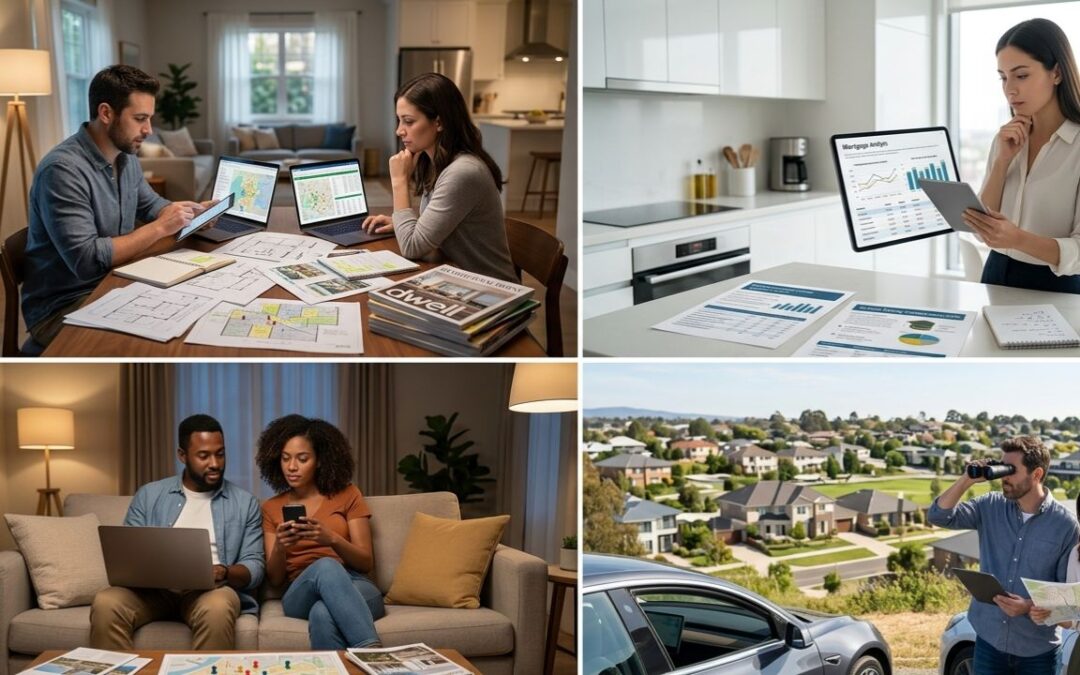
Buying a home has never been a decision people take lightly. The financial commitment is significant, the implications are long-lasting, and the stakes are high enough that even the most decisive people tend to slow down and think carefully before signing anything.
But something has changed in recent years. The amount of time buyers are spending in the research phase — before any serious commitment is made — has grown considerably. Where people once visited a handful of homes, compared prices, made a decision and moved forward, today’s buyers are often researching for weeks or months before they feel ready to commit to anything.
That shift is not a sign of indecision. It is a sign of people taking one of the most important decisions of their lives seriously in a way that the information and tools available today make genuinely possible.
More Information Has Made Buyers More Careful, Not Less
The internet has fundamentally changed what the early stages of home research look like. A buyer today can compare floor plans across dozens of builders without leaving home. They can take virtual tours of display homes in different states. They can read detailed reviews and firsthand accounts from people who have already built with specific companies. They can explore building trends, compare inclusions, and develop a sophisticated understanding of the market before ever setting foot in a display village.
All of that access to information is genuinely valuable. But it has also done something else — it has made buyers more aware of how much there is to consider. The more you know, the more you realise there is to know. And the more clearly you understand what a long-term commitment this decision represents, the less inclined you feel to rush through it.
People want to feel genuinely confident before committing to one of the largest investments of their lives. Taking extra time to build that confidence is not procrastination. It is prudence.
The Questions Buyers Are Asking Have Changed
One of the most telling signs of how the home buying mindset has evolved is the shift in the questions buyers are bringing to the process. The question that used to dominate early conversations — how big is this home? — is giving way to a set of more nuanced and more useful ones.
Will this layout actually work for the way my household lives? Does the home have enough practical storage for what our family genuinely needs? Will it still suit us in five years if our circumstances change in the ways they realistically might? Is this a design that will remain comfortable and functional across many years of daily living, or is it optimised for first impressions?
These are better questions. They take longer to answer honestly, and they require more genuine self-reflection about lifestyle and future plans. But the decisions they lead to are consistently better — homes that continue to feel right across the full span of ownership rather than ones that impressed in the short term and revealed their limitations later.
Long-Term Thinking Has Become the Default
Something has shifted in how buyers frame the whole decision. A home used to be evaluated primarily against current needs — what the household requires right now, at this specific moment in life. Today, more buyers are building future thinking into the process from the very beginning.
They are asking what the household is likely to need not just today but in five, ten, or fifteen years. Whether the family is likely to grow and what that would mean for the home. How remote work arrangements might evolve and what the home needs to offer to support that. Whether the design has enough flexibility to adapt gracefully to lifestyle changes without requiring expensive modifications.
That longer-term frame of reference changes what gets prioritised. Features that serve the household well across many years — practical layouts, flexible spaces, good storage, quality natural light — get more weight. Features that look impressive today but may feel dated or irrelevant sooner than expected get less. The result, consistently, is decisions that hold up better over time.
Functionality Has Moved Up the Priority List
The trend toward valuing functionality over pure aesthetics is one of the clearest and most consistent changes happening across the Australian housing market right now. And it makes complete sense when you think about what actually shapes the experience of living somewhere over many years.
Storage space that is genuinely adequate for the household’s real needs keeps the home feeling organised and calm rather than perpetually cluttered. Practical layouts that support natural daily movement through the home make routines feel effortless rather than mildly inconvenient. Natural light that fills the main living areas throughout the day lifts the atmosphere of the home in ways that are felt every single morning. Rooms that can serve multiple purposes provide flexibility that proves its value over and over as life changes. Easy maintenance means the home does not become an ongoing drain on time and energy that nobody has to spare.
These features may not generate the same immediate excitement as a statement kitchen feature or an impressive exterior design. But they are the ones that shape daily quality of life in a real and lasting way. And buyers who understand that early in the process tend to end up considerably happier with their decision in the long run.
Display Homes Still Play a Vital Role
For all the value that online research provides, it cannot fully replace the experience of visiting homes in person. And the buyers who are spending the most time in the research process understand that.
Photos show how a home looks. Being inside one shows how it feels. The quality of natural light at different times of day. Whether the layout flows in a way that feels natural when you are actually moving through it. How the rooms relate to each other and whether that relationship supports or slightly complicates the daily routines you can imagine playing out in the space. The overall atmosphere — that quality of whether a home feels settled and liveable or slightly off in ways that are hard to articulate but immediately sensed.
These things only reveal themselves in person. And they consistently change buyer priorities in significant ways. Features that seemed essential from online research sometimes matter less once experienced in reality. Practical details that barely registered during the digital research phase suddenly emerge as things that matter enormously once you are standing in a space imagining your actual daily life inside it.
Display home visits are not just a formality in the research process. For many buyers, they are the point at which the research becomes truly useful — where abstract comparisons become concrete and real.
Comfort Has Replaced Luxury as the Goal
The definition of what buyers are actually trying to achieve when they buy or build a home has shifted in a way that reflects real maturity in how people think about this decision. Luxury — in the traditional sense of more upgrades, more features, more of everything expensive — has given way to something that ultimately delivers more lasting satisfaction.
Comfort. The genuine, everyday kind. People want homes that feel welcoming to be in at the end of a long day. Homes that support daily routines rather than complicating them. Homes that are flexible enough to accommodate how life actually operates rather than demanding that the household adapt to the home’s limitations. Homes that require a manageable amount of maintenance rather than generating a constant stream of demands on time and money.
These are the qualities that create real long-term satisfaction. And they are the qualities that more buyers are prioritising when they sit down to make their final decision — because they understand, often from watching others’ experiences, that impressive features at the time of purchase do not always translate into happy homeownership over the years that follow.
Flexible Spaces Are Worth Planning For
The way households use their homes continues to evolve in ways that are not always fully predictable at the time of buying or building. Work arrangements change. Family configurations shift. Children grow through stages that create different space requirements. The activities a household wants to be able to do at home expand and change over time.
Homes with genuinely flexible spaces accommodate those changes gracefully. A spare room that can function well as a home office when that is what is needed and transition easily to a guest bedroom or nursery when circumstances change. A study or activity area that adapts alongside growing children. Living areas that can be used differently at different stages without requiring structural intervention.
Buyers who plan for this kind of flexibility during the research and decision-making phase consistently find themselves grateful for it as the years go on. It is one of those qualities that is easy to overlook when present needs feel fixed and stable — and one that reveals its full value every time life moves in a direction that was not fully anticipated.
Taking More Time Is One of the Smartest Things a Buyer Can Do
The extra time that modern homebuyers are investing in the research process before committing might feel slow in a world that generally rewards speed. But for a decision of this scale and this permanence, that investment of time is one of the most genuinely valuable things a buyer can make.
The buyer who has spent months researching, visiting homes, comparing floor plans, thinking honestly about long-term needs, and asking hard questions about functionality and future flexibility arrives at the decision-making stage in a very different position from the one who moved quickly based on first impressions. They are more confident. They are more certain of what they actually need. They are less likely to discover important shortcomings only after the commitment has been made and the discovery is expensive.
That confidence — grounded in genuine knowledge and honest reflection rather than enthusiasm and optimism — is one of the best foundations a major decision can have.
Final Thought
The home buying process is changing in ways that reflect genuine growth in how Australians understand and approach this decision. More research, better questions, longer-term thinking, and a clearer focus on what will actually make a home feel right across many years of real daily living — all of it is producing better outcomes.
Because choosing the right home has never really been just about where you live today. It has always been about creating a place that continues to work for you, support you, and feel genuinely right as tomorrow becomes today and today becomes the years that make up a life.
Taking the time to find that place — really taking it, without rushing — is not a delay. It is the decision itself being made well.
That is something the team at Granton Homes understands deeply — helping buyers take the time they need to make decisions they will feel genuinely good about, and then building homes that justify that confidence for years to come.