
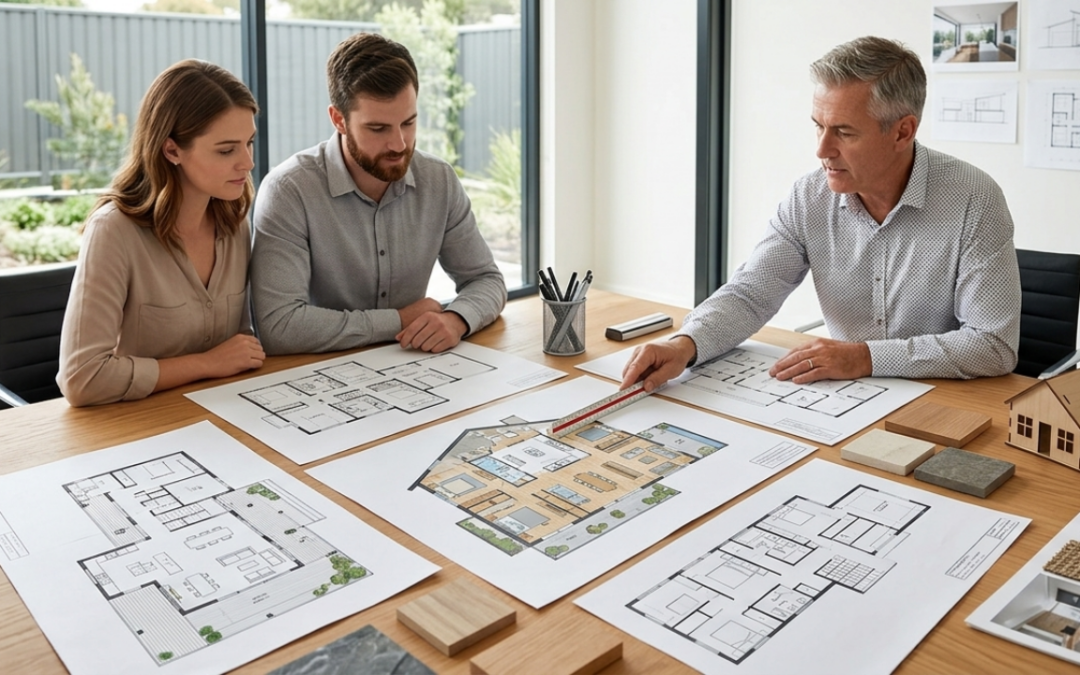
Here is something I did not fully appreciate until after I had spent time talking to people who had already been through a home build.
The floor plan is not just a technical document. It is a description of how your daily life is going to work for the next decade or two. Every morning when you walk from the bedroom to the kitchen, every evening when the kids are doing homework while dinner is being made, every weekend when guests are over and you are trying to manage multiple things happening in different parts of the house — all of that is determined by decisions made on a piece of paper months before you move in.
Get the floor plan right and you barely think about it. The home just works. Spaces flow into each other naturally. Rooms are where they need to be. Life happens comfortably without you having to navigate around design decisions that did not suit the way you live.
Get it wrong and you feel it every day. Not in a dramatic, obvious way — but in the accumulated friction of a kitchen that does not connect well to the dining area, or bedrooms that are too close to the noisy parts of the house, or a living room that never gets good light because of where it ended up on the plan.
This is the decision worth taking seriously. More seriously than most people do when they are caught up in the excitement of choosing colours and finishes.
Before You Look at a Single Floor Plan — Do This First
Most people approach floor plan selection by looking at options. They walk through display homes, browse builder websites, save layouts they like the look of, and then try to figure out which one feels right.
That is working backwards.
The better approach is to spend time thinking about your actual life before you look at any floor plans at all. Not your aspirational life — your real one. The way your household actually functions on an ordinary Tuesday.
Think about who is in the household and how they use different spaces. Do you both work from home at the same time? Then two separate, acoustically reasonable workspaces matter more than they would in a household where everyone is out during the day. Do you have young kids who need to be watched while you are in the kitchen? Then the sight lines between the kitchen and the living or play areas are important. Do you cook seriously and use the kitchen as a social hub when people come over? Then the relationship between the kitchen and the entertaining spaces needs real thought.
Think about what drives you mad about where you live now. Whatever that is — not enough storage, a kitchen that is too isolated, bedrooms that are too noisy, a living area that never gets morning light — those frustrations are telling you something specific about what your next floor plan needs to do differently.
And think about what you genuinely love about places you have lived or visited. Spaces that felt comfortable and right. What was it about them that worked?
Granton Homes spends real time on this conversation before any plans are discussed. Their design process starts with understanding how the client lives, not with presenting a catalogue of options. That approach produces better outcomes than the other way around, and it is worth insisting on regardless of which builder you end up working with.
The Open Plan Question — Honest Answers
Open plan living is the dominant approach in Australian new home design, and it has been for long enough that many buyers just assume it is what they want without really examining whether it suits them specifically.
The case for open plan is genuine. Combining the kitchen, dining, and living areas into one connected space creates a more generous feeling than the same square footage divided into separate rooms. It keeps whoever is cooking involved in what is happening rather than isolated behind a closed door. It makes natural light easier to distribute. It suits the informal, social style of Australian living.
But open plan is not right for everyone, and the honest conversation about it is more nuanced than the design industry sometimes suggests.
Noise is the main limitation. In an open plan space, sound travels freely — which is great when everyone wants to be part of the same moment, and genuinely problematic when someone needs quiet. Working from home in a room adjacent to an open plan living area is difficult. Having a teenager who wants to watch something different from what the rest of the family is watching becomes a negotiation. A baby sleeping while life continues in the rest of the home is a challenge.
The best modern floor plans do not treat this as a binary choice. They use zoning — creating areas within the open plan that have slightly different relationships to each other, using partial walls, changes in ceiling height, or simply thoughtful placement to allow the space to feel open while still having some sense of differentiation. They position the bedroom zone separately enough from the living areas that noise is managed. They include at least one closed room that can function as a genuine retreat or work space.
Granton Homes designs floor plans that think about this carefully — open enough to feel generous and social, but with enough structure that the home works for all the different things a household needs to do simultaneously. When you are reviewing any floor plan, ask yourself specifically: where do I go when I need quiet? If there is not a clear answer, the plan needs more thought.
Room Placement — The Detail That Makes or Breaks a Layout
The size of rooms gets a lot of attention. The placement of rooms gets much less — and it probably matters more.
A bedroom that is the right size but positioned next to the noisy living areas, or directly above the garage, or facing west and getting afternoon sun in summer, is a less good bedroom than a slightly smaller one in a better position. The placement question comes first.
Here is how to think about room placement practically.
Bedrooms should be away from the noisiest parts of the house. In a single storey home, that means thinking about what is on the other side of the bedroom walls — living areas, the garage, the laundry. In a double storey home, it means thinking about what is above and below. Putting bedrooms above the garage is acoustically problematic. Putting them above the main living area is also a consideration.
The master bedroom orientation is worth specific attention. Many people prefer morning light in the master, which means an east-facing aspect. Others prefer it south-facing for consistent, cool light. West-facing master bedrooms get direct afternoon sun in summer, which can make the room uncomfortable to sleep in — worth considering if you are in a warmer climate.
The kitchen position drives a lot of how the rest of the home flows. In most Australian households, the kitchen is the most used room in the house. It should connect easily to the dining area, to the living space, and to the outdoor entertaining area. A kitchen that requires you to walk through another room to get to any of these is a kitchen that creates daily friction.
Bathrooms and laundries are less romantic to think about but worth placing carefully. A bathroom accessible from both the main bedroom and the living areas without awkward routing is more convenient than one that is only logically accessible from one direction. A laundry that connects to an outdoor drying area is more practical than one that is on the wrong side of the house.
These are the kinds of placement considerations that Granton Homes works through during the design process not just accepting the first floor plan that fits the block, but thinking about how the placement of every element serves the people who will live there.
Natural Light — Plan for It Specifically, Not Generally
Almost every floor plan claims to have good natural light. Most of them do not have it everywhere, and some have it in the wrong places.
Natural light in a home depends on three things: which direction rooms face, how large the windows are, and whether anything is blocking the light path. Getting this right requires thinking specifically about each room and each time of day, not just generally asserting that the home will be light-filled.
North-facing living areas receive good light throughout the day in most Australian climate zones — morning sun comes from the north-east, afternoon sun from the north-west, and the winter sun is lower and more southerly but still reasonably north-facing for most of the country. A north-facing living area with appropriate eaves or overhangs that shade the high summer sun while allowing the lower winter sun in is the ideal.
East-facing rooms get morning light — pleasant in bedrooms where you wake up, and useful in a kitchen or breakfast area. They are shaded through the afternoon.
West-facing rooms get afternoon sun in summer, which can make them uncomfortably hot and glary. This is manageable with external shading — shutters, screens, pergolas — but it requires planning and adds cost.
South-facing rooms get the least sun and tend to feel darker and cooler. In cooler climates, south-facing living areas can feel cold and gloomy. In hotter climates, south-facing rooms can be a practical refuge from summer heat.
When you are reviewing a floor plan, draw the sun’s path across the plan mentally — or ask your builder to walk you through it. Where is morning light going to land? Where will the afternoon sun be strongest? Does the orientation of the home on the block support what you want from each space?
Granton Homes thinks about this as part of the design process rather than leaving it to chance. The orientation conversation should happen early, when there is still flexibility in how the home sits on the block.
Storage The Boring Topic With the Biggest Daily Impact
Every person I have ever spoken to who has lived in a thoughtfully designed home says the same thing about storage: you never regret having enough of it. And every person who has lived in a home where storage was an afterthought says the same thing too: you feel it every single day.
Storage is not exciting to plan. It does not look impressive in renders. Nobody walks through a display home and says “look at that beautiful pantry.” But the presence or absence of adequate, well-placed storage is one of the most significant determinants of how comfortable and organised a home feels to live in over time.
Think about what you actually own and where it needs to go. Kitchen storage — not just overhead cupboards, but a proper walk-in pantry if you cook with any regularity. Built-in wardrobes that are genuinely sized for the clothes and other items that go in them, not undersized versions that look fine in a floor plan but are cramped in reality. Linen storage. Bathroom storage. A place in the laundry for cleaning products. Garage storage that is actually planned rather than just an empty space that gradually fills with things that have nowhere else to go.
A floor plan that lacks adequate storage looks fine on paper and creates real frustration within months of moving in. When you are reviewing any floor plan with Granton Homes or another builder, go through every category of storage specifically and make sure the plan accounts for it.
Thinking Past Today
A floor plan designed only for your life right now is already somewhat outdated before you move in.
This is not about trying to anticipate every possible scenario that is impossible and trying leads to over-engineered, over-complicated designs that do not serve any version of your life particularly well. It is about building in enough flexibility that the home can adapt to the normal ways that life changes.
Kids arrive, or grow up and leave. Work-from-home arrangements evolve. Parents age and might eventually need to live with you or visit for extended periods. Health changes. Priorities shift.
A floor plan with a ground floor bedroom and bathroom is more adaptable to changing mobility needs than one where all the bedrooms are upstairs. A room that is sized to serve as both a guest bedroom and a home office is more flexible than one that can only function as one or the other. A living area that can be rearranged for different uses is more adaptable than one where the layout only works one way.
Granton Homes builds long-term thinking into the design conversation. What does this household look like in five years? In ten? Not to design for hypothetical futures, but to make sure the home is not unnecessarily inflexible when flexibility costs very little to build in at the design stage.
Standard Plans Versus Custom The Real Trade-Off
Granton Homes offers both pre-designed floor plans and fully custom design, and the choice between them is worth thinking through honestly.
A pre-designed floor plan that has been developed carefully — tested through previous builds, refined based on how people actually live in it, designed with an understanding of what works and what does not — can be an excellent choice. The design work has already been done. The buildability has been confirmed. The documentation exists. This typically means a faster process and better cost predictability than starting from scratch.
The limitation is that a pre-designed plan, however good, was not designed specifically for your block, your orientation, or your specific household. Modifications are usually possible within a range, but there are limits.
A fully custom design developed specifically for you takes longer and costs more upfront in design fees. But it means the floor plan can respond to the specific characteristics of your block — the orientation, the views, the topography — and to the specific needs of your household in a way that a pre-designed plan cannot fully achieve.
For most buyers, the right answer sits somewhere between these poles. Start with a pre-designed plan that is close to what you need, then modify it specifically for your block and lifestyle during the design process. Granton Homes works with buyers to find this balance — not insisting on a catalogue approach when custom thinking is needed, and not making the process more complex than it needs to be.
The Mistakes That Are Easy to Make and Hard to Undo
A few things come up consistently when people reflect on floor plan decisions they wish they had made differently.
Choosing a plan because it looks impressive rather than because it works. The plan that photographs beautifully for the brochure is not always the plan that functions well for daily life. Ask yourself how you will actually use each space rather than how you feel about it as a concept.
Not thinking about noise. Where sound travels in a floor plan is something most people discover after they are living in the home rather than during the design process. Think about it specifically before you sign off on any layout.
Underestimating storage. Already covered above, but worth repeating because it is so consistently the thing people wish they had paid more attention to.
Making the layout too complex. Floor plans with lots of angles, unusual shapes, and elaborate spatial arrangements can look interesting on paper and create practical complications in construction and in daily use. Simple, well-proportioned layouts often outperform complex ones in how they actually feel to live in.
Not thinking about the relationship between inside and outside. The transition from your living areas to your outdoor spaces is one of the most important design relationships in an Australian home. A floor plan that treats the outdoor areas as an afterthought rather than an extension of the living space is missing one of the most significant opportunities in Australian home design.
What a Good Floor Plan Actually Feels Like
Here is how you know a floor plan is right.
You can walk through it mentally and every transition makes sense. Getting from the bedroom to the bathroom does not require navigating through a room you should not have to go through. Getting from the kitchen to the outdoor entertaining area is direct and natural. The places where the family will gather feel like they are in the right relationship to each other.
The storage is where you need it — in the kitchen for kitchen things, in the bedrooms for bedroom things, in the laundry for laundry things. Nothing is making a long journey to get to where it belongs.
The quiet spaces are genuinely quiet. The social spaces are genuinely connected. The home can support multiple things happening at once without everyone being on top of each other or everyone being completely isolated from each other.
And the natural light lands where you want it, at the times of day when you are in those spaces.
When a floor plan does all of those things and Granton Homes works specifically to achieve exactly this it disappears into the background of your life. You stop noticing the layout because nothing about it requires you to notice it. It just works.
That is the goal. A floor plan you never have to think about because it already thought about you.