
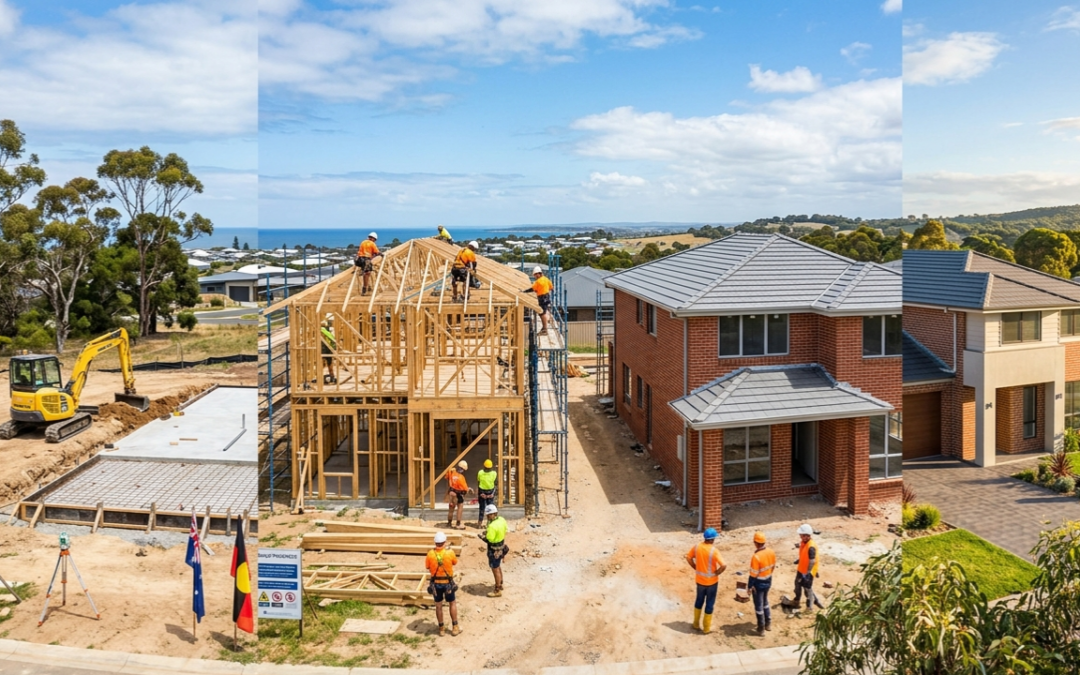
If there’s one question that comes up more than any other when people start researching home building in Australia, it’s this one: how long is it actually going to take? You look online, you get half a dozen different answers, and suddenly you’re more confused than when you started.
That confusion is understandable. Timelines really do vary — sometimes significantly — and a lot of the information floating around online is either outdated, oversimplified, or based on conditions that no longer apply. So let’s cut through it and give you a realistic picture of what to expect in 2026, from the moment you start thinking seriously about building to the day you get your keys.
The Honest Answer: Expect 9 to 18 Months, Total
The number people usually hear is “six months to build.” And while that’s not entirely wrong for the construction phase alone, it leaves out a significant chunk of the process that happens before a single brick gets laid.
When you factor in design, approvals, and all the pre-construction work that needs to happen first, the realistic total timeline for most Australian builds sits somewhere between nine and eighteen months. Some straightforward projects with no complications come in closer to the lower end. More complex builds, or those with council approval challenges or design changes along the way, can push toward the higher end or beyond.
Breaking It Down: What Actually Happens at Each Stage
Stage One — Pre-Construction (Roughly 3 to 6 Months)
This is the stage most people don’t fully account for, and it’s often where the biggest time surprises come from. Before any physical work begins, there’s a lot that needs to happen.
You need to finalise your builder and sign a contract. You need to work through the design process — floor plans, selections, finishes — which takes longer than most people expect because there are a lot of decisions to make and some of them require going back and forth. Then there’s the approval process: council development approvals, engineering reports, and building permits. Depending on your local council and the complexity of your design, this stage alone can take anywhere from a few months to significantly longer.
Builders like Granton Homes guide clients through this stage carefully, because getting the pre-construction groundwork right tends to make everything that follows considerably smoother. Skipping steps or rushing decisions here is where a lot of later problems originate.
Stage Two — Site Preparation (2 to 4 Weeks)
Once approvals are in place and construction is ready to begin, the site needs to be prepared. This involves clearing the land, conducting soil tests if they haven’t already been done, and laying the groundwork for the foundation. For most standard blocks, this stage moves relatively quickly — a couple of weeks is typical. More complex sites with significant slope or difficult soil conditions can take longer and may add to your overall costs.
Stage Three — Construction (Roughly 6 to 12 Months)
This is the main event — the part most people picture when they think about building a house. It covers everything from the concrete slab through to frame construction, roofing, brickwork, internal fit-out, plastering, flooring, cabinetry, painting, and all the finishing work that turns a structure into a liveable home.
Six months is achievable for a straightforward single-storey build with no significant changes or complications. Larger or more complex homes naturally take longer. Twelve months is not unusual, and nobody should feel like something has gone wrong if their build is sitting in that range.
Why Delays Happen — And Why They’re Normal
Even on a well-managed project with an experienced builder, delays are a fairly routine part of construction in Australia. This isn’t a sign of a bad builder or a failing project — it’s just the reality of working in an industry that depends on weather, supply chains, trades availability, and council processes, none of which operate on a perfectly predictable schedule.
Weather is probably the most common culprit. Heavy rain can shut down a site for days at a time, and certain stages of construction — particularly concrete work — can’t happen in poor conditions. Material lead times can stretch unexpectedly, especially for specific products or finishes. Trades sometimes run behind when they’re in high demand across multiple projects. Council approvals occasionally take longer than expected for reasons that have nothing to do with your project specifically.
The buyers who handle these delays best are the ones who knew going in that some flexibility would be required. If your entire plan depends on moving in by a specific date with no margin for movement, you’re setting yourself up for a stressful experience. Build some buffer into your timeline and your living arrangements from the start.
Why the Timelines You See Online Are Often Misleading
If you’ve been researching build times and comparing what different builders quote, you’ve probably noticed that the numbers don’t always line up. Some of that is because different builders genuinely work at different paces with different processes. But a lot of it is also about when the information was written.
The COVID period and the supply chain disruptions that followed created some genuinely unusual conditions for the construction industry — material shortages, labour constraints, and extended delays that pushed timelines well beyond what anyone would consider normal. Some of the “typical” timelines you’ll find in older articles or forum posts from that period reflect those extraordinary circumstances, not what you should expect today.
In 2026, conditions have largely normalised. The industry is in a much more stable place. Builders like Granton Homes are operating with far better visibility on timelines and material availability than was possible two or three years ago. So when you’re researching, focus on recent information and recent reviews rather than anything that dates back to 2021 or 2022.
What You Can Actually Do to Keep Things Moving
You can’t control the weather, and you can’t speed up a council approval. But there are things within your control that have a real impact on how smoothly your build runs.
The single most effective thing you can do is make your decisions early and stick to them. The design and selections process is the phase where most delays originate — not because builders are slow, but because clients change their minds, take a long time to choose finishes, or decide to alter the floor plan after construction has already started. Variation requests mid-build are one of the most reliable ways to extend your timeline and increase your costs simultaneously.
Go into the selections process prepared to make decisions. Do your research beforehand, have a clear sense of your priorities, and treat each decision as something to be made once rather than revisited repeatedly. The more decisive you can be during this phase, the more efficiently your build will move.
Choosing a builder who communicates clearly also makes an enormous difference. When you know what’s happening on site, when the next stage is scheduled, and who to contact if something needs to be addressed, you feel far more in control of the process — even when things don’t go exactly to plan.
A Realistic View: What to Expect vs What People Hope For
Most people start this process hoping it will take six months. Most builds take somewhere between nine and eighteen. That gap exists not because builders are inefficient, but because the full process — from first conversation to handing over the keys — involves a lot of steps that each take real time.
Going in with accurate expectations changes your entire experience. The people who come out of a build feeling positive about it are rarely those who had the fastest timeline. They’re the ones who understood what they were getting into, planned for realistic timeframes, and weren’t caught off guard by the normal rhythm of how construction actually works.
The Bottom Line
Building a home in Australia in 2026 is absolutely achievable, and the conditions for doing so are considerably more stable than they were a few years ago. But it takes time — more time than most people initially expect — and the more clearly you understand that going in, the better your experience will be.
Whether you’re in early conversations with Granton Homes, comparing multiple builders, or still trying to figure out where to start — give yourself a realistic timeline, plan for some flexibility, and focus your energy on the things you can control. That approach won’t make the process instant, but it will make it a lot less stressful.