
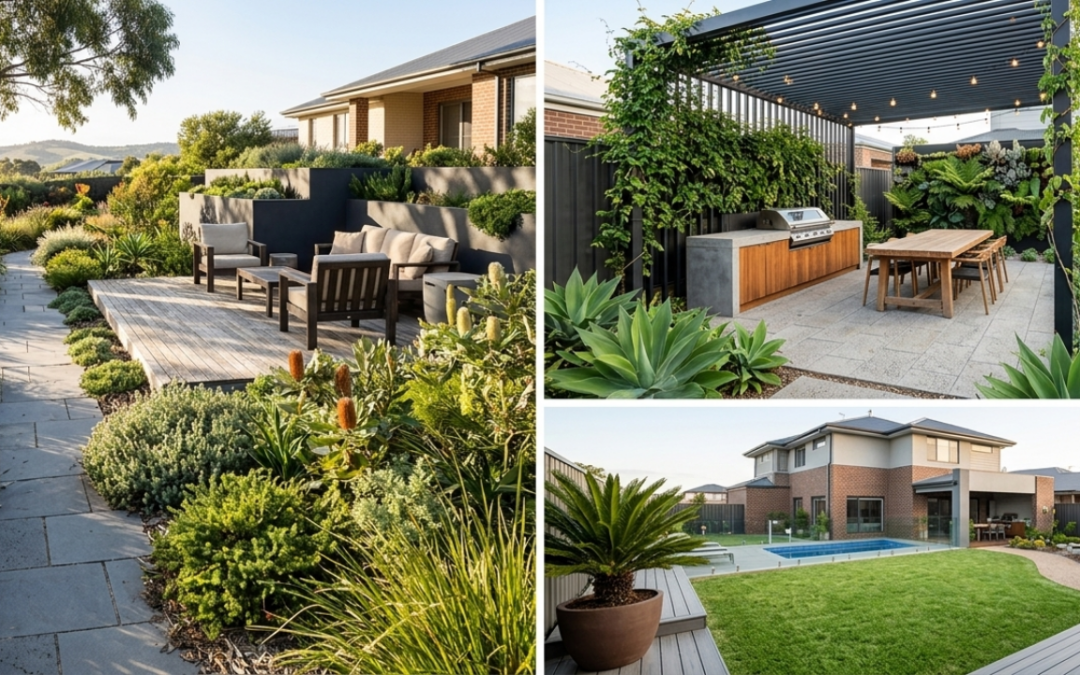
There is a particular kind of frustration that comes from finishing a home build, moving in, and then looking out at a bare dirt yard for the next six months because landscaping got left until the end and the budget had run thin.
It happens more often than people expect. The interior gets all the attention — the kitchen, the bathrooms, the finishes — and the outdoor space gets whatever is left over. Which is sometimes not much.
The outdoor areas of an Australian home deserve better than that. In a country where the climate allows outdoor living for much of the year, a well-designed backyard or garden is not a luxury addition to a home. It is part of how the home actually functions. It affects how you feel when you are inside looking out. It determines whether your entertaining area gets used regularly or sits empty most of the time. And it has a real impact on how the property presents and what it is worth.
So whether you are in the planning stages of a new build with Granton Homes, have recently moved into a new home with a bare block to work with, or are looking at an existing space that has never quite come together — here is how to approach outdoor landscaping in a way that produces results you will actually live with happily.
Start With How You Actually Use Your Outdoor Space
The same principle that applies to floor plans applies to outdoor design. Before you think about what you want the space to look like, think about how you actually want to use it.
Do you entertain regularly? Then a generous, covered outdoor dining and seating area that can function in all weather is the priority. Do you have kids? Then a decent lawn area that they can actually play on matters more than an elaborate garden design. Do you want somewhere quiet to sit with a coffee in the morning? Then orientation and privacy become important considerations. Is low maintenance a priority because you travel often or simply do not enjoy gardening? Then the plant selection and garden design need to reflect that reality rather than aspirational notions of what a garden should look like.
Granton Homes thinks about the relationship between indoor and outdoor living during the design process — not just where the back door goes but how the internal living spaces connect to the outdoor areas and how those outdoor spaces can be set up to serve the household well. If you are still in the design phase, having this conversation early means the indoor and outdoor elements can be planned as a coherent whole rather than independently.
If you are working with an existing space, spend a week observing it before you make any decisions. Where does the sun land at different times of day? Where does shade fall in the afternoon? Where does water pool when it rains? Which parts of the space do you actually gravitate towards and which do you avoid? That information is more useful than any landscaping inspiration board.
The Outdoor Living Area — Get This Right First
In most Australian homes, the covered outdoor living area is the most used outdoor space. It is where summer evenings happen, where weekend breakfasts drift into late mornings, where guests end up even when you intend to entertain inside.
Getting this space right is the highest-priority investment in outdoor landscaping, and it is worth thinking about seriously rather than just accepting whatever gets included in the standard package.
Size matters more than most people anticipate. A covered outdoor area that is too small feels cramped when more than a few people are in it, and the furniture you want to put there does not fit properly. Think about the largest gathering you regularly host and design the space around that rather than around the smallest possible version.
Coverage matters too. A pergola without roofing is a structure that is usable only on mild, clear days — which is not most of the year in most Australian climates. A properly roofed alfresco with insulated roofing panels that reduce heat transfer, combined with ceiling fans and outdoor heaters for shoulder season comfort, is a space that works year-round rather than just in perfect weather.
The flooring of the outdoor living area is worth choosing carefully. It needs to transition well from the internal flooring — both visually and practically. Tiles that complement the internal flooring are a common approach, and they have practical advantages in an outdoor setting — easy to clean, resistant to outdoor conditions, and durable. Timber decking looks beautiful but requires more maintenance, particularly in exposed situations.
The connection between the outdoor living area and the internal living space is critical. Wide stacking or bi-fold doors that genuinely open the internal space to the outdoor area create the indoor-outdoor connection that Australian living is built around. A narrow single door to the outdoor area is a missed opportunity that you will notice every time you have guests.
Lawn — The Most Underrated Landscaping Element
There is a tendency in contemporary landscape design to treat lawn as something to be minimised in favour of more designed elements. And while an all-lawn backyard is not interesting, dismissing lawn entirely is a mistake in most Australian households with families.
A genuine lawn area — large enough to actually use, not just a token strip between garden beds — is one of the most functional elements an outdoor space can have. Kids play on it. Dogs run on it. It is where you set up the portable cricket set or the bubble machine or the slip and slide. It is a flexible, open space that can accommodate whatever outdoor activity is happening.
The right lawn for your situation depends on your climate zone and your maintenance appetite. Sir Walter Buffalo is the most popular lawn variety in many parts of Australia for good reasons — it tolerates shade, recovers well from wear, and requires less water than many alternatives once established. Couch varieties handle heavy traffic well but need more sun. Kikuyu is vigorous and hard-wearing but can be invasive.
Consider an irrigation system at the installation stage if you are laying a new lawn. Retrofitting irrigation after the lawn is established is possible but more disruptive. Getting the infrastructure in place from the start means your lawn has the best chance of getting through its first dry season.
Plant Selection — Choose for Your Climate and Your Time
Australian gardens have benefited enormously from a shift towards native and drought-tolerant planting. Not just because it is environmentally sensible — though it is — but because plants that are suited to the Australian climate are dramatically easier to maintain than exotic species fighting against conditions they were not designed for.
Native Australian plants, once established, generally require far less water, far less fertilising, and far less ongoing intervention than exotic alternatives. Many of them attract native birds and insects, which brings life to the garden in a way that an exclusively exotic garden does not. And the range of native plants available today is far more extensive and visually interesting than the limited palette of a generation ago.
This does not mean your garden needs to look like a bushland planting. Australian natives can be used in formal, structured designs just as readily as in naturalistic ones. Clipped westringia hedges for structure. Lomandras and native grasses for texture. Grevilleas and banksias for colour and bird interest. Frangipani and bougainvillea for a tropical feel in appropriate climates.
What to avoid is planting things because they look good at the nursery in spring without considering how they will behave in summer, how large they will grow, and how much attention they will need. Overcrowded garden beds that create annual pruning headaches and plants that outgrow their space and crowd each other out are the result of not thinking past the immediate planting stage.
Think about mature size when you are selecting plants, and space them accordingly. It will look sparse initially. It will look right in three years. And it will not require the constant intervention that overcrowded planting creates.
Mulching is one of the most valuable things you can do for garden beds. A good layer of mulch retains moisture, suppresses weeds, moderates soil temperature, and gradually improves soil structure as it breaks down. It is low-cost, low-effort, and makes a significant difference to how much maintenance the garden requires.
Pathways and Structure — The Bones of the Garden
A garden without structure is a collection of plants. Structure is what turns it into a designed space.
Pathways serve a practical purpose — getting from one part of the garden to another without walking on grass or garden beds. But they also define the shape of the outdoor space, create visual lines that draw the eye, and give the garden a sense of organisation that makes it feel designed rather than random.
The material you choose for pathways should relate to the materials used in the home and the outdoor living area. Concrete pavers in a similar colour and finish to the alfresco flooring create a coherent look. Sandstone or bluestone work well with more traditional or natural aesthetics. Exposed aggregate concrete is practical and durable but has a specific look that does not suit every style.
Retaining walls, raised garden beds, and defined garden edges all contribute structure to an outdoor space. They separate different elements of the garden clearly, make maintenance easier by keeping lawn and garden beds from bleeding into each other, and add visual interest through the layering they create.
Granton Homes designs homes where the transition from inside to outside feels considered rather than accidental — where the materials and lines of the building extend into the outdoor space rather than stopping abruptly at the back door. Working with that design language when planning the landscaping creates a finished result that feels coherent rather than patched together.
Outdoor Lighting — The Element That Changes the Garden at Night
A garden that looks good in daylight and disappears at night is a missed opportunity. Outdoor lighting, done well, transforms how the outdoor space feels from late afternoon onwards and dramatically extends how much the space gets used.
The key is layering different types of lighting for different purposes rather than relying on a single bright light source.
Garden lighting placed at low level — along pathways, in garden beds, under the canopy of trees — creates atmosphere and defines the space at night without the harsh glare of a single overhead light. LED strip lighting under the coping of raised garden beds or along the underside of pergola beams adds a contemporary touch that photographs beautifully and works well in practice.
Pathway lighting improves safety as well as aesthetics — knowing where the steps and edges are at night matters. Low-voltage LED pathway lights are energy-efficient, long-lasting, and easy to install.
Task lighting over the outdoor dining and cooking area needs to be practical — bright enough to actually cook and eat by. A single pendant or small cluster of pendants over the outdoor dining table mirrors what you would have in the indoor dining area and works similarly well.
The overall principle is that outdoor lighting should feel warm and considered rather than industrial. The goal is an outdoor space that you want to be in at night, not one that is merely illuminated.
Privacy — Often Overlooked, Always Appreciated
In suburban Australia, outdoor spaces are frequently overlooked by neighbours, passing traffic, or both. Without some degree of privacy, an outdoor living area does not feel like a genuinely comfortable place to be — and it gets used much less as a result.
Privacy does not require high solid fencing that makes the outdoor space feel enclosed and cut off. There are more nuanced approaches that create the sense of enclosure without the fortress effect.
Screening plants — either hedges of appropriate native or exotic species, or standard trees underplanted with lower shrubs — create privacy over time while contributing to the garden design rather than just blocking the view. The limitation is time — screening plants take several years to reach useful heights, so if immediate privacy is a priority, structural elements need to do more of the initial work.
Timber battens and slat screens are popular in contemporary Australian gardens because they provide screening without completely blocking airflow and light. They also work as a design element rather than just a functional one. Powder-coated aluminium alternatives to timber are more durable and require no maintenance, at a higher upfront cost.
Pergola structures with climbing plants — passionfruit, star jasmine, wisteria depending on climate — provide overhead privacy and screening while adding to the garden character over time.
Materials — Make Them Talk to Each Other
One of the most common reasons outdoor spaces look disconnected from the homes they belong to is that the materials used in each have no relationship to each other.
A home with a predominantly brick exterior and internal concrete flooring finished with dark tiles looks jarring with a backyard decked out in weathered timber and white aggregate pathways. Not because those outdoor materials are bad — they are not — but because they have no visual conversation with the house they are next to.
The outdoor materials palette should draw from the same language as the house. If the home uses warm toned materials, the outdoor elements should too. If the interior is cool and contemporary with lots of concrete and white surfaces, clean-lined paving in similar tones extends that aesthetic outside. If the home has a classic brick facade, natural stone and traditional paving materials will feel coherent in a way that ultra-contemporary outdoor elements will not.
Granton Homes pays attention to this relationship in the design of their homes — the way the external materials of the building translate into the immediate outdoor areas around it. If you are planning landscaping for a Granton Homes build, ask about what materials were used in the construction and let that inform your outdoor material choices. The result will feel like a considered whole rather than a house with a garden attached.
Planning for the Long Term
Landscaping that looks right on day one and looks wrong in five years because nothing was planned for how it would grow and change is frustrating and expensive to fix.
Plants grow. Trees get larger. Garden beds that seemed to have plenty of space become overcrowded. Paving that was not installed on a proper base settles unevenly. A retaining wall that was not engineered properly begins to move.
Plan for mature growth rather than immediate appearance. Choose plants with their adult size in mind and space them accordingly. Make sure any structural elements — retaining walls, pergolas, fencing — are built properly rather than to a price point that will require replacement in a few years.
And think about maintenance realistically rather than optimistically. A high-maintenance garden that you love in concept but do not actually have time to look after becomes a source of guilt and eventual neglect. A lower-maintenance design that you can keep looking good with a realistic time investment will serve you better over the long term, regardless of what the aspirational version would have looked like.
Putting It Together
The best outdoor spaces in Australian homes are not the most elaborate ones. They are the ones that were thought through properly from the beginning — designed around how the household actually lives, connected to the materials and character of the home, practical to maintain, and genuinely enjoyable to spend time in.
Whether you are working with Granton Homes on a new build where the outdoor design can be planned alongside the house, or you are approaching an existing outdoor space that has never quite come together, the starting point is the same. Think about how you live. Think about what the space needs to do. And then make decisions that serve those real needs rather than aesthetic impulses that look good in a magazine but do not actually suit your life.
The outdoor space is part of the home. It deserves the same thoughtfulness that goes into every other decision.