
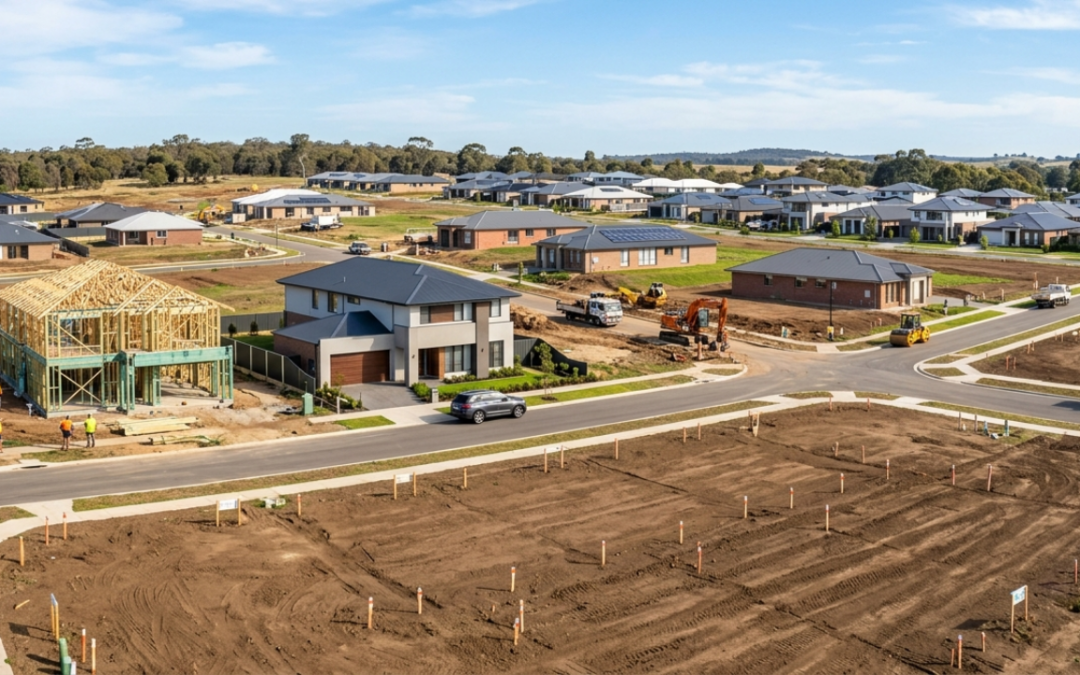
If you have been looking at the property market in Australia and trying to figure out the most sensible path to homeownership, house and land packages have probably appeared in your research multiple times.
They are advertised heavily, positioned as the accessible entry point to building new, and often come with attractive headline prices that seem to simplify a process that can otherwise feel overwhelming. For a lot of buyers — particularly first-time buyers who find the separate processes of finding land, choosing a builder, and managing the whole thing independently quite daunting — the apparent simplicity of a package deal is genuinely appealing.
But the gap between the advertised appeal of house and land packages and the reality of what you actually get when you sign up for one is worth understanding clearly before you commit. Because packages genuinely are a good option for some buyers in some circumstances — and a less good option for others, for reasons that are not always obvious from the marketing.
This is an honest look at what house and land packages actually involve, what the genuine advantages are, what the real limitations and costs are, and how to think about whether they make sense for your situation in the current Australian market.
What a House and Land Package Actually Is
The term covers a range of arrangements that differ from each other in significant ways, and understanding the specific structure of any package you are considering matters more than understanding the category in the abstract.
At the most basic level, a house and land package bundles a block of land in a specified estate with a home design from a specific builder. You buy both together — often through separate contracts, one for the land with the developer and one for the construction with the builder — and the home gets built on the land you have purchased.
Some packages involve land that has already been titled — meaning it is registered and can be built on immediately. Others involve land in estates that are still being developed, where the land is contracted but the actual registered title will not be available for months. Building cannot start until the land is titled, so packages with untitled land have an additional waiting period built in that is easy to underestimate.
Some packages are very fixed — you choose from a defined set of designs that will be built as specified on the available lots, with limited capacity to change the layout or specification. Others offer more flexibility, allowing meaningful customisation of the design and selections within the bounds of the estate’s design guidelines. The degree of flexibility varies enormously between packages and builders, and the advertised price typically corresponds to the most fixed version of the offer.
The relationship between the land developer and the builder in a house and land package can also vary. In some packages the developer and builder are affiliated — the developer controls which builders can operate in the estate and receives a commercial arrangement. In others the builder has negotiated lot allocations independently. Understanding this relationship matters because it affects whether the builder was selected for quality and value or primarily because of a commercial arrangement with the developer.
The Genuine Advantages — What Packages Actually Deliver Well
The advantages of house and land packages are real and meaningful for the right buyer.
Simplicity of process. For a first-time buyer who finds the prospect of independently researching builders, finding suitable land, managing the interface between them, and coordinating the legal and financial processes genuinely daunting, a package deal reduces the complexity significantly. The land and builder are already connected. The design is pre-matched to the lot. The documentation is largely coordinated through a single process. This simplicity has genuine value for buyers who lack the time, knowledge, or confidence to manage all the components independently.
New home advantages. A new home is exactly that — new. No hidden maintenance issues lurking beneath the surface, no renovation needed to bring it to a liveable standard, no dealing with someone else’s design choices or deferred upkeep. Everything is under warranty. The fixtures and fittings are current. The design reflects contemporary standards for energy efficiency, spatial planning, and livability. For buyers who have weighed up new versus existing property and concluded that new is what they want, a house and land package delivers on that choice.
Stamp duty treatment. In most Australian states, purchasing a house and land package involves paying stamp duty on the land component only at the time of land contract, rather than on the full improved value of the completed property. The specific rules vary by state and are subject to change, but this can represent a meaningful saving relative to buying an equivalent established property where stamp duty applies to the full purchase price.
Fixed price certainty for the construction component. Most house and land packages are structured around fixed price building contracts, which means the construction cost is defined before you commit and is protected against the cost escalation risk that applies in cost plus arrangements. For buyers with defined budget limits, this certainty is genuinely valuable.
First home buyer incentives. Various state and federal government incentive programs for first home buyers — stamp duty concessions, grants, and other assistance — are generally available on new homes and therefore apply to house and land packages. The specific programs and amounts vary by state and change over time, but the potential to access government assistance that would not be available on an established home purchase is a real financial advantage for eligible buyers.
The Real Limitations — What Gets Left Out of the Marketing
The limitations of house and land packages are real and consistent enough that understanding them specifically is important before you commit to one.
The advertised price is not the final cost. This is the limitation that catches more package buyers off guard than any other, and it is the one that the marketing most consistently obscures.
The headline price of a house and land package typically covers the land at its base price and the construction at its base specification. The base specification is a defined level of finish — adequate and functional, but not what was shown in the display home. The gap between the base specification and the display home standard is the upgrade cost, and it is real and often significant.
Beyond upgrades, the costs that sit outside the package price are extensive. Site preparation — the work required to prepare the specific lot for construction, which varies depending on the lot’s characteristics and may include fill, retaining, or additional drainage work — is typically not included in the advertised package price and is adjusted once the site is assessed. Utility connections have costs. Landscaping, driveway, and fencing are almost always excluded. Window furnishings are excluded. These items collectively add meaningfully to the total cost of getting from a signed package contract to a liveable home.
Understanding the realistic total cost — not the headline price — is the most important financial due diligence step before committing to any package. Ask specifically what the total cost looks like including site costs, typical upgrades, and all the items outside the package price. The answer to that question, and the transparency with which it is provided, tells you more about the package value than the headline number does.
Location limitations. House and land packages are concentrated in greenfield development areas — new estates on the urban fringe and in outer suburban corridors. These locations offer lower land prices and larger lot sizes relative to established suburbs, which is a genuine advantage for buyers whose priorities include space and lower entry cost.
The limitations are equally real. Infrastructure in new estates is often limited in the early years of development — schools, medical facilities, public transport, retail, and community amenity take time to establish. Commute distances to employment centres can be significant. The character of the neighbourhood is defined by proximity — streets of similarly new homes in various stages of completion rather than the established street trees and community character of older suburbs.
For buyers whose priorities include proximity to specific facilities, access to particular school catchments, or established neighbourhood character, the location of most house and land packages is a genuine constraint rather than just a trade-off to manage.
Limited design flexibility. The degree of design flexibility in a house and land package varies significantly between packages and builders, but it is almost always less than what is available in a custom build arrangement.
At the most restricted end, the design is fixed — you select a specific plan from the available options for your lot, and the home is built as specified. Structural changes are not available. The layout reflects the builder’s standard offering rather than your specific needs. Finish selections are made from a defined range within each category.
More flexible packages allow meaningful customisation within bounds — structural modifications, layout adjustments, more extensive finish selection. But even these packages operate within the constraints of the estate’s design guidelines, the builder’s construction systems, and the economics that allow the package to be offered at its advertised price.
Buyers who have specific needs that require genuine custom design — a particular room configuration, a layout that responds to the site’s specific orientation, features that do not appear in any standard design — will not be well served by a house and land package regardless of how much flexibility is advertised.
The builder selection limitation. In most house and land packages, the builder is not chosen by the buyer based on quality and value research — they are defined by the package arrangement. This means the due diligence process that should characterise builder selection — verifying the licence, seeing completed homes, speaking to past clients — is either truncated or skipped entirely because the buyer does not feel they have a genuine choice.
This limitation matters because builder quality varies, and the quality of your specific building experience and the quality of your finished home is substantially determined by the builder you end up with. In a package arrangement where the builder is effectively predetermined, you lose the leverage and the optionality that come with a genuine comparative selection process.
How to Evaluate a Specific Package Properly
If you are seriously considering a specific house and land package, the evaluation process that produces genuinely informed decisions is more specific than a general comparison of headline prices.
Get the full cost picture, not just the package price. Ask the builder and developer specifically about site costs, upgrades required to reach the display home standard, and all the items excluded from the package price. Build a realistic total that includes everything required to move into a finished and liveable home.
Understand the land status. Is the land already titled and available for immediate construction, or is it in a developing estate where title is months away? If untitled, what is the realistic date for title and what happens to construction timing if that date slips?
Visit the location at different times. A site visit during the selling weekend of a new estate release is the best possible presentation of a location. Visiting at a regular weekday morning and evening — to understand the commute reality, the available facilities, and the character of the developing neighbourhood — gives you a more accurate picture of what living there will actually be like.
Research the builder specifically. Even in a package arrangement where the builder is predefined, you have every right to research them independently before committing. Verify their licence. Ask to see completed homes. Request references and speak to past clients. The package may define the builder, but your decision to accept the package with that builder is your choice.
Understand the design guidelines and approval process. New estates typically have design guidelines that specify external materials, colours, setbacks, and architectural requirements. Understanding these before you commit — and making sure the design you are choosing will be approved within those guidelines — avoids discovering constraints after you have signed.
Compare against the full-cost alternative. The most useful comparison for a house and land package is not against other packages but against the alternative of choosing land and a builder independently. What does the total cost of the package look like against the total cost of choosing your own block and engaging a custom builder like Granton Homes? What do you gain and what do you give up in terms of flexibility, quality, location, and process?
Who House and Land Packages Suit Well — And Who They Do Not
House and land packages suit buyers who want a simpler process for entering the new home market, are comfortable with a developing area location, do not have specific design requirements that cannot be met by available plans, and whose priority is an accessible, structured path to homeownership rather than a bespoke outcome.
They are a particularly good option for first home buyers who find the independent process overwhelming and would benefit from the streamlined coordination that a package provides. They work well for buyers who are primarily motivated by getting into a new home at a controlled price point rather than by specific design outcomes.
They suit buyers less well when specific design needs are genuinely important — when the floor plan, the orientation, or the features required for the household’s lifestyle do not appear in any standard package offering. They are a poor fit when location is a primary consideration and the buyer has specific requirements for proximity to work, schools, or established amenity that are not met by available estate locations.
For buyers in this second group — those whose needs require genuine design flexibility, specific location, or a premium quality outcome — working with a custom builder independently, choosing land specifically suited to the project, and managing the process with the right support is likely to produce a better outcome than any package arrangement. Granton Homes serves exactly this kind of buyer, developing genuinely custom homes around specific client briefs, specific sites, and specific lifestyle needs rather than adapting standard designs to fit pre-selected lots.
The 2026 Context — What Has Changed and What It Means for Packages
The house and land package market in Australia in 2026 reflects several shifts from the position a few years ago.
Construction cost stabilisation has improved the reliability of package pricing. The extreme cost escalation of the 2020 to 2023 period — which caused real problems for fixed price package contracts and led to some package builders experiencing serious financial difficulties — has eased. Package prices in 2026 better reflect realistic construction costs than they did during the peak disruption years, which improves confidence in the fixed pricing offered.
Land prices in many package estates have moderated from their pandemic peaks. The combination of higher interest rates, reduced demand pressure, and increased supply in some corridors has made land in new estates more accessible than it was at the peak of the boom. For buyers who were priced out of packages during 2021 and 2022, the current market offers better entry conditions.
Infrastructure development in established outer suburban corridors has progressed. Areas that were developing estates five years ago now have schools, shopping, medical facilities, and improved transport links. The infrastructure lag that historically affected new estate liveability has been reduced in many corridors, though it remains a consideration in the newest and most remote release areas.
Interest rates have affected borrowing capacity and therefore the realistic price range that most buyers can access. This has shifted some demand towards the lower end of the package price range and has made the genuine total cost question — not just the headline price — more important than ever.