
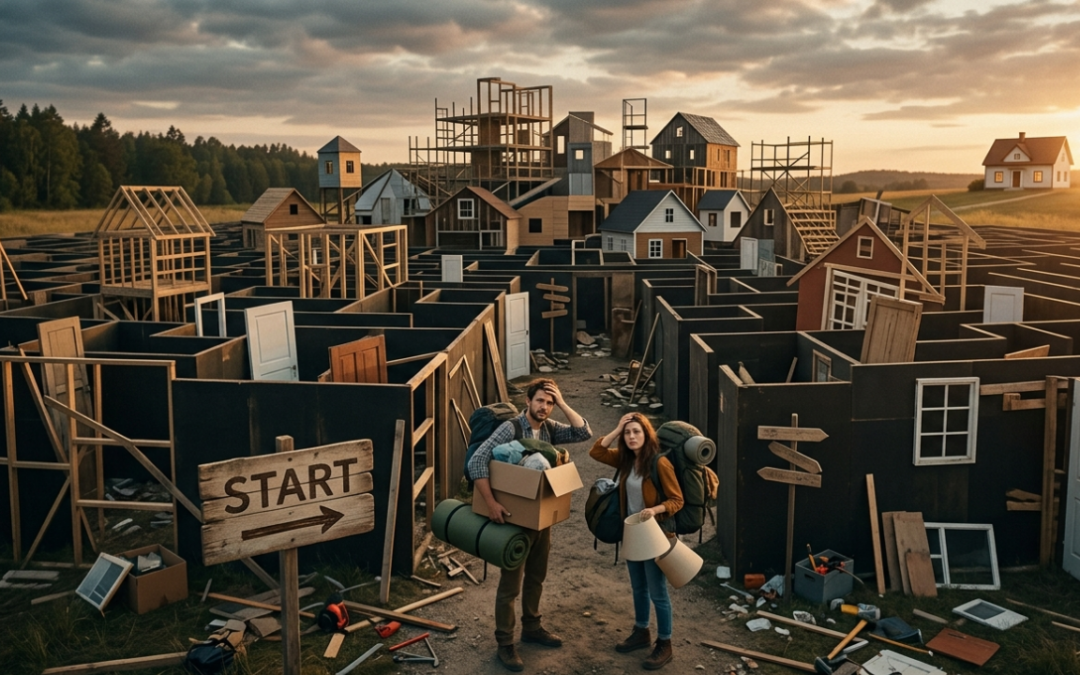
The planning stage of a home build is the part that everyone rushes through to get to the exciting parts.
This is understandable. The exciting parts are genuinely exciting. Choosing a design. Visiting display homes. Imagining which room will go where and how the outdoor area will work and what the kitchen will feel like when it is done. These are the things that motivated you to start the process in the first place, and they are the things that feel like real progress.
Planning — the part that happens before any of that — feels like a preliminary. Something you do briefly to establish the parameters before getting on with the actual project. You sort out roughly what you can spend, you have a general sense of what you want, and then you move forward into the good stuff.
The problem is that the problems people experience later in the build process — the budget surprises, the design regrets, the timeline frustrations, the decisions that in retrospect were obviously the wrong ones — trace back almost universally to insufficient planning at the beginning. Not to bad luck or difficult circumstances or any particular failure during the build itself. To decisions made too quickly, with incomplete information, at the stage when getting them right mattered most and taking a bit more time cost nothing.
This guide is about what adequate planning actually involves, why it is more demanding than most people expect, and what the consequences of underdoing it tend to look like — so that you can approach the planning stage with the right expectations and the right level of attention.
What Planning Actually Involves — Beyond Choosing a Design
The most common misunderstanding about the planning stage is that choosing a design is the main event. Once the design is chosen, the plan is done, and everything else follows from it.
In reality, design selection is fairly late in a genuinely well-done planning process. Before it comes a set of decisions and preparations that are less visually engaging but more consequential.
Understanding your actual financial position — specifically and honestly. This means more than knowing your rough borrowing capacity. It means understanding the realistic total cost of the project you are considering — not just the construction base price but the full picture including site costs, upgrades, items outside the construction contract, approval fees, carrying costs during the build, and the contingency buffer that every build needs. And it means being honest about what you can realistically afford rather than what you hope you can make work.
Many first-time buyers plan around the advertised price of a home design they like plus an estimate of what the land will cost, and treat the resulting sum as their project cost. This approach consistently produces an underestimate, because it does not account for the many real costs that sit between those two figures and that will need to be funded regardless.
Getting an honest full cost picture before committing to any financial plan is not pessimistic — it is the preparation that makes it possible to build a budget that will actually hold up through the project rather than requiring constant revision as additional costs emerge.
Being specific about what you actually need the home to do. Not what you want it to look like — what it needs to do. How many people are in the household and what are their specific requirements? What does not work about where you are currently living that the new home needs to address? What are the non-negotiables — the things that, if the home does not provide them, it will not serve your household well — and what are the things that would be nice to have but that you could live without?
This specificity is what makes design evaluation possible. Without a clear sense of what the home needs to achieve, the design selection process becomes an aesthetic exercise — choosing what looks most appealing — rather than a functional exercise of identifying which design best meets the household’s actual requirements.
Understanding the location and land dimensions of the project. The location decision — whether you are choosing land or working with land you already own — has consequences for the design, the cost, and the long-term value of the project that are significant enough to need careful thought before any other decisions are made around them.
The specific characteristics of a block of land — its orientation, slope, soil conditions, access, planning environment, and proximity to relevant facilities — affect what can be built, what it will cost to build, and how well the finished home will function. Understanding these characteristics before finalising any design is planning. Discovering them during or after the build is expensive.
Choosing a builder before committing to a design. This might seem backwards — surely you choose the design and then find a builder to execute it? — but the builder choice is actually prior to the design in the logical sense that the right builder for your project shapes the design process that follows.
Different builders have different approaches to design, different inclusions specifications, different contract structures, and different track records of quality and communication. Choosing a builder based on proper research — verified credentials, completed work seen in person, past clients spoken to — and then working through the design with them produces a better outcome than falling in love with a design and then finding whoever will build it for the lowest price.
Granton Homes’ design process starts with a thorough brief from the client — understanding how the household lives, what the home needs to achieve, and what the specific requirements are — before any floor plan is developed. This approach produces designs that genuinely serve the household rather than designs that looked good in the catalogue.
The Budget Mistake That Is Easiest to Make and Hardest to Recover From
If there is one planning failure that causes more problems than any other, it is building a financial plan around an incomplete picture of what the project will actually cost.
The base price — the figure on the builder’s website or the package advertisement — covers the construction of the home to a standard specification. It is a genuine figure but it is not the total cost of having a finished, liveable home on a specific block of land. The real total is made up of components that sit around the base construction cost, and these components are real regardless of how the project is structured.
Site costs — the costs of preparing the specific block for construction, which depend on soil conditions, slope, drainage, and access — are the most variable of these components and the one most commonly left out of first-time buyers’ budgets. They cannot be accurately estimated without a proper site assessment, and they can range from modest to very significant depending on what the site assessment reveals.
Upgrades during the selections process add to the base construction cost in ways that accumulate faster than people expect. Each individual upgrade decision seems manageable; the cumulative total across all decisions can be substantially more than the buyer anticipated.
The items outside the construction contract — driveway, fencing, landscaping, window furnishings, utility connections, approval fees — are real costs that need to be funded before the home is liveable and that are consistently excluded from first-time buyers’ initial budgets.
And the contingency — the financial buffer that absorbs the unexpected costs that occur in every build — needs to be in the budget from the beginning rather than appearing as borrowed money when the unexpected inevitably occurs.
Building a budget that genuinely includes all of these components, and that sets a realistic total before any commitments are made, is planning work that many first-time buyers skip in their eagerness to get to the design and selection phase. The consequences — discovering additional costs progressively throughout the process, making decisions under financial pressure that was avoidable, ending up with a total cost that is significantly higher than the plan — are the predictable result of incomplete planning rather than bad luck.
The Emotional Reality of the Planning Stage — What Nobody Tells You
Home building planning involves a sustained period of making consequential decisions with incomplete information, under time pressure that may be real or self-imposed, with significant financial and personal stakes riding on the outcomes.
This is emotionally demanding, and the demand is not evenly distributed across the process. The early planning stage — when you are trying to understand the full scope of the project, build a realistic budget, choose a builder, and develop a design brief — is the most demanding because you are doing all of this without the reference points that come from having done it before.
Most first-time buyers are not prepared for how much uncertainty the planning stage involves, how many decisions need to be made before the design even begins to take shape, and how long the process from initial planning to breaking ground actually takes when done properly.
The emotional responses this produces are normal and predictable. A sense of being overwhelmed by the volume of information and the number of decisions. The temptation to make a decision quickly to resolve the discomfort rather than to gather the information that would make it a good decision. The second-guessing of choices already made when new information arrives that suggests a different choice might have been better. The pressure — internal or external — to move faster than the quality of the decision-making actually allows.
None of these responses are signs of failure. They are the normal experience of navigating a complex, high-stakes process for the first time. Knowing that they are normal, and that the right response is patient persistence rather than either rushing to resolve the discomfort or stopping until the uncertainty disappears, is one of the most useful things any first-time buyer can know going in.
Why Rushing the Planning Stage Creates Problems That Are Expensive to Solve
The decisions made during the planning stage — about budget, about location, about the builder, about the design brief — are the decisions that everything else in the project is built on. Getting them right at the start produces a project that proceeds with reasonable clarity and consistency. Getting them wrong creates problems that surface later at the points where they are most expensive and most disruptive to fix.
A budget that was built around an incomplete cost picture produces financial pressure throughout the build as the real costs reveal themselves progressively. Each new cost that appears above the plan is a problem to be managed rather than a figure that was anticipated and provided for. The stress this generates — and the compromises it forces on decisions that would have been made differently with better initial planning — is the direct cost of rushed early budgeting.
A design chosen quickly — because the display home created a strong emotional response and the planning stage was not used to develop the specific brief that would have allowed a more considered evaluation — produces a home that may not serve the household as well as one chosen with more specific thought. The regret that follows is not about the finishes or the aesthetic choices. It is about the layout decision that creates daily friction, the storage provision that was inadequate from the start, the acoustic arrangement that was not thought through.
A builder chosen without proper research — because the selection process was abbreviated in the rush to move forward — produces a relationship that the project is then stuck with for eighteen months to two years. The consequences of this, if the builder turns out to have quality or communication problems, are experienced every week of the build.
All of these problems trace back to the same source: insufficient time and attention given to the planning stage. The investment in adequate planning — the time spent building a complete budget, developing a specific brief, researching builders properly, understanding the location and land dimensions thoroughly — is one of the most reliable investments available in the home building process.
What Adequate Planning Actually Looks Like in Practice
Adequate planning is not indefinite. There is a point at which planning is sufficiently complete to support good decisions, and at that point further planning produces diminishing returns and the project should move forward.
But adequate planning for a new home build — genuinely adequate, not the abbreviated version that gets compressed by enthusiasm or external pressure — typically takes longer than first-time buyers expect and involves more specific work than browsing home designs and getting a couple of quotes.
Budget planning is adequate when you have a realistic total that includes all the components — base construction, site costs, upgrades, items outside the contract, approval fees, carrying costs, contingency — and when you have confirmed that this total is within what you can realistically fund. Not approximately within range, but confirmed with a lender or broker who has actually assessed your application.
Location and land planning is adequate when you have a clear picture of the specific block’s characteristics — orientation, soil, slope, planning environment — and when you have considered how these characteristics affect the design, the cost, and the long-term livability of the home.
Builder research is adequate when you have verified credentials, seen completed homes, spoken to past clients with specific questions, understood the contract terms, and compared against at least one alternative with enough detail to make a genuinely informed choice rather than just a relative impression.
Design brief development is adequate when you have been specific and honest about what the home needs to do — the functional requirements, the acoustic requirements, the storage requirements, the flexibility requirements — rather than just what it should look like.
When all of these are in place, the design selection and subsequent decisions can be made with the confidence that comes from genuine preparation rather than the hope that things will work out.
The Planning Stage as Investment, Not Overhead
The reframe that is most useful for first-time buyers who are tempted to rush the planning stage is this: planning is not a delay before the real project begins. It is an investment in the quality of everything that follows.
Every hour spent developing a realistic budget before committing to a project prevents the financial stress of discovering costs that were not anticipated. Every conversation with past clients of a builder before choosing them reduces the risk of a difficult relationship that the project is then stuck with. Every specific question worked through in the design brief before the floor plan is drawn reduces the likelihood of a design that creates daily friction rather than daily ease.
The planning stage does not produce anything visible. There is no slab, no frame, no walls going up. The progress is internal — in the quality of the decisions being prepared rather than in any physical output. But the quality of those decisions determines the quality of everything that follows, and the investment in getting them right at the stage when it is cheapest and easiest to do so is one of the most reliable things a first-time buyer can do.
Granton Homes understands this and builds it into how they work with clients. Their initial conversations are not sales presentations — they are planning conversations, designed to help prospective clients understand the full picture of the project they are considering and to make sure the decisions being made are properly informed ones. The time invested in those early conversations, before any commitments are made, produces better projects and better client experiences than rushing through planning to get to the exciting parts.
The Payoff
The first-time buyer who takes the planning stage seriously — who builds a complete budget, researches their builder properly, develops a specific design brief, and understands the location and land dimensions of their project before making any commitments — goes into the subsequent phases of the process with something genuinely valuable.
Not certainty. The home building process involves uncertainty that adequate planning reduces but cannot eliminate.
But confidence. The confidence that comes from having made important decisions with good information rather than rushing them under pressure. The confidence that the budget reflects the real cost. The confidence that the builder was chosen based on evidence rather than impression. The confidence that the design will serve the household rather than just look good.
That confidence makes the inevitable challenges of the subsequent phases manageable rather than overwhelming. It is the direct return on the investment in doing the planning stage properly.
And for a project of this scale — one of the largest financial commitments most people will ever make, producing a home they will live in for years or decades — that return is worth every bit of the time and attention the planning stage requires.