
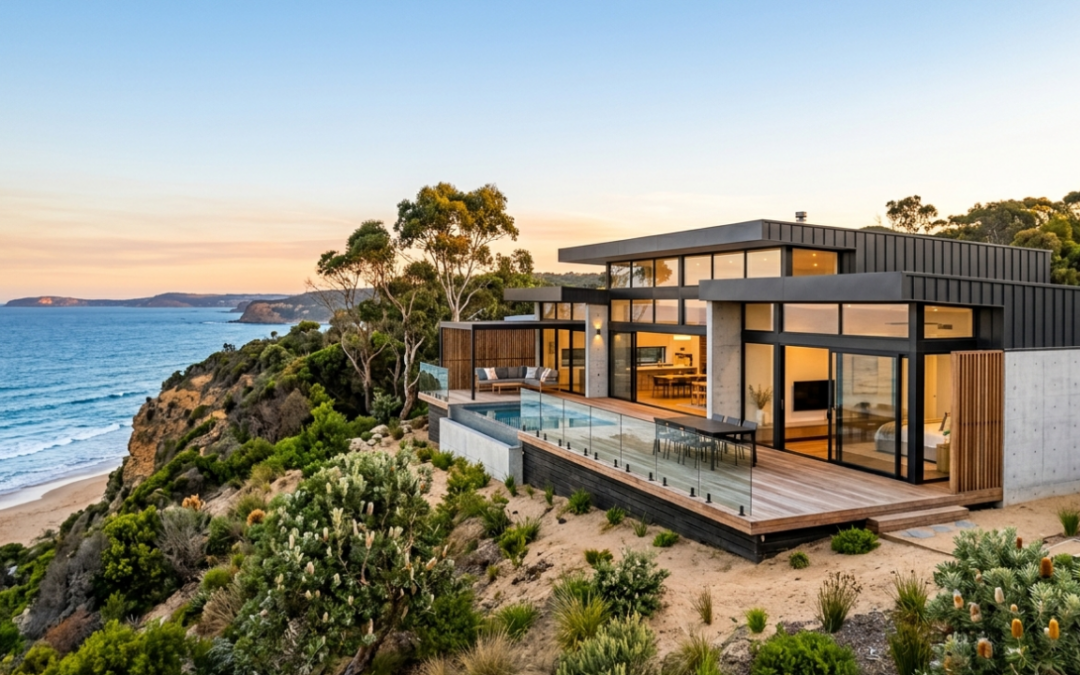
If you’ve ever driven through different Australian neighbourhoods and found yourself admiring one house while barely noticing the next, there’s a good reason for that — architecture style matters more than most people realise. It shapes not just how a home looks from the street, but how it feels to live in every single day.
Australia is genuinely spoilt for choice when it comes to home design. The country’s mix of climates, landscapes, and cultural influences has given rise to a fascinating variety of styles — and for anyone planning a new build, sorting through all of them can feel a little overwhelming. So let’s break it down in plain terms.
Modern Architecture
When people say they want a “modern home,” they usually mean clean lines, open spaces, and a design that doesn’t try too hard. Modern architecture strips away the unnecessary and focuses on what actually works. You’ll typically see large windows that pull in natural light, open-plan living areas, and very little decorative fuss. It’s a great fit for people who like order and simplicity in their surroundings.
Contemporary Style
This one often gets mixed up with modern, but there’s a real difference. Contemporary design isn’t fixed to a particular era — it moves with the times. So while a modern home has a defined aesthetic rooted in a specific period of design history, a contemporary home reflects whatever’s happening in architecture right now. That might mean bold material choices, flexible floor plans, or unexpected layout decisions. It’s a living, evolving style.
Hamptons Style
There’s a reason Hamptons-style homes remain so popular — they just feel good to be in. Inspired by the breezy coastal estates of New York’s East End, this style brings together light colour palettes (think white, soft cream, warm beige), timber detailing, and interiors that feel both spacious and inviting. It’s elegant without being stiff, and relaxed without being lazy. Particularly well-suited to coastal or suburban blocks where there’s room to breathe.
Coastal Style
Coastal design takes a slightly more relaxed approach than Hamptons, prioritising airflow, natural light, and a connection to the outdoors. Neutral tones, open layouts, and the occasional nod to blues and greens make these homes feel calm and fresh. It’s no surprise this style dominates in beachside regions across Queensland, New South Wales, and Western Australia — it’s genuinely built for the Australian way of life.
Traditional Style
Not everyone wants to reinvent the wheel, and that’s perfectly fair. Traditional homes offer a sense of familiarity and solidity — defined rooms, classic layouts, and finishes like brick or stone that have stood the test of time. There’s a reason these homes have been built for generations: they work. They suit families who want distinct spaces for distinct purposes, rather than one big open area trying to do everything at once.
Minimalist Design
Minimalism is less a style and more a philosophy applied to design. The idea is simple: keep only what you need, and make sure everything has a purpose. Neutral colours, clean surfaces, functional furniture — it all adds up to a home that feels genuinely restful rather than just tidy. For people who find clutter mentally exhausting, this kind of space can make a real difference to daily life.
Industrial Style
Industrial homes aren’t for everyone, but for those who love them, they really love them. Exposed brick, raw concrete, metal fixtures, high ceilings — it’s a bold look that leans into the bones of a building rather than hiding them. Once associated mainly with converted warehouses, this style has found its way into new builds too, particularly in urban settings where its honest, no-fuss aesthetic fits right in.
Split-Level Homes
Split-level design is often driven by necessity — specifically, blocks of land that aren’t flat. Rather than fighting the slope, a well-designed split-level home works with it, creating distinct zones on different levels that actually improve how the home functions. The result is a layout with real character, and often better separation between living, sleeping, and entertaining areas than you’d get on a single floor. Builders experienced with challenging sites, like Granton Homes, often recommend this approach when the land calls for it.
Eco-Friendly (Sustainable) Homes
Sustainable design has moved well beyond a niche interest — it’s quickly becoming the sensible default for new builds. Solar panels, passive ventilation, insulation that actually works, and materials chosen with longevity in mind all combine to reduce running costs and environmental impact over the long term. In a country with Australia’s climate and energy costs, building without at least considering sustainability is starting to feel like leaving money on the table.
Custom Hybrid Designs
Increasingly, homeowners aren’t choosing just one style — they’re mixing elements that genuinely appeal to them. Coastal warmth with minimalist restraint. Traditional structure with contemporary finishes. Modern openness with industrial texture. There are no rules that say you can’t, and a good builder will help you work out which combinations actually hold together and which ones clash. Granton Homes, for instance, works with clients to develop custom designs that pull from multiple influences while still feeling cohesive.
So How Do You Actually Choose?
Honestly, the best starting point is your lifestyle — not a mood board. Think about how you actually live. Do you cook for crowds or eat quietly at home? Do you need separate spaces for kids, or does everyone tend to gather in one place? Do you run hot or cold, live near the coast or inland, love entertaining outdoors or prefer staying in?
Budget and block shape matter too. Some styles suit certain land sizes and orientations better than others, and a design that looks beautiful on paper can feel wrong once it’s built if it doesn’t suit the site.
A Final Word
Australia’s architectural variety is one of its genuine strengths. Whether you’re drawn to the ease of coastal living, the clarity of minimalism, or the warmth of a traditional layout, there’s a style — or a combination of styles — that can be shaped around the way you want to live.
The home you build should feel like yours. Not a showroom, not a trend piece — something that works for your life, your family, and your future. Take your time with the decision, ask plenty of questions, and don’t be afraid to push back until the design feels exactly right.