
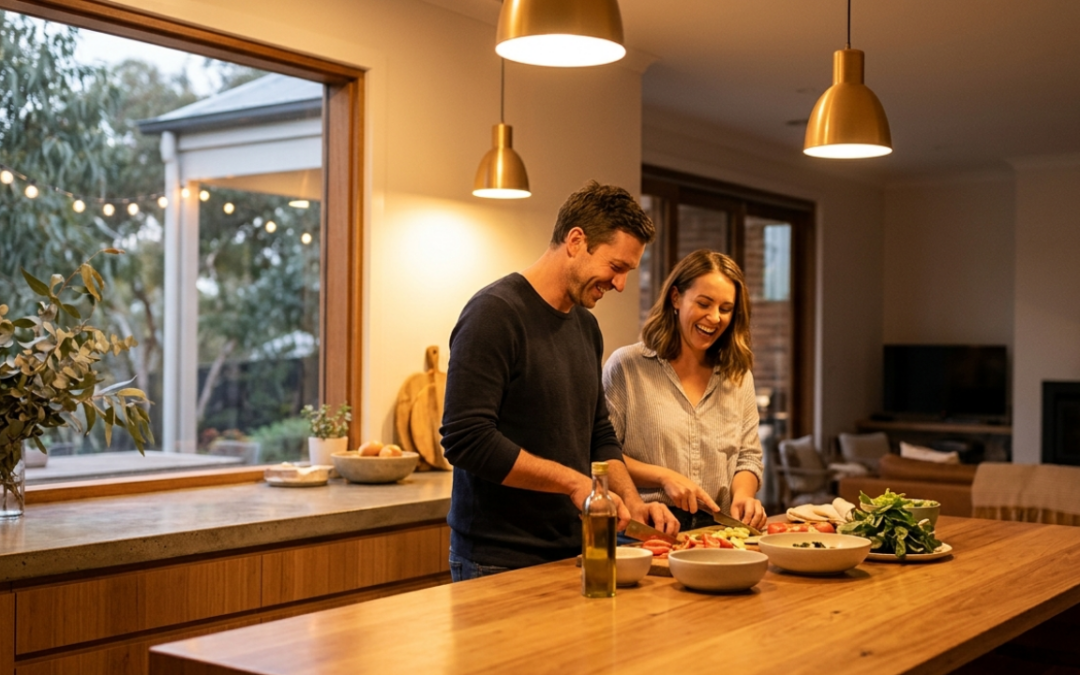
When people first start searching for a new home, the process tends to follow a fairly predictable path. Floor plans get compared. Room sizes get measured against current needs. Home designs get evaluated for their visual appeal. Modern features get added to wishlists. All of that is a natural and reasonable starting point — those things genuinely matter.
But something interesting tends to happen to people once they have actually been living in a home for a while. The things that made the biggest impression during the search process are often not the things that end up mattering most in daily life. And the things that turn out to matter most are sometimes ones they barely thought about at the beginning.
A home is not just a collection of rooms and square metres. It is the place where real life unfolds every day — and what makes it feel genuinely good to live in is often more subtle and more practical than the features that look impressive in a brochure.
A Home That Works for Real Life Is Worth More Than One That Looks Good
Most buyers spend a significant amount of time researching homes online before they visit anything in person. They scroll through photos, save floor plans, watch walkthrough videos, and build up a mental picture of what their ideal home looks like. That research has real value — but it also has a tendency to focus attention on the visual and the impressive rather than the practical and the everyday.
Once daily life actually begins in a home, the hierarchy of what matters tends to shift fairly quickly. The feature that looked stunning in a photo fades into the background as routine takes over. What comes to the front instead are the things that are engaged with every single day — often multiple times a day.
How easy it is to move between rooms without the layout creating unnecessary friction. Whether there is enough storage to keep the home feeling organised without constant effort. How natural light fills the living areas throughout the day and how that affects the atmosphere of the spaces you spend the most time in. Whether the main living areas are genuinely comfortable to be in for long stretches rather than just impressive to walk through.
These are not the features that generate the most excitement during the research phase. But they are the features that shape how good a home feels to live in across months and years of real daily life.
Why the Floor Plan Deserves More Attention Than It Often Gets
One of the most important decisions in building or choosing a home is also one that buyers sometimes underestimate — the floor plan. Two homes of identical size can feel completely different to live in depending on how thoughtfully the layout has been designed.
A well-conceived floor plan creates a natural flow through the home that makes daily movement feel intuitive and easy. It maximises the usable quality of the space rather than just the technical square metreage. It thinks about how different areas of the home relate to each other — how the kitchen connects to the living and dining areas, how bedrooms are positioned relative to the main living spaces, how the home engages with outdoor areas.
These relationships between spaces have a real impact on how comfortable and functional a home feels. And they are something you really only fully appreciate once you are living with them every day.
This is why many Australians now spend considerably more time studying floor plans than they do comparing decorative features. Granton Homes Australia offers a range of layouts designed with different lifestyle needs and family configurations in mind — reflecting an understanding that the floor plan is not just a technical document but the foundation of how a home actually lives.
Comfort Has Moved to the Centre of What Buyers Want
Something has shifted in the values driving home building decisions across Australia, and it is showing up clearly in what buyers are prioritising. The chase for every new design trend — the constant pressure to have the most modern, most impressive, most up-to-date home possible — is giving way to something that feels more lasting and more personally meaningful.
Comfort. The genuine, everyday kind that comes from living in a home that feels welcoming, works well for the household’s real routines, and does not create unnecessary friction or stress.
Buyers are paying more attention to whether a home will actually feel good to be in at the end of a long day. Whether it supports family life in a practical and relaxed way. Whether it remains enjoyable to live in not just when it is new and exciting but years later when it has become the familiar backdrop of daily existence.
That is a healthier and more honest thing to optimise for — and it is producing homes that hold up better over time.
Natural Light Does More Than Most People Expect
Ask homeowners what they appreciate most about their home after a few years of living in it, and natural light comes up with remarkable consistency. It is one of those features that is easy to undervalue during the research phase — and one that quickly reveals its importance once you are living with it every day.
Spaces filled with good natural light feel more generous, more welcoming, and more comfortable to spend time in. The atmosphere of a home is lifted in a way that artificial lighting simply cannot replicate. The difference between a main living area that gets great light throughout the day and one that does not is felt every single morning and afternoon — and that adds up to an enormous difference in the quality of the lived experience over time.
Getting natural light right is largely a matter of thoughtful design decisions made early — orientation, window placement, how spaces are arranged relative to the sun’s path. These decisions are easy and inexpensive to get right at the planning stage. They are much harder and more costly to address after the home is built. It is one of the clearest examples of why design quality matters so much in the long run.
The Value of Spaces That Can Change With You
One of the practical realities of building a home is that life does not stay the same. The household that moves in on day one may look quite different from the household living there five or ten years later. Children arrive or grow up and leave. Work arrangements change. Hobbies evolve. The way a family uses its home at one stage of life can be quite different from how it uses it at another.
Homes that are designed with some degree of flexibility built in — spaces that can genuinely serve different purposes as needs change — hold up far better across those transitions than homes that are rigidly optimised for a single moment in time.
A spare bedroom that can become a home office when remote work demands increase. A study or activity area that can adapt as children move through different stages. A living configuration that can flex depending on how the family chooses to use the space at different points. These flexible spaces add lasting value because they allow the home to keep fitting the life being lived in it rather than becoming limiting.
Storage Shapes the Daily Experience More Than People Realise
Of all the practical features that influence how enjoyable a home is to live in, storage might be the one most consistently underestimated during the buying or building process — and most consistently appreciated afterwards.
A home without enough well-placed storage tends to feel cluttered and disorganised in ways that create real ongoing low-level stress. Things accumulate without good places to go. Spaces that should feel open start to feel crowded. The mental load of managing a home that lacks proper storage is something people often do not recognise until they experience a home that has it right.
Walk-in wardrobes that genuinely accommodate how a family stores and accesses their clothing and belongings. Kitchen pantry storage that keeps things organised and accessible without constant effort. Garage storage that handles the practical requirements of household life without turning the garage into an unusable space. A laundry that is designed to make one of the more repetitive household tasks as efficient as possible.
These are not glamorous features. But they are the ones that make a home genuinely pleasant to live in day after day — and they are worth thinking about carefully from the very beginning of the design process.
Thinking About Where Life Is Going, Not Just Where It Is Now
Buyers who end up most satisfied with their homes over the long term tend to share a common characteristic — they were thinking about the future as well as the present when they made their decision. They were not just asking what the home needs to do right now. They were asking what it might need to do in five or ten years as well.
Family plans that might change the number of people in the home. Work arrangements that could shift toward more time spent at home. Lifestyle priorities that evolve as different life stages are navigated. The flexibility the home will offer if any of those changes come to pass.
None of that requires a crystal ball. It just requires asking the questions honestly during the planning phase — when adjustments are easy and inexpensive to make — rather than discovering the answers after the home is built.
Why Simple and Functional Is Winning
There is a growing appreciation among Australian homebuyers for home designs that are clean, functional, and straightforward rather than elaborate and complicated. And the reasons behind that appreciation are practical ones.
Simpler homes are easier and less expensive to maintain. They age more gracefully because they are not tied to a specific moment’s aesthetic trends. They tend to feel calmer and more organised to live in because they are not asking more of the household than the household wants to give. And they often provide a genuinely better daily living experience than more elaborate homes that look impressive but create ongoing demands.
Simple and functional is not a compromise. Done well, it is the product of more careful and more intelligent thinking about what a home actually needs to do — and it consistently produces spaces that people feel genuinely at home in for a very long time.
Final Thought
The best homes are not always the largest or the most expensively finished. They are the ones that feel right to live in. The ones that make daily life feel a little easier, a little more comfortable, and a little more like the life you actually want to be living.
Whether you are researching Granton Homes Australia or comparing a range of builders and designs, the question worth keeping at the centre of every decision is not just how it looks — but how it will actually feel to live in, day after day, across the full reality of daily life.
Practical design. Genuine comfort. Spaces that work well for real life and keep working well as that life evolves. That is what makes a house feel like home.
And it is what Granton Homes Australia is committed to helping every client build — a home that does not just look right on paper, but feels genuinely right to live in for years to come.