
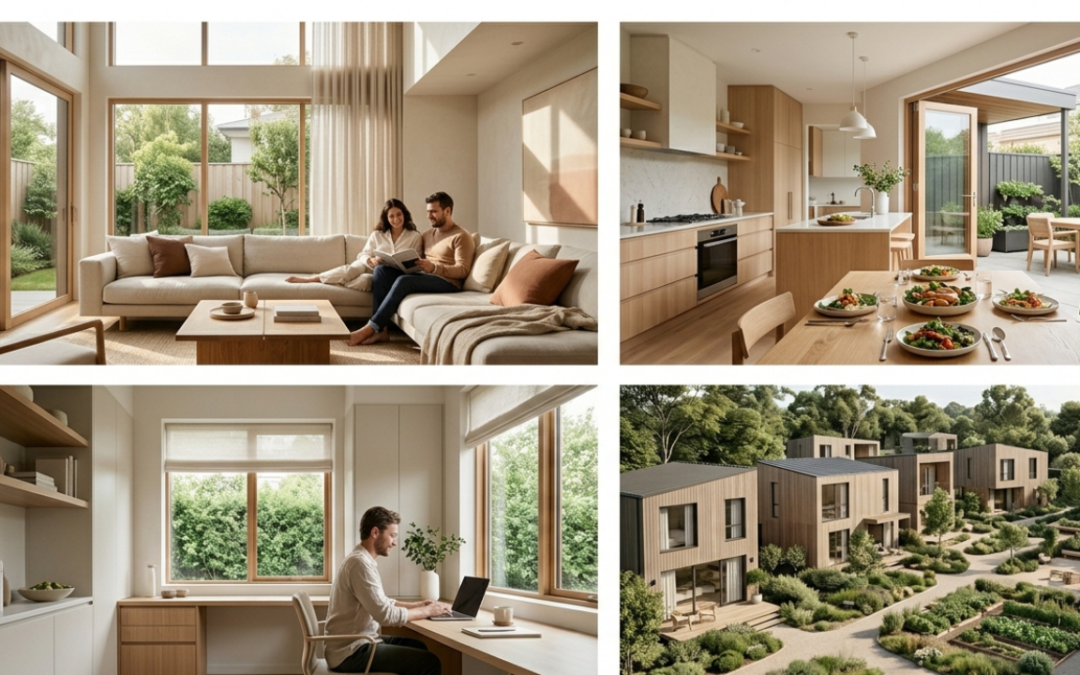
For a long time, the logic behind home buying decisions felt fairly simple and widely accepted. More space meant more comfort. More rooms meant more value. More upgrades meant more happiness. Bigger was better, almost by definition, and a lot of Australians built their housing decisions around that assumption.
But in 2026, that logic is being questioned in a meaningful way — and the questions are coming from buyers themselves, not from outside pressure.
Instead of asking how big a home is, more people are asking something that actually matters more. Will this home make everyday life easier and more enjoyable? That shift in the question being asked is quietly reshaping how homes are chosen across the country.
Life Happens Inside the Home, Not on the Specification Sheet
The early stages of researching a home tend to be dominated by numbers. Square metres get compared. Bedroom and bathroom counts get evaluated. Upgrade lists get reviewed and measured against other builders. These are natural and reasonable starting points — they give a quick sense of what is on offer and how options compare at a surface level.
But something tends to happen as buyers move deeper into the process and start spending real time visiting homes, walking through spaces, and genuinely imagining what daily life will look like inside them. The numbers start to matter less. The feel of the home starts to matter more.
How natural the layout feels when you are moving through it. Whether the living spaces are genuinely comfortable to spend long stretches of time in. How well the home supports the rhythms and routines that make up actual everyday life rather than the idealised version that looks good in a brochure.
People do not live in a floor plan. They live in a home. And the experience of living in a space is shaped by qualities that no specification sheet can fully capture.
The Most Valuable Features Are Not Always the Most Expensive Ones
Here is something that a large number of homeowners discover after a year or two of living in their homes. The features they end up appreciating most are often not the ones they were most excited about during the buying or building process. And the things that make the biggest difference to daily comfort are sometimes surprisingly unglamorous.
Natural light is one of the clearest examples. During an inspection or a display home visit, it is easy to focus on the kitchen design or the master bedroom configuration and barely register how the light moves through the main living areas. But once you are living somewhere, the quality of natural light becomes something you notice and feel every single day. A room that is filled with good natural light feels warmer, more open, and more genuinely pleasant to spend time in. It lifts the atmosphere of the home in ways that are hard to manufacture artificially and impossible to fully appreciate until you are living with them.
Storage is another one. Nobody walks into a display home and gets excited about the pantry organisation or the built-in wardrobe configuration. But ask any homeowner what they wish they had more of — or what they are most grateful they planned well — and storage consistently comes near the top. A home with genuinely good storage stays organised without effort. It feels calmer and less cluttered. It removes a layer of low-level daily friction that builds up in surprising ways when it is absent.
And then there is layout — the fundamental logic of how a home is put together and how movement through it actually feels. A layout that flows naturally makes daily life feel effortless in a way that is hard to articulate until you have experienced the contrast. A layout that does not flow creates small inefficiencies and awkwardnesses that compound over time into something that genuinely affects how pleasant the home is to live in.
These practical features — light, storage, layout — often provide more long-term satisfaction than any luxury upgrade. They are worth thinking about carefully from the very beginning of the process.
Modern Families Need Homes That Can Change With Them
The way Australian families live today is genuinely different from how previous generations lived. Remote work has shifted from an exception to a normal part of many households’ weekly reality. Online study has become a regular part of family life. Home-based businesses are more common than they have ever been. The line between personal and professional life that once mapped neatly onto different physical spaces has blurred considerably.
All of that means a home needs to do more than it once did — and needs to be able to do different things at different times depending on what the household requires at any given moment.
Flexibility has become a real and practical priority as a result. A spare bedroom that can genuinely function as a home office when needed rather than just technically fitting a desk in the corner. A study or activity space that adapts as children move through different ages and requirements. Living areas that can be used in different ways depending on what the day demands.
Homes designed with genuine flexibility built in tend to provide far more value over the full span of ownership. They keep working well as life changes rather than requiring expensive modifications every time circumstances shift.
Why Taking More Time to Research Pays Off
The amount of research Australian homebuyers are doing before making any serious commitment has increased significantly. And it is producing better outcomes — not because more information is automatically better, but because the right kind of research done with genuine focus helps buyers understand what they actually need rather than just what initially appeals.
Comparing builders across a range of factors rather than just price or promotion. Visiting display homes multiple times with different questions in mind at different stages. Reading floor plans carefully with real daily life scenarios in mind rather than just aesthetically. Understanding what current buyers and recent homeowners value and what they wish they had done differently.
That kind of thorough, patient research tends to produce buyers who arrive at their decision with genuine clarity rather than excitement mixed with uncertainty. The decisions they make are more grounded in honest self-awareness about lifestyle needs — and they tend to feel much more confident about those decisions over the long term.
Simplicity Has Become Its Own Kind of Luxury
The definition of luxury in housing is quietly changing. For a long time, luxury meant having more — more rooms, more features, more upgrades, more of everything. A home that offered abundance was considered the aspirational standard.
But for a growing number of Australians, that definition no longer resonates. What feels genuinely luxurious now is something quite different. Less ongoing maintenance that demands time, money, and attention. A home that is easy to keep on top of without it becoming a second job. Better functionality that makes daily routines feel smooth rather than complicated. More free time because the home is not constantly generating work and expense just to keep it at the standard it was built to.
A home that supports a genuinely balanced lifestyle — one that gives rather than takes — can feel far more valuable than an elaborate home packed with features that look impressive but add more burden than they relieve. That shift in what luxury means is real, and it is influencing decisions across the market.
Thinking About Tomorrow as Well as Today
One of the clearest markers of good home buying decisions is how far ahead the buyer was thinking when they made them. The best home choices are rarely just about what is needed right now — they are about what will still be needed and appreciated five, ten, and fifteen years from now.
Will this home still genuinely suit the household if circumstances change in the ways they realistically might? Can it adapt to a growing family, changing work arrangements, or shifting lifestyle priorities without requiring major and expensive interventions? Will it remain comfortable and practical across the full span of years the family is likely to spend there?
These questions are worth sitting with honestly during the research and planning phase — when the answers can still meaningfully shape the decisions being made. Homes chosen with genuine long-term thinking consistently deliver more sustained satisfaction than homes chosen purely for the present moment.
Where Home Ownership Is Heading
The direction the Australian housing market is moving in feels clear when you look at what buyers are genuinely prioritising today. Impressive appearances and extensive feature lists are giving way to something more personal and more lasting. Comfort. Practicality. Flexibility. Homes that genuinely improve quality of life rather than simply signalling status or matching trends.
Buyers are becoming less interested in what their home says to other people and more interested in what it does for the people living in it every day. That shift in focus is producing a market that rewards good design, thoughtful planning, and genuine liveability more than it ever has before.
And there is no sign of that trend reversing. If anything, it is deepening as more Australians experience firsthand the difference between a home that looks impressive and a home that actually feels good to live in.
Final Thought
The best home has never really been the largest or the most expensive one. It has always been the one that fits the life being lived inside it — that makes daily routines feel easier, that remains comfortable and enjoyable long after the initial excitement has settled, and that keeps working well as life grows and changes over the years.
More Australians are understanding that clearly now. And they are making housing decisions that reflect it — choosing better living over simply bigger living, and finding that the homes they end up in feel genuinely right in a way that impressive-but-impractical homes rarely do.
Because at the end of the day, a home should improve your life. Not complicate it, not stretch it financially beyond what is comfortable, not demand more than you want to give. Just quietly and consistently make the days inside it feel a little better.
That is what Granton Homes is committed to delivering — homes designed around real comfort, genuine practicality, and a lifestyle that feels worth coming home to every single day.