
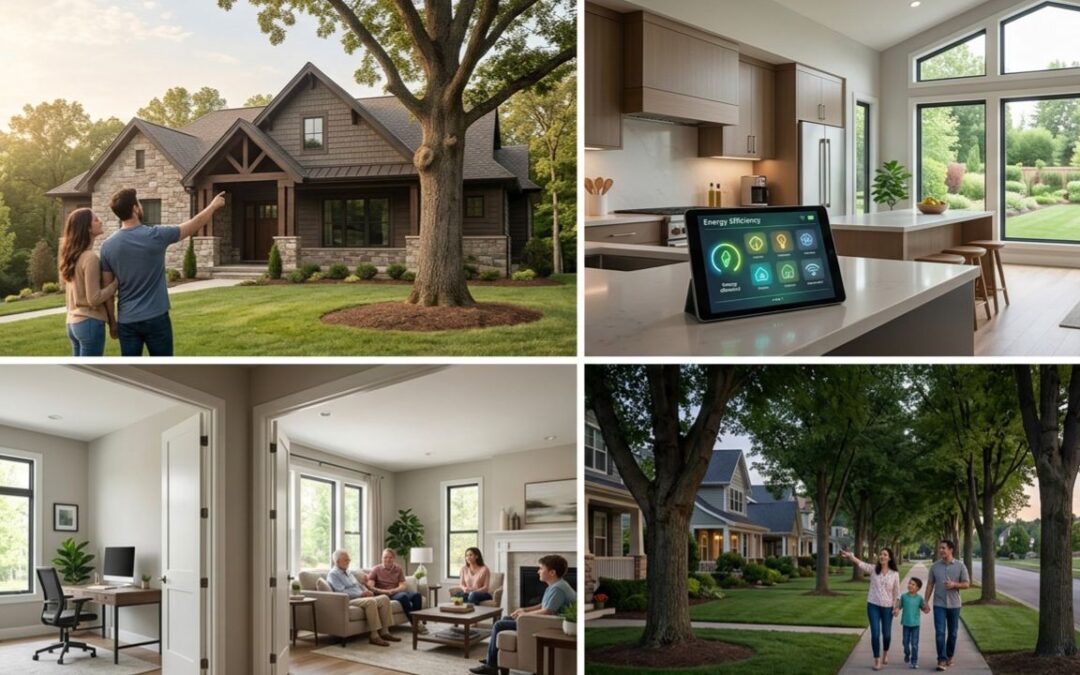
Buying a home is one of those experiences that manages to be exciting and overwhelming at the same time. The options are endless, the decisions are significant, and everywhere you look there is something new competing for attention — a design trend, a feature upgrade, a style that feels fresh and current and impossible to ignore.
It is easy, in that environment, to make decisions based on what looks impressive right now. And it is easy to discover, a few years later, that what looked impressive right now has faded into the background while other things — quieter, more practical things — have revealed themselves as what actually matters.
More Australian homebuyers are waking up to that pattern before they make their decision rather than after. They are taking a longer view. And it is producing meaningfully better outcomes.
What Grabs Attention First Is Not Always What Lasts
Walk into any display home or scroll through any online property gallery and the things that catch the eye immediately are predictable. Large, beautifully fitted kitchens. Stylish finishes that photograph well. Eye-catching design details that feel current and considered. These create a genuine and understandable first impression — and they are designed to do exactly that.
But talk to people who have been living in their homes for three, five, or ten years and a different picture tends to emerge. The features they genuinely appreciate most are rarely the ones that made the strongest initial impact. The kitchen they fell in love with during the inspection is just the kitchen now — taken for granted in the way that things are when they become part of daily routine. What has come to the front instead are the things they may barely have thought about during the search.
How well the layout flows for the way the household actually moves through its day. Whether there is enough genuinely practical storage that keeps the home feeling organised without constant effort. How much natural light fills the main living areas and how much that affects the atmosphere of the whole space. Whether the home is easy to maintain or generates ongoing demands that nobody particularly wants to deal with.
These are the features that shape the real, lived experience of a home across years of daily life. And they deserve considerably more attention during the search process than they typically receive.
Why Good Design Is About Function, Not Just Form
There is a version of home design that is primarily about creating a strong visual impression. And there is a version that is primarily about making daily life work better for the people inside the home. The best design does both. But when those two goals come into tension, the second one matters more in the long run.
A practical home — one where the layout makes intuitive sense, where the kitchen is positioned to make meal preparation feel easy rather than complicated, where storage is genuinely adequate and thoughtfully placed, where rooms relate to each other in ways that support natural daily flow — makes everyday life feel better in ways that accumulate quietly across months and years.
These are not always the dramatic design choices that generate excitement during an inspection. But they are the choices that people are grateful for every ordinary morning and evening, across the full span of time they spend in their home. And that is worth a great deal more than a feature that looked impressive once and then became invisible.
This is one reason that thoughtful buyers consistently spend more time studying floor plans than comparing decorative details. The floor plan is the foundation of how everything else functions — and getting it right matters enormously.
Flexible Spaces Have Become a Real Priority
The way Australians live and work has changed significantly, and the homes that serve people best are the ones that have adapted to reflect that reality.
More people work from home today than at any previous point — not as a temporary arrangement, but as an ongoing and often permanent feature of their working life. More household members are spending more time inside the home across more different types of activity. Study, work, exercise, hobbies, relaxation, and family life are all happening within the same four walls, often simultaneously.
That creates genuine demand for spaces that can flex and adapt depending on what the household needs at any given time. A spare bedroom that can function effectively as a home office when that is what is required — with proper lighting, adequate space, and a sense of separation from household activity — and transition comfortably to a guest room or another purpose when circumstances change. A study or activity area that grows and adapts alongside the children using it. Living spaces that can be used differently at different stages of family life.
Homes designed with this kind of genuine flexibility built in tend to remain useful and comfortable across the full span of ownership rather than starting to feel limiting as life inevitably evolves in directions that were not fully anticipated at the time of building.
Research Has Become Central to the Process
One of the more noticeable changes in how Australians approach home buying is the sheer amount of research that now happens before any serious commitment is made. Buyers today arrive at the decision-making stage considerably better informed than previous generations were — and that better information is producing better decisions.
The research process typically unfolds over months rather than weeks. Floor plans get studied carefully across multiple builders and design options. Display homes get visited and revisited with evolving and increasingly specific questions in mind. Builder reviews and buyer experiences get read in detail. Housing forums and community discussions provide access to the collective wisdom of people who have already been through the process and have genuinely useful things to say about what they wish they had done differently.
During this process, many buyers include companies like Granton Homes Australia in their comparisons — exploring the design options, floor plans, and home styles available and evaluating how they stack up against what the household genuinely needs. The goal driving all of that research is not simply to find a house. It is to find a home that will genuinely fit long-term needs and keep doing so well across the years that follow.
That is a more sophisticated objective than most previous generations brought to the search. And it is producing more sophisticated and more satisfying outcomes.
Comfort Has Become the Real Definition of Luxury
The meaning of luxury in housing has quietly but meaningfully shifted in recent years. For a long time, luxury meant scale and elaboration — bigger homes, more upgrades, more of everything. The most expensive option was assumed to be the best one.
But experience has taught a more nuanced lesson, and more Australians are arriving at it. What genuinely feels luxurious — what actually improves daily quality of life in a lasting way — is often quite different from what the traditional definition suggested.
A home that is comfortable to live in every day without demanding constant effort and attention. Maintenance requirements that are manageable without consuming disproportionate amounts of time and money. Functionality that makes daily routines feel easy and natural. Natural light that lifts the atmosphere of the main living areas throughout the day in a way that no amount of artificial lighting quite replicates. A practical layout that supports the household’s real rhythms rather than working against them.
These are the things that genuinely feel luxurious once you are living with them. And they often provide more sustained satisfaction than expensive upgrades that looked impressive during the inspection but are rarely engaged with in the reality of daily life.
Thinking Further Ahead Makes Better Decisions
One of the more consistent patterns in housing regret involves buyers who focused entirely on current needs without giving enough thought to where life might go. The home that fit perfectly for the household as it was at the time of building started to feel limiting or frustrating as circumstances changed — and changing it meant expense and disruption that proper planning might have avoided.
Buyers who think further ahead during the search process consistently make better decisions. They are asking not just what the home needs to do today but what it might need to do in five or ten years. Will it still work well if the family grows or changes configuration? Can it accommodate shifting work arrangements without requiring significant and costly modifications? Does the design offer enough flexibility to remain genuinely right across different life stages?
These questions take more time and more honest reflection to work through properly. But they are among the most valuable ones a buyer can ask — because the answers shape decisions that will be lived with across many years, and getting them right makes an enormous difference to long-term satisfaction.
Final Thought
The Australian housing market is being shaped by buyers who are more thoughtful, more informed, and more focused on long-term value than perhaps any previous generation. The shift away from short-term trend appeal toward genuine comfort, functionality, and lasting liveability is real — and it is producing better homes and more satisfied homeowners.
Whether researching Granton Homes Australia or comparing a range of other builders and options, the buyers who end up most satisfied are consistently the ones who looked past the first impression and asked harder, more honest questions about how the home would actually perform across the full reality of years of daily living.
Because the best home is not the one that looks most impressive on the day you first walk through it. It is the one that keeps feeling right — comfortable, practical, and genuinely suited to your life — long after the excitement of moving in has settled into the quiet satisfaction of actually being home.