
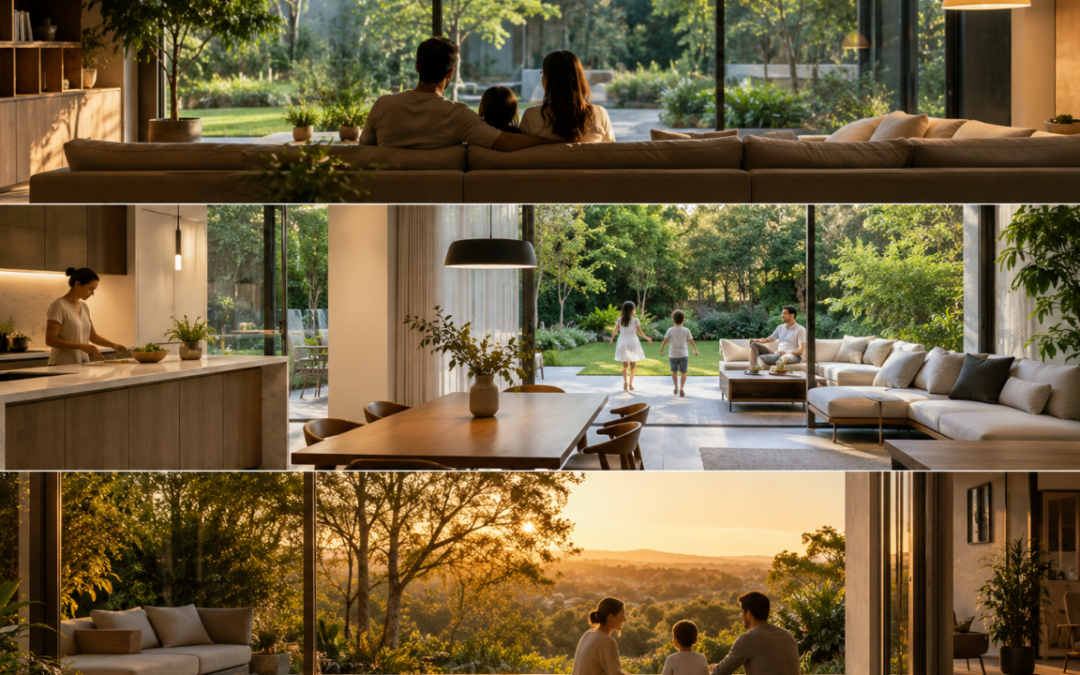
When most people begin their search for a new home, their attention goes naturally to what they can see. A kitchen that looks stunning. A modern exterior that makes a strong first impression. A stylish living room that feels exciting to imagine yourself in. An impressive floor plan that seems to offer everything on the wishlist.
All of those things genuinely matter. But many homeowners, after spending a year or two actually living in their homes, arrive at a realisation that changes how they think about what makes a home great. The features that impressed them most during the search are often not the ones that end up mattering most in daily life. And the homes people love most deeply are usually the ones that fit naturally and effortlessly into the way they actually live.
That understanding is changing how a growing number of Australians approach the search for a home — and it is producing better decisions.
A Home Should Work for the Life Being Lived in It
Every household is different in ways that matter enormously when it comes to what a home needs to do. A family with young children needs different things from their space than a couple who works from home full time. Someone who loves entertaining on weekends has different priorities than someone who values quiet and privacy above everything else. A household that is growing has different requirements than one that is starting to simplify.
There is no universally perfect home design. There is only the home that fits a specific household’s specific way of living — now and into the future.
More buyers are starting from that honest recognition rather than from a generic wishlist. Instead of asking how many upgrades a home has or how it compares to the most impressive display home they visited, they are asking a more personal and more useful question. Will this home actually make my daily life easier? Will it support the way my family really lives rather than the way we imagine we should live?
That shift in the starting question consistently leads to a shift in the final decision — toward homes that feel genuinely right rather than just impressively featured.
The Details That End Up Mattering Most
There is a consistent gap between what grabs attention during a home inspection and what ends up being most appreciated after a few years of real living. And understanding that gap before making a decision is enormously valuable.
The big, visual features — the statement kitchen, the grand entrance, the luxury bathroom — create strong first impressions. They are designed to. But first impressions are transient. What remains, day after day and year after year, are the quieter details that shape how comfortable and functional the home actually is to live in.
Natural light is one of the most powerful examples. It is easy to overlook during a daytime inspection when lighting conditions happen to be good. But the quality of natural light throughout a home — how it moves through the main living areas at different times of day, how it affects the atmosphere of the spaces you spend the most time in — turns out to have an enormous influence on how the home feels to live in across every season. Bright, naturally lit spaces feel more welcoming, more generous, and more genuinely comfortable than spaces of identical dimensions that lack good light. That difference is felt every single morning.
Storage is another one that consistently surprises buyers with its importance. During the excitement of the search process, storage rarely generates the same enthusiasm as an impressive kitchen or a stylish master bedroom. But once daily life has begun and the household’s real accumulation of possessions, hobbies, and practical requirements is being managed, the quality and placement of storage becomes one of the most significant factors in how organised, calm, and enjoyable the home feels. A home with genuinely good storage stays on top of itself. A home that lacks it creates a low-level friction that compounds over time.
And then there is room placement — the thoughtfulness behind how different spaces relate to each other and how they support the flow of daily routines. A home where the layout makes intuitive sense for how the household actually moves through its day feels effortless in a way that is hard to articulate but immediately felt. A home where the layout creates unnecessary detours or awkward transitions makes daily life feel slightly more effortful than it needs to be, in ways that add up over years.
These details do not always stand out immediately. But they are the ones homeowners appreciate most deeply and most consistently once they are actually living with them.
Comfort Cannot Be Measured on a Specification Sheet — But It Is Everything
Comfort is one of those qualities that is genuinely difficult to quantify. You cannot read it off a floor plan. You cannot calculate it from a list of inclusions. And yet it is one of the most important things a home can offer — and one of the clearest measures of whether a home is actually successful.
Comfort in a home comes from the accumulation of many things working together well. A layout that makes sense for the way the household lives. Living spaces that are sized and proportioned to feel genuinely pleasant to spend time in rather than just impressive to walk through. Lighting that creates the right atmosphere in different rooms at different times of day. Rooms that serve clear purposes and do them well rather than existing simply to add to the room count.
A home that is genuinely comfortable encourages the people inside it to actually enjoy being there. It becomes a place of restoration and ease rather than a backdrop for stress and effort. And that quality — that sense of a home genuinely working for you — is what transforms a house from a property into something that feels deeply personal and valuable.
Purpose-Driven Design Is Replacing Feature-Driven Design
One of the more noticeable shifts in how Australians are thinking about home design is the move away from filling homes with features for the sake of having them. The question is shifting from what can we include to what does this home actually need — and the answer to that second question is usually more focused and more considered than the answer to the first.
Purpose-driven design means that every room has a genuine function that serves the people living there. Every space adds real value to daily life rather than simply existing as evidence of a larger budget. Every feature earns its place by improving how the home is actually used and experienced.
Homes designed this way tend to feel better in practice than homes designed around an impressive feature list. They are more coherent, more comfortable, and more genuinely enjoyable to live in. And they remain so over time — not just for the first year when everything is new and exciting, but across the full long stretch of daily living that follows.
Flexibility Is Worth Planning For
Life does not stay the same for long. The household that moves into a home on day one may look quite different from the household living there five years later. Work arrangements change. Families grow or shift. Priorities evolve in ways that are sometimes predictable and sometimes not.
Homes that are designed with genuine flexibility in mind — spaces that can honestly serve different purposes as the household’s needs change — hold their value and their usefulness across those transitions in a way that inflexible homes simply cannot.
A spare room that can genuinely function as a home office when that is what is needed, and comfortably transition to a guest bedroom or a nursery when circumstances change. A study or activity area that grows and adapts alongside the children using it. Living spaces that can be used in different configurations depending on what the family needs at any given stage.
This kind of flexibility is not just convenient — it is a form of genuine long-term value that is worth thinking about carefully during the design process. Homes that can grow and adapt alongside the people in them tend to remain right for much longer.
Long-Term Thinking Produces Long-Term Satisfaction
The buyers who end up most satisfied with their homes over the long term share a common quality — they were thinking ahead when they made their decision, not just focusing on the present moment. They were asking not just what the home needs to do today, but what it will need to do as life moves forward.
Will this home still work well for us if the family grows? Can it accommodate shifting work arrangements without requiring expensive modifications? Does the design offer enough flexibility to remain genuinely right across different life stages rather than fitting perfectly for now and becoming limiting later?
These questions take more time and more honest self-awareness to answer. But the homes chosen by people who ask them tend to age far better — remaining genuinely suitable and genuinely satisfying across the full span of ownership rather than prompting regret sooner than expected.
Why Simplicity Is an Advantage, Not a Compromise
There is a persistent idea that choosing a simpler home is somehow settling — that it represents a reduction in ambition or a failure to get everything possible. But experience consistently tells a different story.
Simpler, well-designed homes are easier to maintain without that maintenance becoming a significant ongoing burden. They are easier to keep organised because they are not generating more chaos than the household can comfortably manage. They are easier to actually enjoy because they are not constantly demanding time, money, and energy just to keep functioning at the standard they were built to.
In today’s world, where most households are already managing significant complexity across work, family, and personal life, a home that reduces rather than adds to that load is genuinely valuable. Balance — the sense of having a home that supports life rather than competing with it — is something more Australians are actively seeking. And simplicity, done well, is one of the most reliable paths to it.
A Home That Keeps Working for You
The measure of a truly successful home is not how it performs on day one. It is how it performs across years of real living — whether it continues to feel right, comfortable, and genuinely well-suited to the people inside it long after the initial excitement of moving in has given way to the familiar rhythms of everyday life.
That kind of sustained performance comes from homes that were designed with genuine care and genuine intelligence — around how people actually live, what they actually need, and what will continue to serve them well as their lives grow and change over time.
Final Thought
The best homes are not the ones with the most impressive upgrades or the largest floor plans. They are the ones that fit the people living in them — that support daily life, grow alongside the household, and continue to feel genuinely right and genuinely comfortable year after year.
When buyers focus on people rather than on property features — on how the home will actually feel to live in rather than how it looks in a brochure — they consistently make better decisions. Decisions that hold up under the full weight of daily reality rather than fading once the novelty wears off.
Because what truly turns a house into a home is not what it looks like. It is how it makes the people inside it feel every single day.
That is the belief that drives everything at Granton Homes — designing and building homes that are genuinely centred on the people who will live in them, because that is what makes all the difference between a house and a home worth coming back to.