
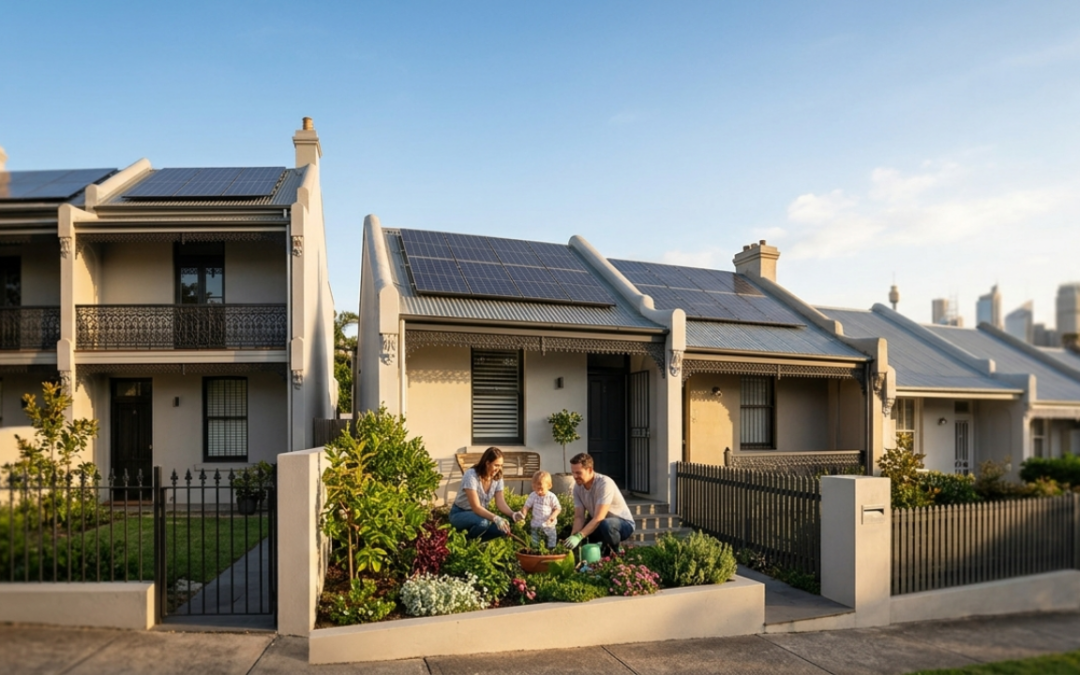
There has been a quiet but significant change in what Australians are asking for when they build homes. Not dramatic. Not sudden. But consistent enough, and visible across enough conversations, that it is worth paying attention to. The aspiration that drove a generation of Australian home building — the bigger the better, the more features the more impressive, the highest specification the most desirable — has been losing ground to something that, on the surface, looks less ambitious but in practice often produces better outcomes.
More people are choosing homes that are sized for their actual lives rather than for the most they can borrow. More people are prioritising layouts that work brilliantly over layouts that look impressive. More people are asking whether the upgrades they are considering will genuinely improve their daily experience, rather than just their home’s appearance on a brochure.
This shift has real causes. It is a rational response to a changed financial environment. It reflects accumulated learning from people who built ambitiously and discovered the ongoing cost of maintaining that ambition. And it is producing homes that, in the judgment of the people who live in them, are more satisfying than the maximalist alternative.
Understanding why this is happening — and what it means for how homes should be planned and designed — is useful regardless of where you are in your own planning process.
The Realisation That Scale Has Running Costs
The appeal of larger homes is real and not difficult to understand. Space feels like abundance. Extra rooms feel like options. The sense that there is room for everything — for guests, for hobbies, for the activities the household does and the ones it might do — has genuine appeal, particularly during the planning phase when everything is possibility and nothing is maintenance.
The relationship between scale and ongoing cost is less immediately apparent during the planning phase than it becomes once the home is occupied.
A home that is significantly larger than the household needs to function comfortably costs more to heat and cool — every year, across every season. The additional floor area being conditioned has a cost that compounds over the decades of ownership in ways that the initial comparison between construction costs did not capture. A household that builds to the maximum scale its budget allows, at the expense of energy performance provisions or size appropriateness, is trading a one-time construction saving for an ongoing running cost increase.
Maintenance follows the same logic. More surface area means more painting cycles. More rooms mean more flooring to eventually replace, more systems to service, more fixtures and fittings that wear and require attention. The maintenance cost of a larger home is higher in absolute terms than a smaller one, and it accumulates over time.
Extra rooms that do not have a clear, active purpose often become the rooms that are heated, cooled, cleaned, and maintained without being meaningfully used. The formal dining room that seats twelve but hosts dinners three times a year. The theatre room that sees occasional use in the school holidays. The gym that is used enthusiastically for the first months and then becomes a guilty reminder of good intentions. These rooms represent real ongoing cost without proportional benefit.
The calculation that is invisible during the planning phase — the accumulated difference in running and maintenance costs over twenty years between a right-sized home and an oversized one — is very visible to the people who have been living it.
The Financial Context That Has Made Practical Thinking More Urgent
The shift toward simpler, more appropriately scaled homes is partly a natural evolution of the learning described above — people who have lived in oversized homes passing on what they have learned. But it has been significantly accelerated by the changed financial environment.
Interest rates that were historically low during a significant period of home building aspiration have risen substantially. The household that borrowed at the upper edge of its capacity at low rates and then experienced rate increases has encountered the financial pressure that over-stretching creates. The repayment that seemed manageable at one rate becomes meaningfully more burdensome at a higher one, particularly when it is combined with the general cost of living increases that have affected most Australian households.
The cumulative effect is that more people are doing the full cost calculation before committing — not just the construction cost but the ongoing loan repayment at realistic current rates, plus the running costs, plus the maintenance costs, plus all the other household expenses that need to be met from the same income. When this full calculation is done honestly, the case for building to the maximum scale the budget theoretically allows becomes much less compelling.
What replaces it is a question about financial sustainability over time rather than maximum capacity at a point in time. Can we comfortably afford this ongoing — not just now, but across the realistic range of possible financial conditions over the next decade? That question, taken seriously, produces more modest answers than the question “what is the most we can technically borrow?”
The homes being planned and built by people who are asking the sustainable question are different from the ones planned by people asking the maximum question. They are more appropriate in scale to the household’s actual needs. They have more cushion built into the budget. They prioritise things that reduce ongoing costs — energy performance, maintenance-friendly materials, right-sized spaces — over things that increase initial impressiveness.
What Practical Design Actually Looks Like
A home designed for practical livability rather than impressive specification is not a compromised home. It is a different kind of excellent — one whose excellence shows in daily use rather than in photographs.
The layout that works brilliantly is one where every space has a clear purpose and that purpose is served well. Where the kitchen is positioned and configured for how the household actually cooks and gathers. Where the bedroom zone is acoustically appropriate for the household’s routines. Where the connection between indoor and outdoor is genuinely functional for the household’s entertaining and outdoor living habits. Where the storage is adequate for what the household actually owns, positioned where the things are actually used.
Natural light is the most powerful design element available in any home, and it is one that costs nothing to get right during the design phase. A home oriented with its main living areas facing north, with appropriate eaves to manage summer solar gain while admitting lower winter sun, with windows positioned to distribute light across the spaces where people spend most of their time — this is a home that feels genuinely comfortable to live in year-round without the ongoing energy cost of fighting against a poor orientation with mechanical heating and cooling.
Cross-ventilation is similarly cost-free at the design stage and genuinely valuable in the Australian climate. Windows positioned to allow air to flow through the home when a breeze is present reduce the need for mechanical cooling across a significant portion of the year. This is not exotic or expensive design — it is standard good practice that is sometimes omitted in the rush to resolve a floor plan quickly.
Storage designed for what the household actually owns, positioned where things are actually used, is one of the highest-return investments available in any home design. A kitchen pantry sized and positioned for how the household shops and cooks. A wardrobe configured for the actual clothing and belongings of the people using it rather than a generic configuration. A bathroom with genuine storage for the products actually used in it. These things seem unglamorous but they make a significant difference to how comfortable and organised the home feels to live in over time.
Granton Homes designs custom homes that prioritise exactly these kinds of practical quality outcomes. Their design process starts with a genuine brief about how the household lives — not with a catalogue of the most impressive options — and the homes that come from that process are designed to work brilliantly for the specific people living in them.
The Changing Definition of What Makes a Home Good
The most interesting aspect of the shift toward simpler homes is what it reveals about how people understand the quality of a home as opposed to its impressiveness.
Impressiveness is a relative measure — it depends on comparison and on the observer’s assessment. A home that impresses guests, that looks dramatic in photographs, that signals a level of aspiration through its scale and specification — these are outcomes that depend on external evaluation.
Quality of daily life is not a relative measure. The morning that is easy because the home’s routines are well supported by its layout. The comfort of a room that has genuinely adequate storage and well-managed light. The financial ease of running costs that do not create ongoing pressure. The emotional comfort of a financial commitment that feels sustainable rather than stretched. These are outcomes that are experienced directly, continuously, by the people living in the home.
The shift toward practical homes reflects a growing recognition that the second set of outcomes — quality of daily life, financial sustainability, genuine comfort over time — is more important than the first set. That a home that is slightly less impressive but significantly more comfortable to live in is a better home by the measures that actually matter.
This recognition is not new — it has always been available to anyone who thought carefully about what they were building for. What has changed is that it is becoming more widely held and more openly expressed, partly because the financial environment has made the cost of prioritising impressiveness over practicality more apparent, and partly because enough people have lived in both kinds of homes to compare the experience directly.
What This Looks Like in the Design Conversation
The shift is visible in the design conversations that builders are having with clients.
The brief that says “I want the most impressive home my budget will allow” is being replaced more often by briefs that say “I want a home that works brilliantly for how we actually live, at a cost we can genuinely sustain.” These are different starting points and they produce different designs.
The first brief produces homes that maximise scale and specification within the budget. The second produces homes that are right-sized for the household, designed around its specific patterns of daily life, with budget allocated to the things that genuinely improve the lived experience rather than the things that look impressive in photographs.
Granton Homes works with both kinds of clients, and the homes they design for clients with the second brief are consistently among the most satisfying to live in — not because they are the most expensive or the most dramatic, but because they were designed specifically for the people living in them and they show it.
The design questions that produce this outcome are specific ones about daily life rather than general ones about aspiration. How does the household actually use its kitchen? What are the acoustic requirements of the bedroom zone given the household’s routines? What does the outdoor entertaining area need to accommodate for how the household actually entertains? Where does storage need to be for the things the household actually owns?
These questions lead to a floor plan that is genuinely right for the household rather than one that looks right in a render.
The Long View
The homes that people are most satisfied with over a decade or more of ownership are consistently the ones that were built for their actual life rather than for their aspirational one.
Not always the smallest or the most modest. Not always the cheapest. But always the ones where the scale and specification were appropriate to the household’s genuine needs, where the financial commitment was sustainable over time, and where the design reflected careful thought about how the space would actually be lived in rather than how it would look to someone who had not visited.
The trend toward simpler, more practical homes in Australia is not a retreat from quality. It is a recalibration of what quality means when it is applied honestly — quality of daily experience, quality of financial sustainability, quality of fit between the home and the life being lived in it.
That recalibration, visible in the conversations happening between builders and clients across Australia in 2026, is producing homes that will serve their owners better over the long term than the more ambitious alternative would have. And for anyone who is in the process of planning a new home right now — the shift is worth taking seriously. Not as a constraint on aspiration, but as a more sophisticated version of what aspiration in home building actually means.