
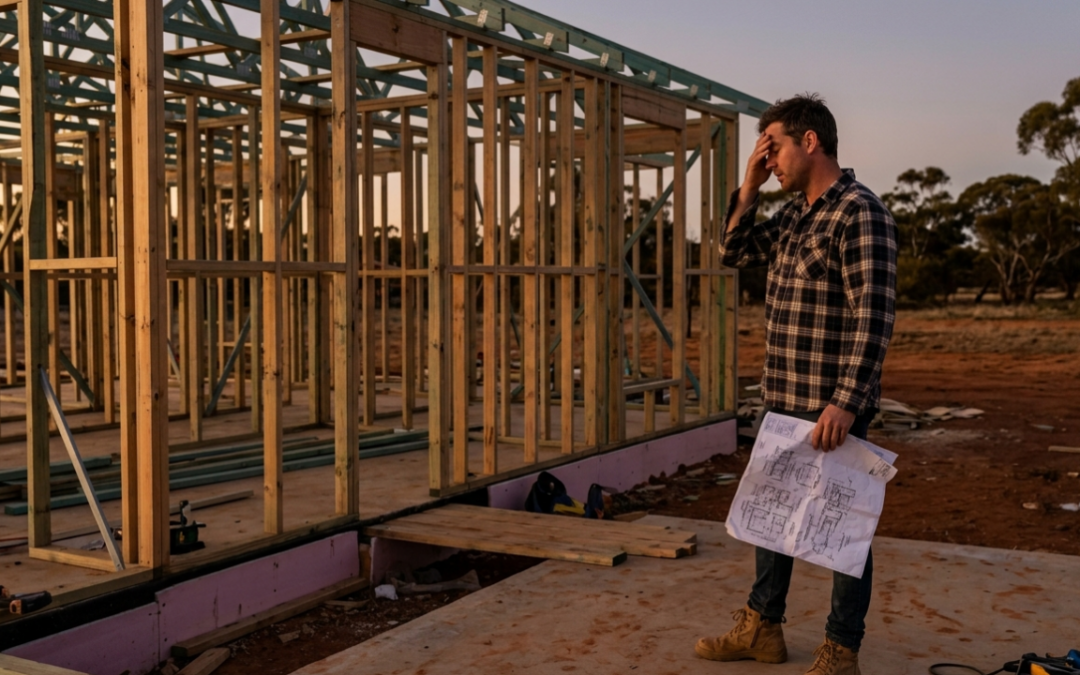
When most people think about building a home, their mind goes straight to the fun parts. Picking the floor plan, walking through display homes, imagining how the kitchen will look, and finally getting the keys to a brand new place.
What they don’t see coming is how tiring the whole process can get — not just physically, but mentally.
Because building a home today is not just about money. It takes a surprising amount of emotional energy too.
The Decisions Never Seem to Stop
At the start, everything feels fresh and exciting. You are researching, exploring options, and imagining possibilities.
But somewhere along the way, the excitement starts turning into pressure.
Suddenly you are making decisions about layouts, budgets, land sizes, storage, lighting, colours, inclusions, upgrades, and long-term costs — all at the same time. Each decision on its own might seem small. But when they all pile up together, the mental weight becomes very real.
Too Much Online Research Can Make Things Worse
Almost everyone starts their home-building journey online these days. Hours go into watching walkthrough videos, comparing different builders, reading reviews, saving posts for inspiration, and scrolling through social media feeds.
The intention is to feel more prepared. But often the opposite happens.
The more information people take in, the harder it becomes to think clearly. After a certain point, everything starts blending together and decisions that should feel straightforward start feeling confusing.
The Fear of Getting It Wrong
One of the biggest reasons this process feels so stressful is because a home is not a small purchase. It is a long-term commitment, and people know that.
That awareness creates a constant worry in the back of the mind. What if we overspend? What if the layout does not work for us later? What if we regret an upgrade we paid extra for? What if we miss something important?
These fears make even minor decisions feel much heavier than they should be.
What People Want Often Changes Along the Way
Here is something interesting that many home builders notice about themselves. Their priorities shift as the process goes on.
In the beginning, a lot of people are drawn to luxury finishes, large open spaces, and modern styling. It all looks amazing in the brochures.
But after spending more time researching and thinking practically, many people start caring more about things like natural light, comfortable layouts, storage that actually works, and a home that fits their real day-to-day life. That change in thinking is completely normal. It just takes time to get there.
Money Stress Makes Everything Harder
There is no getting around the fact that building a home in Australia right now is expensive. Interest rates, rising construction costs, and general living expenses all add pressure to the process.
When people feel that financial pressure, they start trying to make every single decision perfectly. They do not want to waste money or make choices they will regret. And that constant need to get everything right leads to a lot of overthinking.
Social Media Adds Pressure That Does Not Need to Be There
Scrolling through Instagram or Pinterest while planning a home build can quickly become a problem.
People compare their choices to what they see online — other people’s designs, upgrades, builder selections, and finished homes. Everything looks polished and perfect.
But what social media never shows is the stress behind those photos. The compromises people made, the budget blowouts, the decisions that did not go as planned.
Because only the highlights get shared, many buyers end up feeling like their home needs to look a certain way — even when that standard is completely unrealistic.
Keeping Things Simple Usually Works Out Better
Many Australians eventually reach the same conclusion after going through all of this. Simpler choices tend to create less stress — and often, more satisfaction in the long run.
Instead of chasing every possible upgrade or trying to create something picture-perfect, people start focusing on what actually matters to them. A layout that works for their family. A budget they can manage comfortably. A home that fits their life rather than a lifestyle they saw online.
That shift in mindset makes the whole process feel a lot healthier.
Mistakes That Are Easy to Make
Looking back, most people can identify where things started feeling overwhelming. Researching too many options at once without making any decisions. Constantly comparing their choices to what others are doing online. Putting pressure on themselves to get everything perfect. And ignoring the mental strain building up in the background. These are all very common mistakes, and they are worth being aware of before you start.
What People Are Doing Differently Now
More and more Australians are approaching the home-building process with a calmer mindset. They are slowing things down instead of trying to figure everything out at once. They are focusing on what is practical rather than what looks impressive. They are setting realistic budgets and sticking to them. And they are making peace with the fact that not every decision needs to be perfect. This more grounded approach is becoming far more common — and for good reason.
Final Thought
Building a home is genuinely exciting. But it is also one of the most mentally demanding things a person can go through.
And that is okay. There are a lot of moving parts, a lot of money involved, and a lot of emotions tied up in the process. It makes complete sense that it would feel heavy at times.
The most important thing to remember is that a good home is not just about choosing the right design. It is also about taking care of your mindset along the way — and not letting the pressure of the process take away from what should be a meaningful and rewarding experience.
That is exactly why teams like Granton Homes focus not just on building quality homes, but on making the entire journey as smooth and stress-free as possible for their clients. Because when you have the right people guiding you through the process, those big decisions start feeling a lot more manageable.