
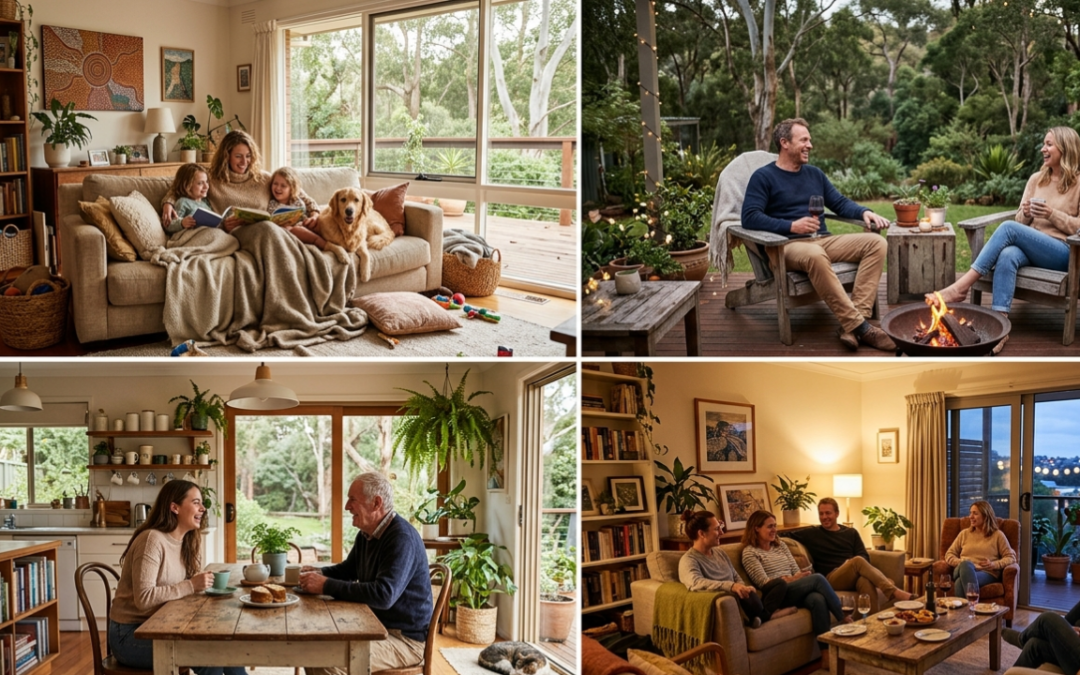
For a long time, the goal for many Australians when it came to homes was fairly straightforward — bigger, more modern, and packed with as many upgrades as the budget would allow. The focus was on creating something impressive. Something that looked the part and made a statement. But something has been quietly shifting in recent years.
More people are stepping back from that mindset and focusing on something that actually matters more to them in daily life — simply feeling comfortable in the place they live. Not the most impressive home on the street. Not the one with the longest list of features. Just a home that genuinely works well and feels good to be in every day. And in today’s world, that shift makes a lot of sense.
How Thinking About Homes Changes Over Time
When most people first start looking at homes, the exciting stuff grabs their attention. A stunning kitchen. Large open living areas. High-end finishes. Stylish design details that look incredible in photos. That is where the energy goes early on, and it is completely understandable.
But after spending real time comparing options, visiting homes in person, and thinking seriously about what everyday life will actually look like, something tends to change. People start realising that the things that looked most exciting during the research phase are not always the things that make a home genuinely enjoyable to live in.
Daily comfort starts carrying more weight. How practical the layout is matters more. Whether the home actually suits the rhythm of your life becomes the more important question. And once that shift happens, the decision-making process looks very different.
Money Is Changing the Conversation
A big part of why more Australians are thinking this way comes down to financial reality. Building a home today is expensive — more so than many people expect going in.
Interest rates have pushed repayments higher. Construction costs have risen significantly. Everyday living expenses have increased, and people are managing more financial pressure than they were a few years ago. In that environment, spending money on upgrades that are primarily about appearances starts to feel harder to justify.
More buyers are asking a different question than they used to. Instead of — what is the most impressive home I can build? — the question has become — what kind of home will actually make life easier and less stressful over the long term?
That is a much more useful question to build a decision around. And it is leading to much better outcomes for the people asking it.
Bigger Does Not Always Mean Better
There is an assumption that a larger home is automatically a more comfortable and enjoyable one. But many people who have lived in oversized homes will tell you that is not always how it plays out.
Extra rooms that never really get used. More space to heat and cool, which means higher energy bills. More surface area to clean and maintain. A layout that feels impressive to walk through but does not actually suit the way the household operates day to day.
Meanwhile, a well-designed, appropriately sized home that is thoughtfully laid out often feels far more comfortable and relaxing to live in. It is easier to keep on top of, less expensive to run, and does not create the sense of constantly managing more than you need.
A lot of Australians are coming to that realisation — and it is changing what they look for when they start seriously comparing options.
The Details That Actually Shape Daily Life
One of the most consistent discoveries buyers make when they visit homes in person rather than just looking at them online is how much the practical details matter. Things that did not seem particularly exciting on paper start to reveal their real value once you are actually imagining your daily life in a space.
Natural light that fills the main living areas and makes the home feel warm and welcoming throughout the day. Airflow that keeps things comfortable without relying entirely on expensive systems. Storage that is genuinely in the right places so the home stays organised without effort. Room flow that feels natural so moving through the space just works.
These are not the features that trend on social media. They are not what gets highlighted in glossy builder brochures. But they are the details that affect how you feel in your home every single morning and evening — and over time, that matters more than anything else.
What Social Media Gets Wrong
Online home content has a way of creating pressure that is not always helpful. Perfect interiors everywhere you scroll. Luxury upgrades in every room. Homes that look flawless from every angle. It sets a standard that feels like something to aspire to — but that standard has very little to do with what makes a home genuinely good to live in.
What those images never show is the cost behind those finishes. The maintenance required to keep things looking that way. The practical compromises that were made to achieve the visual result. The day-to-day reality of living in a space that was designed primarily to look impressive rather than to function well.
More Australians are becoming aware of that gap. They are learning to separate what looks appealing online from what will actually serve them well in real life. And that awareness is making them significantly better decision-makers.
Peace of Mind Is Worth More Than People Realise
Beyond the practical considerations, there is something else driving this shift — a growing recognition that peace of mind is genuinely valuable. Not just nice to have, but something that meaningfully improves quality of life.
A home with manageable repayments. A home that does not demand constant maintenance money. A home that allows you to live comfortably without financial pressure looming in the background every month. That kind of home creates a very different feeling to one that stretches you in every direction just to maintain. More Australians are choosing the first kind of home — and feeling better for it.
Why Simpler Homes Are Getting More Appealing
There is a growing appreciation across Australia for homes that do not ask too much of you. Homes that are easy to keep on top of. Homes that cost a reasonable amount to run. Homes that feel calm and organised rather than overwhelming.
For many people, that kind of home — practical, manageable, and genuinely liveable — is starting to feel far more attractive than an elaborate dream home that looks impressive but creates ongoing pressure. The lifestyle that comes with a simpler, well-designed home is often a better one. And more buyers are starting to recognise that.
What People Are Actively Trying to Avoid
Buyers today tend to go into the process with a clearer sense of the mistakes they want to avoid. Stretching the budget further than is comfortable in pursuit of something impressive. Paying for upgrades that are primarily about appearance rather than practical value. Letting social media comparisons drive decisions that should be based on personal needs. Ignoring long-term liveability in favour of short-term excitement.
Being aware of these traps early makes a real difference. It keeps the decision-making process grounded and leads to outcomes people feel genuinely satisfied with for years to come.
What Australians Are Actually Looking For in 2026
When you look at what buyers are genuinely gravitating toward right now, the pattern is consistent. Homes that feel comfortable and easy to be in. Spaces that support daily life rather than complicate it. Designs that reduce stress rather than add to it. Properties that remain financially sustainable and practically enjoyable over the long term.
That is what a good home looks like to more and more Australians today. And it is a far more honest and useful standard than trying to match what looks perfect online.
Final Thought
The idea of what makes a dream home is changing in Australia — and it is changing for the better. For a growing number of people, the best home is no longer the flashiest or the most feature-packed. It is the one that feels right to live in every day. Practical, peaceful, comfortable, and genuinely suited to real life.
That is not a lowered expectation. It is a smarter one. Because a home that brings you genuine comfort and calm — without unnecessary financial pressure or the stress of maintaining something beyond your needs — is worth far more than any perfectly styled space that looked great on a screen but never quite felt like home.
It is that belief that sits at the heart of what Granton Homes does. Helping Australians build homes that are designed around real life, real comfort, and long-term liveability — because that is what truly makes the difference.