
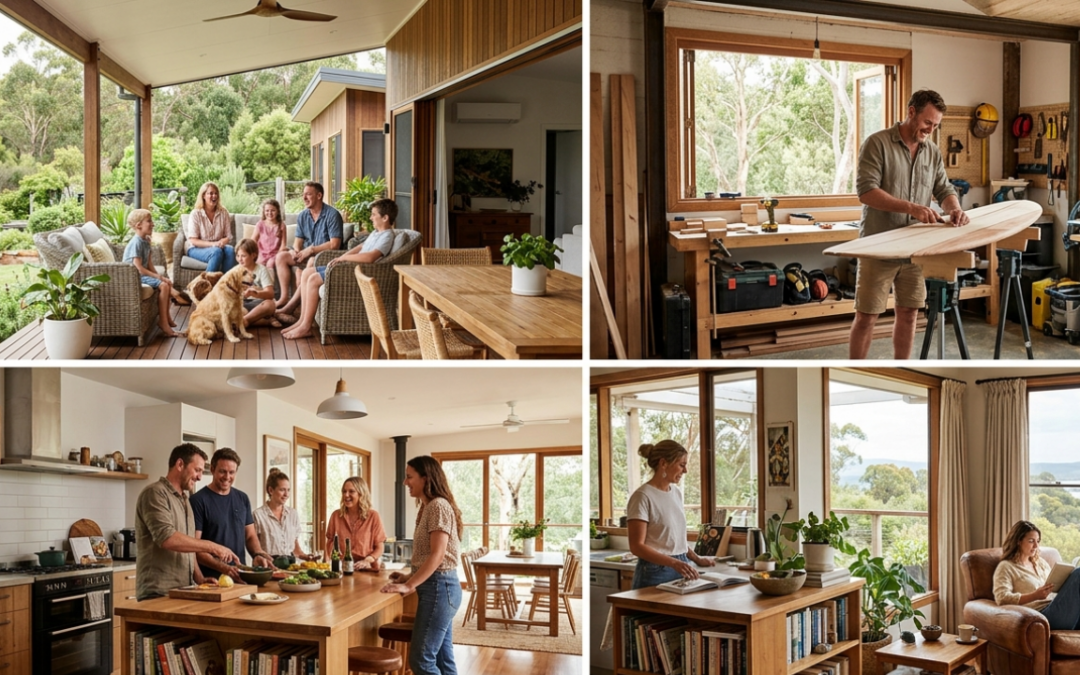
For a long time, the conversation around homes in Australia was heavily focused on appearances. Bigger spaces, more luxurious finishes, modern styling, impressive upgrades — these were the things that drove most buying and building decisions. If it looked good, it was considered good.
But that conversation is shifting. And the question more Australians are now asking before making one of the biggest decisions of their lives is a much simpler and more honest one.
Will this home actually suit the way I live every day? That question is changing everything.
What People Used to Look for and What They Are Looking for Now
Not too long ago, the home that turned the most heads was often considered the best one. Oversized kitchens that looked stunning in photos. Designer finishes throughout. Large open-plan spaces that felt grand during an inspection.
Those things still have appeal. But after spending real time researching, comparing, and visiting homes in person, a lot of buyers are arriving at the same realisation. A home that photographs beautifully does not always translate into a home that feels good to live in day after day.
The gap between how a home looks and how it actually functions in daily life can be surprisingly large. And more Australians are learning that lesson before they commit — not after.
The Practical Details That End Up Mattering Most
One of the most consistent things buyers notice when they start visiting homes in person is how much the quiet, practical details shape their experience of a space.
Natural light that makes rooms feel warm and welcoming throughout the day rather than dark and enclosed. Airflow that keeps the home comfortable without relying entirely on heating and cooling systems. Room flow that feels intuitive so moving through the home just works naturally. Storage that is actually in the right places so the space stays organised without effort. Quiet living areas where you can genuinely switch off and feel settled.
None of these details tend to feature prominently in marketing materials. They are not the things that get highlighted in display home walkthroughs. But they are the things that shape how you feel in your home every single morning, afternoon, and evening. And over time, that matters far more than any upgrade ever could.
Financial Reality Is Reshaping What People Want
A significant part of why buyers are thinking differently comes down to money. The cost of building and buying in Australia right now is genuinely high, and people are approaching financial decisions with more care than they were a few years ago.
Mortgage repayments have increased. Energy costs have gone up. General living expenses are higher across the board. Long-term financial comfort is something people are factoring into their decisions much earlier in the process than they used to.
In that environment, the idea of stretching a budget to its absolute limit to create a dream home that looks impressive starts to feel less appealing. What starts to feel more appealing is a home that fits comfortably within your means and allows you to live well without financial pressure following you around every month. That is a meaningful shift in thinking — and it is leading to better decisions.
Why Social Media Is No Longer Driving as Many Decisions
Online platforms have had an enormous influence on how people think about homes over the past several years. Instagram, TikTok, YouTube, Pinterest — perfectly styled homes are everywhere, and they set a standard that feels aspirational but is rarely grounded in reality.
The issue is that what gets shared online is always the highlight. The beautiful finished result. The carefully staged inspection. The flawlessly lit photo taken on the best possible day. What never gets shared is the financial pressure behind those finishes, the ongoing maintenance cost of keeping a large home looking that way, or the practical compromises that were made to achieve the visual effect.
More Australians are becoming aware of that gap. They are learning to separate what looks appealing on a screen from what will genuinely serve them well in real life. And that growing awareness is producing more grounded, more personal, and more satisfying housing decisions.
Bigger Does Not Automatically Mean Better
This is something many buyers only fully appreciate after experiencing it firsthand. The assumption that a larger home creates a better lifestyle is one that tends to hold up well in theory but falls apart fairly quickly in practice.
Extra rooms that are never really used. Higher energy bills because there is simply more space to heat and cool. More surfaces to clean and maintain. A layout that feels impressive to walk through during an inspection but does not actually suit the way the household operates day to day.
On the other side of that, a well-designed home that is the right size for how you actually live tends to feel remarkably good. It is easier to keep on top of. It costs less to run. It feels calm and organised rather than overwhelming. And it does not create the sense of constantly managing more than you need or want.
Functionality over size is a trade-off more Australians are consciously making — and most of them feel good about it.
Peace of Mind Is Being Taken Seriously as a Priority
Something broader is also shifting in terms of what people value in their lives and in their homes. Peace of mind — the genuine feeling of being settled, financially comfortable, and not under constant pressure — is being recognised as something worth actively pursuing rather than just hoping for.
A home with manageable repayments. A property that does not demand more maintenance money than you are comfortable spending. A space that feels calm to live in rather than one that is always demanding something from you. These things create a very real and very meaningful difference to daily quality of life.
More buyers are building that consideration into their decision-making from the beginning rather than discovering it the hard way after they have already committed. And the homes they are ending up in reflect that.
What People Are Actively Trying to Avoid
Buyers today tend to go into the process with a clearer sense of where things can go wrong. They are making deliberate efforts to avoid overbuilding — creating something larger or more elaborate than their life actually requires. They are questioning upgrades that are primarily about appearance rather than practical value. They are being more careful about how much their decisions are influenced by what they see online versus what they actually need.
And they are trying to avoid the kind of short-term excitement driven decision-making that leads to long-term regret. Taking more time, asking harder questions, and staying honest about real needs and real budgets — that approach is producing better outcomes.
What Australian Buyers Are Actually Looking for in 2026
When you look at what is genuinely appealing to buyers right now, a clear and consistent picture emerges. Homes that feel practical and easy to live in. Spaces that support daily routines rather than complicate them. Designs that feel calm rather than demanding. Properties that remain financially comfortable and genuinely liveable over many years.
That is the standard more Australians are holding their housing decisions to in 2026. It is a more honest standard, a more personal one, and ultimately a far more useful one than trying to build or buy the most impressive home available.
Final Thought
What makes a home genuinely good is being redefined across Australia — and the new definition is a healthier one. It is no longer primarily about size, luxury, or how well something photographs. It is about how the home actually fits the life of the person living in it.
Comfortable, practical, financially sustainable, and genuinely suited to real everyday life. That is what more Australians are looking for. And that is what tends to create lasting satisfaction in a way that impressive but impractical homes rarely do. A home should make your life feel easier and calmer — not more complicated and more pressured. When it does that well, it does not need to be perfect. It just needs to be right for you.
That is exactly what the team at Granton Homes focuses on helping people achieve. Building homes that are designed around real life, real comfort, and long-term liveability — because a home that genuinely fits your lifestyle is always worth more than one that simply looks good online.