
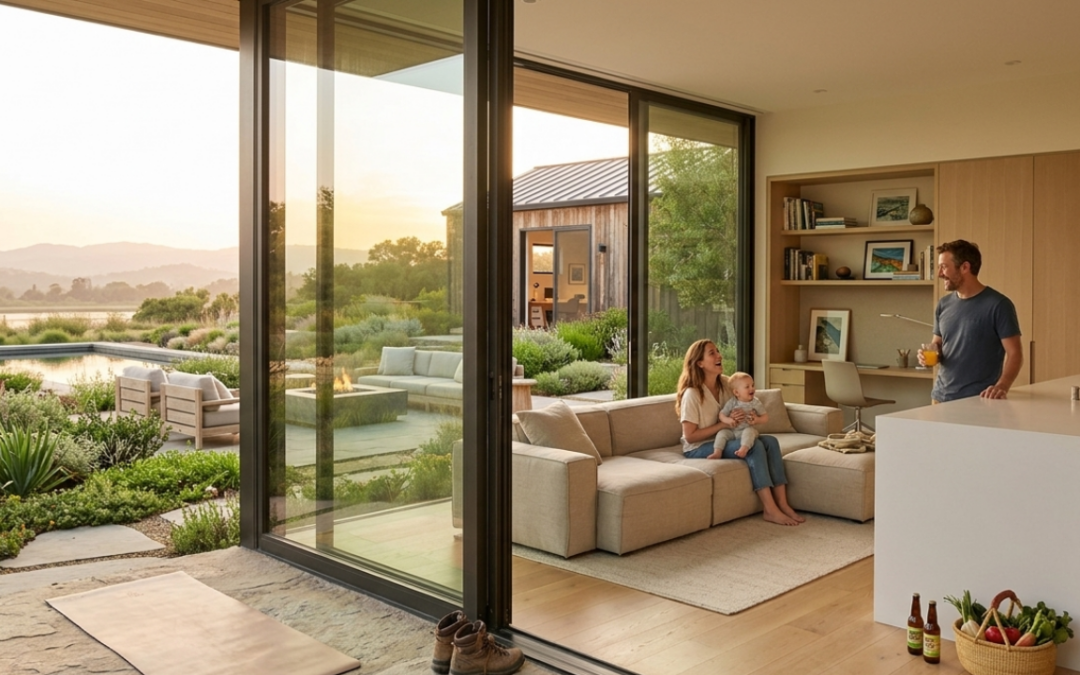
Buying a home has never really been just about bricks and rooms. At its core, it has always been about something more personal — the feeling of having a place that is genuinely yours, that supports the life you are building, and that holds the moments that matter most. Comfort. Stability. A space where real life unfolds day after day.
What has changed in recent years is the order in which buyers are approaching the decision. More Australians are starting their home search not with a floor plan or a feature list, but with a far more personal question.
Will this home actually support the lifestyle I want to live? That question — deceptively simple, enormously clarifying — is changing how people evaluate properties, compare builders, and ultimately decide which home is the right one.
A Home Needs to Do More Than It Used To
The modern home is carrying more responsibility than it did for previous generations. It is no longer simply a place to sleep, eat, and gather. For a growing number of Australian households, it is also a workplace, a study environment, a fitness space, a creative studio, and a social hub — often all of these things in the same week, sometimes in the same day.
That expanded role has real implications for what a home needs to provide. When work was exclusively done elsewhere and school was exclusively somewhere else, the functional requirements of a home were simpler. Now that the line between home and everything else has blurred so significantly, the home needs to function well across a much wider range of activities and purposes.
This is driving buyers to pay considerably more attention to how spaces actually function — how well the home supports the full breadth of what the household does there — rather than simply how those spaces look when staged for an inspection.
Different Households Need Different Things
One of the most useful realisations any buyer can have early in the process is that there is no universally right home. The features that make a home excellent for one household may make it merely adequate for another — because different households live differently in ways that matter enormously when it comes to what a home needs to provide.
A household where entertaining guests regularly is an important part of social life needs open, flowing living and dining areas that feel generous when there are people in them. A household where one or both adults work from home full time needs dedicated workspace that is genuinely separate from the rest of household activity. A family expecting to grow over the coming years needs a home that can accommodate that growth without requiring expensive and disruptive renovation at every stage.
These are not hypothetical differences. They are real and daily — and they lead to genuinely different homes being the right choice for different people. The buyer who starts with an honest assessment of their own lifestyle and household needs, rather than with a generic wishlist, consistently makes better decisions and ends up more satisfied with the result.
Why Practical Living Has Become Such a Priority
Practical living — the quality of a home that makes everyday routines feel easy and natural rather than complicated or slightly effortful — has moved to the centre of what many Australian buyers are looking for. And the reasons for that are straightforward.
A home is lived in every single day. The features that make the biggest difference to quality of life are not the ones that look most impressive during a once-off inspection. They are the ones that make daily routines feel manageable and comfortable across hundreds and thousands of ordinary days.
Functional layouts that flow naturally for the household’s real daily patterns. Storage that is genuinely adequate and positioned where it is actually needed. Natural light that fills the main living areas and lifts the atmosphere throughout the day. Flexible room designs that can serve different purposes as needs change over time.
None of these features are glamorous. They are not the things that lead a marketing brochure or generate the most excitement during a display home visit. But they are the things that make a home genuinely good to live in — and they are what more buyers are wisely choosing to prioritise.
What Storage Keeps Teaching Homeowners
The lesson about storage tends to arrive through experience rather than advice — which is one reason it keeps being learned by each new generation of homeowners. It is consistently underestimated during the buying process and consistently proves its importance once real daily life is fully underway.
The explanation is simple and practical. A home without enough thoughtfully placed storage becomes gradually harder to manage as household life fills the available space in the way it always does. Things accumulate — possessions, equipment, the everyday requirements of running a household — and without proper places for them to go, they end up creating the clutter and disorganisation that makes a home feel harder to live in than it should.
Good storage solves this problem before it begins. Wardrobes that actually work for how the household stores its belongings. Kitchen pantry space that keeps cooking and meal preparation organised. Garage storage that handles the practical side of family life. A laundry designed with genuine efficiency in mind. These details make the home feel more spacious, more organised, and more genuinely comfortable — and that improvement is felt every ordinary day, across the full span of living there.
Natural Light Has Earned Its Place as an Essential
There was a time when natural light was considered a nice design feature — pleasant to have, but not exactly a fundamental requirement. That framing has changed considerably as homeowners have come to understand how significantly it shapes the daily experience of living somewhere.
Rooms filled with good natural light feel more generous, more welcoming, and more genuinely comfortable to spend extended time in than rooms of identical size without it. The atmosphere of a home throughout the day is lifted in ways that artificial lighting cannot fully replicate. Main living areas that receive good natural light simply feel better — more alive, more inviting, more like somewhere you actually want to be — and that better feeling is experienced consistently across every morning, afternoon, and evening of every year.
More buyers are recognising this and treating natural light not as a design preference but as a genuine functional requirement — something to evaluate specifically during home comparisons rather than simply hoping for. The orientation of the home, the placement and sizing of windows, and how living areas are positioned relative to where light enters at different times of day are all worth deliberate consideration. They are easy to get right during the design phase and genuinely difficult to address afterward.
Why Flexibility Protects the Value of the Decision Over Time
A home buying decision is made at a single point in time. But the home will be lived in across many different points in time — different life stages, different household configurations, different work arrangements, different priorities. A home that is perfectly suited to the moment of purchase but cannot adapt as life changes will start to reveal its limitations sooner than the household would like.
Flexibility in home design is the quality that bridges that gap. It allows a room that serves one purpose today to genuinely serve another purpose when circumstances change — without requiring expensive structural modifications or living with the frustration of a space that no longer fits.
A spare bedroom that can transition to a home office when remote work demands increase. A study that can become a nursery when a baby arrives. A living space that can be arranged differently as children grow and their relationship with the home’s shared spaces evolves. These transitions happen in virtually every household across any significant span of ownership. A home designed with genuine flexibility accommodates them gracefully rather than creating new problems at every stage.
Looking Past the First Impression
First impressions in a home search are real and worth paying attention to. But they are formed in a single visit under conditions that are carefully curated to show the property at its best. They do not always tell the whole story of what living in that home for years will actually feel like.
Experienced homeowners — the ones who have been living with their decisions long enough to know what held up and what did not — often give similar advice about this. Look past the first impression. Ask the practical questions that do not have obvious answers from a single inspection walk-through.
How will this space actually function during a busy weekday morning? Is the layout genuinely practical for the way the household moves through its day, or does it just look good standing still? Will these features still be serving us well in five years as life continues to evolve? Can this space adapt to the changes that are realistically coming?
These questions do not diminish the importance of a home looking and feeling appealing. They add to it — ensuring that what looks good also works well, consistently, across the full reality of years of daily living.
Where Home Buying Is Heading
The direction Australian home buying is moving in is clear when you look at what buyers are genuinely prioritising. Comfort over impressiveness. Convenience over complexity. Flexibility over rigidity. Functionality over trend appeal.
These qualities deliver real and lasting value in a way that purely visual or trend-driven features simply cannot. They make daily life feel better in ways that compound quietly across months and years of living somewhere. And as buyers become more informed about this — as more people hear from homeowners who have lived with the consequences of prioritising one set of values over another — the shift toward lifestyle-focused decision-making is only going to deepen.
Final Thought
The modern homebuyer thinks differently from previous generations — and that different thinking is producing better decisions and more genuinely satisfied homeowners.
Starting with lifestyle rather than floor plans. Asking how the home will function in real daily life rather than just how it looks during an inspection. Thinking about future needs alongside present ones. Prioritising the practical details that shape daily comfort alongside the visual qualities that create appeal.
The best home is not simply the one with the most impressive features or the most current design. It is the one that fits your life — that supports your daily routines, adapts alongside your household as things change, and remains comfortable and genuinely enjoyable long after the excitement of moving in has settled into the familiar satisfaction of being home.
Finding that home starts with being honest about the life you are actually living and the life you are realistically heading toward — and then choosing the home that genuinely fits both.
That is what Granton Homes helps every client do — build a home designed around real lifestyle, real daily comfort, and the kind of long-term liveability that makes every day inside it feel like exactly where you are supposed to be.