
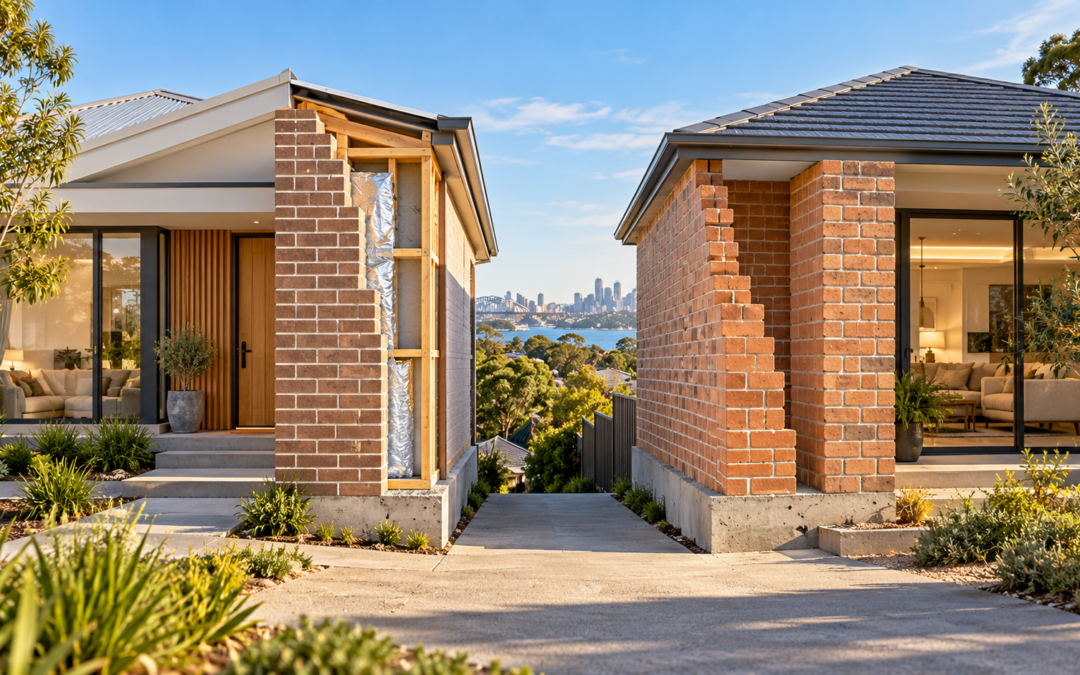
When planning a new home, choosing the right exterior walls is about more than appearance. Have you ever wondered whether brick veneer or double brick is the better option for your home?
Both construction methods are used in Australia, but they are built differently and can perform differently depending on the climate, insulation, workmanship and overall design.
If you are exploring Granton Homes Australia, understanding these differences can help you ask better questions before choosing a home design.
What Is the Difference Between Brick Veneer and Double Brick?
Although both options can give a home a brick exterior, their construction is not the same.
Brick veneer generally uses an external brick layer attached to a supporting frame, often timber or steel. The wall system includes a cavity and should incorporate suitable insulation and moisture management.
Double brick generally uses two masonry leaves, often with a cavity between them. The exact construction can vary, so it is important to understand the proposed wall system rather than relying on the name alone.
The key difference is how the wall is constructed, not simply how the finished exterior looks.
Is Double Brick Always Stronger?
Not necessarily in every sense. Both construction methods can be suitable when properly designed and built to meet the applicable requirements.
The strength and performance of a wall depend on factors such as structural design, materials, workmanship, connections and site conditions.
It is therefore better to ask how the proposed wall system meets your project’s structural requirements instead of assuming that one method is automatically superior.
Which Option Offers Better Thermal Comfort?
This is one of the most important questions to consider when building in Australia.
Double brick has greater thermal mass than a typical lightweight-framed brick veneer wall. Thermal mass allows a material to absorb, store and release heat over time. However, greater thermal mass does not automatically mean a home will stay cooler in summer or warmer in winter.
Its performance depends on the local climate, insulation, window design, shading, ventilation and how the thermal mass is used.
A well-designed brick veneer home with appropriate insulation can perform well, while a poorly designed masonry home may still experience uncomfortable temperatures.
The Australian Government’s YourHome guide explains how thermal mass works in home design.
Is Brick Veneer Cheaper to Build?
The cost depends on the design, local labour rates, material availability, site conditions and the specifications included in the building quote.
Brick veneer can use a different structural system from double brick, which may affect construction time and cost. However, it would be misleading to assume that one option is always cheaper for every project.
When comparing prices, ask for a clear breakdown of what is included. Consider the wall construction, insulation, finishes, structural requirements and any additional work needed for your site.
The cheapest initial quote is not necessarily the best overall choice if important inclusions differ.
Which Wall System Is Better for Sound Insulation?
Both brick veneer and double brick can help reduce sound transmission, but the result depends on the complete wall assembly.
Wall mass, cavity design, insulation, gaps, windows and doors all affect how much noise enters a home. A well-designed lightweight wall system may perform differently from an uninsulated or poorly detailed masonry wall.
If you live near a busy road or expect noise from neighbouring properties, discuss acoustic performance with your builder. Ask whether the proposed wall system and window specifications are suitable for your location.
Does Your Local Climate Matter When Choosing Brick Construction?
Yes. Australia’s climate varies considerably, so a wall system that performs well in one location may require different design considerations elsewhere.
In areas with hot summers and cooler nights, thermal mass may be useful when combined with suitable shading and ventilation. In other locations, insulation and protection from unwanted heat gain may be more important.
Moisture management is also essential. The wall design should include appropriate detailing to manage water and reduce the risk of moisture-related problems.
Rather than selecting a construction method based only on general advice, consider the climate and conditions of your actual building site.
What About Maintenance and Long-Term Durability?
Both systems can provide long-term performance when designed, installed and maintained appropriately.
With brick veneer, the brickwork, cavity, supporting frame and moisture-control details all need to perform as intended. Double-brick construction also requires proper workmanship, suitable detailing and attention to moisture management.
For either option, ask about maintenance expectations, drainage details, the treatment of openings and the relevant construction warranties.
It is also worth remembering that the quality of the complete building system matters more than the exterior material alone.
What Should You Ask Granton Homes Before Choosing?
If you are researching Granton Homes and planning a new home, consider asking these questions before making your decision:
-
Which external wall systems are available for my selected design?
-
What insulation and thermal-performance specifications are included?
-
How will the proposed wall system suit my local climate?
-
What acoustic performance can I expect from the specified walls and windows?
-
Are there differences in construction cost or ongoing maintenance?
-
What wall construction details and finishes are included in the building agreement?
You can visit Granton Homes to explore the brand and discuss the options available for your proposed project. Confirm the actual wall specifications, inclusions and costs directly with the builder.
So, Which Option Should You Choose?
There is no single answer that suits every Australian home.
Brick veneer may appeal to people considering a framed wall system with an external brick finish. Double brick may suit projects where a masonry-based wall system is preferred. The right choice depends on the building design, climate, budget, performance requirements and construction specifications.
Before deciding, compare the complete wall systems rather than judging them by appearance alone.
Final Thoughts
Should you choose brick veneer or double brick for your new home in Australia? Start by understanding how each system is constructed and how it may perform in your local climate.
Look at insulation, moisture management, sound control, construction costs and long-term maintenance. These factors will help you make a more informed decision than simply choosing the wall that looks best.
.
When planning a home with Granton Homes, ask for clear details about the proposed construction system and how it suits your property. A well-informed choice can help you balance comfort, durability and budget