
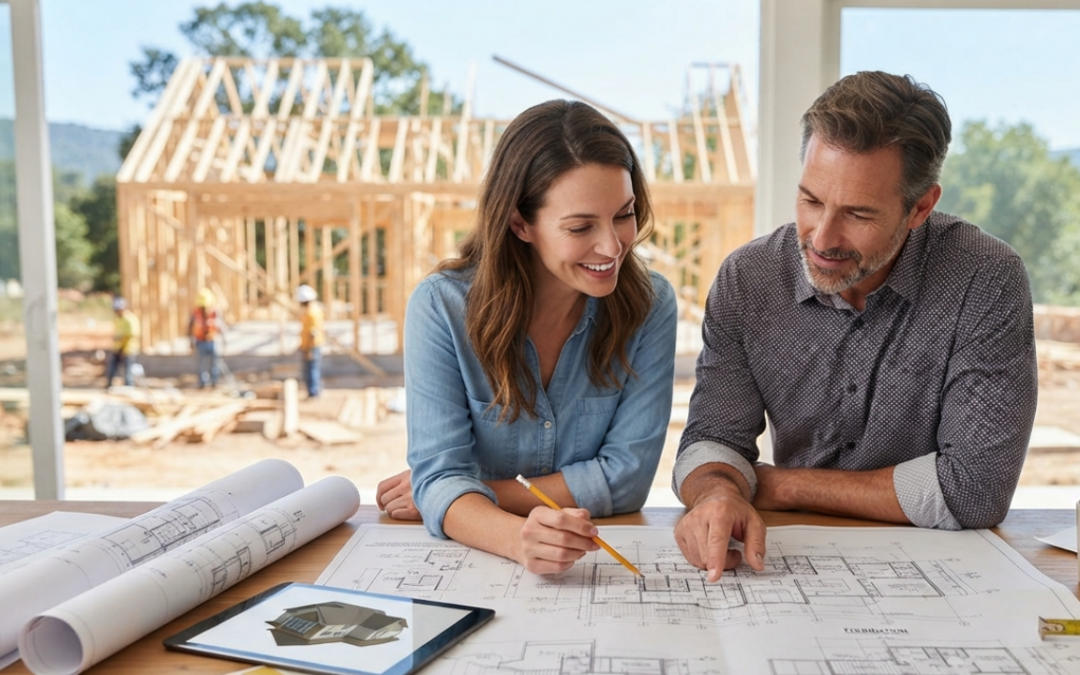
Building a home sits at the intersection of excitement and responsibility in a way that few other experiences do. The excitement is genuine and deserves to be enjoyed — the prospect of creating a space that is truly yours, designed around the life you want to live, is something worth feeling good about. But alongside that excitement comes a series of decisions, each of which will shape your daily experience for years to come.
The builders who get researched. The floor plans that get compared. The questions that get asked — or do not. The priorities that get clarified before any serious commitment is made. All of it matters. And the buyers who give it the time and thought it deserves consistently end up in a better position than those who move quickly on first impressions.
Taking a practical, research-first approach to building a home is not about dampening the excitement. It is about making sure the excitement is directed toward something that will genuinely deliver on its promise — not just on moving day, but across all the years of living that follow.
Start By Getting Clear on What You Actually Need
Before comparing builders, before visiting display homes, before looking at any floor plan — it is worth spending some real time on a question that sounds simple but takes honest thought to answer well.
What does this household actually need from a home?
Every buyer has a different version of their ideal home, shaped by their stage of life, their daily routines, their family situation, and their plans for the future. Some families place the highest value on generous, open living spaces where entertaining and family gathering happen easily. Others need a properly functional home office because remote work is a daily reality rather than an occasional arrangement. Some buyers are planning ahead for a growing family that is not yet here. Others are simplifying, looking for something that is manageable and comfortable rather than expansive and elaborate.
None of these visions is more valid than the others. But they lead to genuinely different homes — and the buyer who is clear about their own specific priorities before starting to compare options makes much more productive use of the research process. Every display home visit, every floor plan comparison, every conversation with a builder becomes more focused and more useful when the household’s real priorities have been thought through first.
When your priorities are clear, every subsequent decision has a frame of reference. And that frame of reference makes the whole process considerably less overwhelming.
Photos Are a Starting Point, Not a Substitute for Being There
The amount of home design content available online today is genuinely remarkable. Galleries of finished homes. Walkthrough videos of display properties. Floor plan comparisons available at the click of a button. All of it is accessible without leaving home, and all of it has genuine value as a starting point for building understanding and narrowing down preferences.
But it has a limitation that becomes very clear once buyers start visiting homes in person. What a home looks like and what a home feels like to move through and imagine your daily life in are two genuinely different things — and online content, however well produced, can only really show you the first one.
A design that looks perfect in photographs sometimes reveals practical shortcomings once you are physically standing in it. Rooms that read as generous on a floor plan can feel different with real proportions and real natural light conditions rather than those captured at the ideal moment for a photo. Conversely, a home that did not particularly stand out in its online presentation can turn out to feel surprisingly right in person — the layout flowing naturally, the light falling well, the overall atmosphere feeling settled and comfortable in ways that images simply could not communicate.
Visiting display homes in person is not a formality to check off the list. It is where a great deal of the most valuable research actually happens. The more homes you walk through — with genuine attention and specific questions in mind — the clearer your sense of what genuinely works for your household becomes.
Think About the Ordinary Days, Not Just the Best Ones
Display homes are carefully designed to create a strong impression. The staging is considered. The lighting is optimised. Everything is presented at its absolute best to show the property in the most favourable light possible. That is entirely appropriate — but it also means that what you experience during a display home visit is not the same as what you will experience living in that home across thousands of ordinary days.
The most useful thing a buyer can do during any home evaluation is shift the frame from the impression of the moment to the reality of daily life. Not — does this kitchen look impressive? But — is this kitchen actually convenient and practical to use every morning and evening across years of real meal preparation? Not — do these living areas feel spacious during this visit? But — will they feel comfortable and functional during a busy Saturday with children around, during a quiet weekday evening when nobody wants to be cramped, during all the varied ordinary moments that make up a household’s real life in a home?
Specific practical questions that bring daily life into the evaluation consistently produce more useful insights than general impressions.
Is there enough storage for what the household genuinely needs to store, and is it positioned where it will actually be useful? Do the living areas feel comfortable for the full range of activities the family will use them for, not just the staged version? Does the layout adapt in ways that will keep the home genuinely working as life changes over the years? Is there enough natural light throughout the main living areas to make the home feel pleasant to be in across every season without relying heavily on artificial alternatives?
These are the details that matter most after moving in. They deserve to be evaluated before committing rather than discovered afterward.
Compare on the Things That Shape Daily Life, Not Just the Things That Look Impressive
Many buyers focus their initial comparisons primarily on upgrade packages and inclusion lists — the visible, easily comparable features that can be assessed from a brochure or a website. These things matter and are worth comparing. But they are not the only things worth comparing, and they are not always the things that have the biggest impact on long-term satisfaction.
Some of the most important things to evaluate sit alongside feature comparisons rather than inside them.
How efficiently is the space laid out? Does the floor plan use the available area in ways that maximise genuine usability, or does it create impressive-looking rooms alongside wasted transitions and underutilised spaces? How does natural light work throughout the home — is it genuinely good across the main living areas throughout the day, or does it depend on conditions being just right? How flexible is the design — can the home genuinely adapt to changing needs as the household evolves, or is it rigidly configured around a single moment in time? How manageable is the home to maintain — does the design create practical convenience or ongoing demands?
Looking at the complete picture, with these broader considerations alongside the more obvious feature comparisons, consistently produces more balanced and more satisfying decisions.
Listen to People Who Have Already Been Through It
One of the most practically valuable resources available to home buyers today is the collective experience of people who have already built homes and are living with the results of their decisions. Online communities, discussion forums, and homeowner groups where people share honest accounts of their experience — what they valued about their builder, what they would do differently, what they wish they had thought about before committing — provide insights that no amount of marketing material can replicate.
The most useful thing these accounts offer is not a definitive answer about which builder to choose. Every household’s situation is genuinely different, and what worked well for one family may not be the right fit for another. The value is in the range of considerations they surface — the things that come up repeatedly across many different accounts because they reflect genuine truths about what makes a home good to live in over the long term.
Learning from other people’s experiences before making your own decision is one of the most efficient ways to avoid the mistakes that are predictable enough to be preventable.
Give Yourself the Time the Decision Deserves
Building a home is a long-term commitment. The floor plan you choose, the builder you work with, the design decisions made during the planning phase — all of it will shape daily life for years, sometimes decades. That is not a decision that benefits from being rushed.
Taking a few extra weeks to compare options more thoroughly, to visit more homes in person, to think more carefully about future needs alongside present ones — that is a small investment of time relative to the scale of what is being decided. And it is an investment that consistently pays off in greater confidence, fewer regrets, and more sustained satisfaction with the outcome.
Confidence in a home building decision rarely comes from moving quickly. It comes from having done the work — from knowing that you compared thoughtfully, asked the right questions, and made a decision based on genuine understanding of your household’s real priorities rather than on excitement or first impressions.
Plan for Where Life Is Going, Not Just Where It Is Now
The household that moves into a home on moving day is not always the same household that will be living there five or ten years later. Life changes in ways that are sometimes predictable and sometimes not. Families grow. Work arrangements evolve. The way different household members use their space changes at every stage of development and life.
A home chosen without any thought given to these likely future changes can start to feel limiting sooner than expected — and adapting it to accommodate new needs can be expensive and disruptive. A home with genuine flexibility built into its design — rooms that can honestly serve different purposes as needs evolve, layouts that remain sensible across different household configurations — accommodates those changes far more gracefully.
Planning for the future during the research and selection phase costs nothing but thought and honesty about where life is likely to go. The alternative — discovering limitations only after they have become inconvenient — costs considerably more.
Final Thought
Choosing a builder and building a home is about far more than finding a design that looks appealing. It is about selecting a home that will genuinely support your household’s daily life today, adapt to the changes that the coming years will bring, and continue to feel comfortable and right across the full span of time you spend in it.
The buyers who take the time to approach that decision with genuine research, honest self-reflection about their real priorities, and thoughtful comparison of what different options actually offer — rather than what their marketing suggests they offer — consistently make better decisions and feel more satisfied with those decisions across the long term.
As Australians continue exploring their building options, including Granton Homes, the ones who invest in doing their homework first are the ones who end up in homes they genuinely love for a very long time.
Because a well-researched decision made with genuine understanding of what your household needs is always worth the time it takes.
That is something Granton Homes is genuinely committed to supporting — helping buyers think clearly about what they need, and then building homes that genuinely deliver it for years to come.