
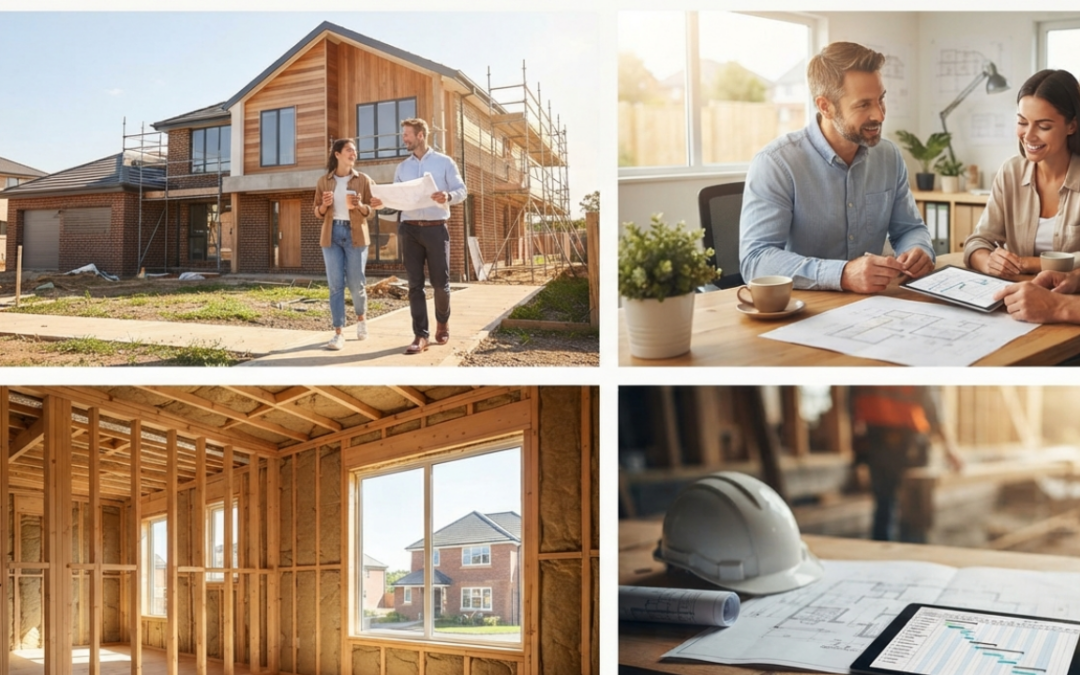
Building a home is one of those experiences that sits right at the intersection of genuinely exciting and genuinely overwhelming. The possibilities feel wide open and the future feels close. But so does the weight of the decision — the sheer number of things to figure out, the choices that feel consequential, the unfamiliarity of a process most people are navigating for the first time.
The good news is that most of that overwhelm is manageable with the right preparation. A little clear thinking before the process begins goes a long way. Here are seven practical things that consistently help buyers move through the home building journey with more confidence and less stress.
Know Your Lifestyle Before You Start Looking at Designs
This is the step most people skip — and it is arguably the most valuable one.
The natural starting point for most buyers is to open up a browser or walk into a display village and start looking at home designs. It feels productive. But without a clear sense of what the household actually needs, all of that looking produces a lot of impressions and not much clarity. Every design has something appealing about it. Without a filter, the comparison becomes more confusing the longer it goes on.
The more useful starting point is an honest conversation — with yourself and with anyone else who will be living in the home — about lifestyle and priorities.
How many bedrooms does the household genuinely need, not just in case, but practically? Does anyone work from home, and if so, how seriously does a dedicated workspace factor into the design? Is entertaining guests a regular and important part of social life, or is it occasional enough that the living areas do not need to be optimised for it? Is the family likely to grow, and if so, does the design need to accommodate that from the start or simply allow for it?
Clear answers to these questions turn design comparison from an exercise in being attracted to whatever looks best into a focused search for what actually fits. That focus makes every subsequent step faster, clearer, and more productive.
Build a Budget That Reflects the Real Cost
Construction costs are the headline number in any home building budget — but they are not the only number that matters. One of the most common sources of financial stress in the home building process is the gap between what buyers budgeted for and what they actually needed to spend, caused by expenses that were not fully anticipated going in.
Land costs and site preparation can vary enormously depending on the specific block. Landscaping and driveways are significant costs that many buyers underestimate or do not think about until the house is built and the block around it is bare earth. Window coverings, which are rarely included in standard building contracts, add up quickly across an entire home. Furniture for a new home — particularly one that is larger than the previous place — can be a substantial expense. And the practical costs of moving itself are easy to forget until the time comes.
Building all of these into the budget from the beginning, rather than treating the construction cost as the total cost, prevents the kind of financial surprises that add significant stress to an already busy process. It also gives a much more realistic picture of what is genuinely affordable — which is more useful information than a number that looks comfortable on paper but leaves no room for the inevitable additional costs.
Compare Floor Plans as Carefully as You Compare Prices
Price is the natural first point of comparison between builders. It is objective, it is easy to compare, and it directly affects what is affordable. But two homes with very similar price tags can offer completely different living experiences depending on how the floor plans have been designed — and that difference matters far more in practice than the price difference that initially attracts attention.
A practical, well-thought-out floor plan consistently delivers more long-term satisfaction than an impressive upgrade package in a home that does not flow or function well for the household’s real daily life.
When comparing floor plans, the things worth looking at most carefully are the everyday practical details. How are the rooms connected — does the layout feel natural and intuitive, or does it require unnecessary movement between spaces? How is the kitchen positioned relative to the dining and living areas — does it support how the family actually gathers, or does it create separation where connection would be more useful? Where is the storage, and is there genuinely enough of it in the right places? How does the living space connect to outdoor areas? How does natural light move through the main living areas throughout the day?
These details shape the actual experience of living in a home far more reliably than any feature comparison based on inclusions lists and upgrade packages.
Visit Display Homes in Person — More Than Once
Online research is valuable and has become a central part of how buyers understand what is available. Floor plans can be compared, photos can give a reasonable sense of design and quality, and virtual tours can help narrow down options before visiting in person. All of that is genuinely useful.
But it has limitations that only become apparent once buyers are standing inside a real home. Photos are taken under ideal conditions at ideal angles — they show what a home looks like at its best but cannot communicate how it feels to actually be in the space. A room that reads as generous on a floor plan may feel different when you are standing in it with real furniture in mind. Ceiling heights that seemed adequate on a specification sheet may feel lower or higher than expected in reality. The natural light may be better or worse than the photographs suggested.
There are also things that simply cannot be assessed without being physically present. The way air moves through the home. The feeling of moving between rooms and whether transitions feel natural. The overall atmosphere — that hard-to-define quality of whether a home feels settled and right to simply be in.
Visiting display homes in person, with specific questions and a genuinely critical eye rather than just a general impression, provides information that no amount of online research can replicate. And visiting more than once — at different times of day when light conditions are different, after the first impression has settled — often reveals details that the initial excitement obscured.
Think About the Next Ten Years, Not Just Right Now
The household moving into a home on day one is not necessarily the same household that will be living there in five or ten years. Life changes — often in ways that are partially predictable and partially not — and a home chosen purely around present needs can start to feel limiting sooner than expected as those changes arrive.
Children arrive or grow up. Work arrangements shift, sometimes dramatically, particularly as remote and hybrid work continues to be a permanent feature of many households’ realities. Aging parents may need to be accommodated for extended periods. Interests and priorities evolve in ways that change how different rooms get used and what the home needs to provide.
Thinking specifically about how the household’s needs might look different in a decade — and evaluating how well each design option accommodates those likely changes — is one of the most practically valuable things a buyer can do during the comparison process. A flexible room that can genuinely serve as a home office today, a nursery in a few years, and a guest bedroom later requires thoughtful design but costs relatively little additional planning at the outset. The alternative — discovering that the home cannot accommodate the changes life brings without expensive renovation — costs considerably more in both financial and practical terms.
Ask Every Question You Have — There Are No Bad Ones
One of the most consistent pieces of advice from experienced homeowners is that they wish they had asked more questions during the building process — more specifically, more of the practical questions that would have given them a clearer picture of what they were committing to.
There is a natural tendency for first-time buyers to hold back questions that feel too basic or that might reveal their inexperience. That tendency is worth actively resisting. Every question you do not ask is a piece of information you do not have — and information matters enormously when making decisions of this scale.
What is genuinely included in the base price versus what costs extra? How do construction timelines typically work, and what are the common causes of delays? What does the warranty cover, and for how long? What design flexibility exists within the standard offering, and what are the implications of customisation? What does the upgrade or variation process involve, and what are the typical costs?
These are practical questions with practical answers, and having those answers makes the entire process easier to navigate and the decisions easier to make with genuine confidence.
Take the Time the Decision Deserves
Building a home is a long-term commitment — one that will shape daily life for years, sometimes decades. There is no meaningful prize for making the decision fastest. And the pressure to move quickly, which buyers often feel through promotions, deadlines, and the general sense of urgency that surrounds major purchases, is rarely as real or as urgent as it feels in the moment.
Spending a few extra weeks comparing builders carefully, visiting more display homes, reading homeowner experiences, and sitting with the decision before committing to it is a genuinely small investment of time relative to what is being decided. And it consistently pays off in greater confidence, fewer regrets, and more sustained satisfaction with the outcome.
As buyers across Australia compare their options — including builders like Granton Homes alongside others in the market — the ones who give themselves the time to make a genuinely informed decision, rather than a quick one, consistently end up in a better position. Their confidence comes from preparation rather than from optimism. And that kind of confidence tends to hold up well across everything that follows.
Final Thought
Every home-building journey is genuinely unique. The right home for one family is not automatically the right home for another — because different households have different priorities, different daily routines, different plans for the future, and different definitions of what comfortable daily living actually feels like.
What is consistent across all of them is that the buyers who approach the process thoughtfully — who clarify their priorities before comparing designs, who visit homes in person, who ask the questions they need answered, who think about the future alongside the present, and who give themselves the time to make a genuine decision rather than a rushed one — end up in better homes and feel better about those decisions for longer.
Building a home is not about making the fastest decision. It is about making the right one. And with the right preparation, that right decision is genuinely within reach.
That is what Granton Homes is committed to supporting — helping every client move through the home building process with the clarity, confidence, and preparation that leads to a home they will genuinely love for many years to come.