
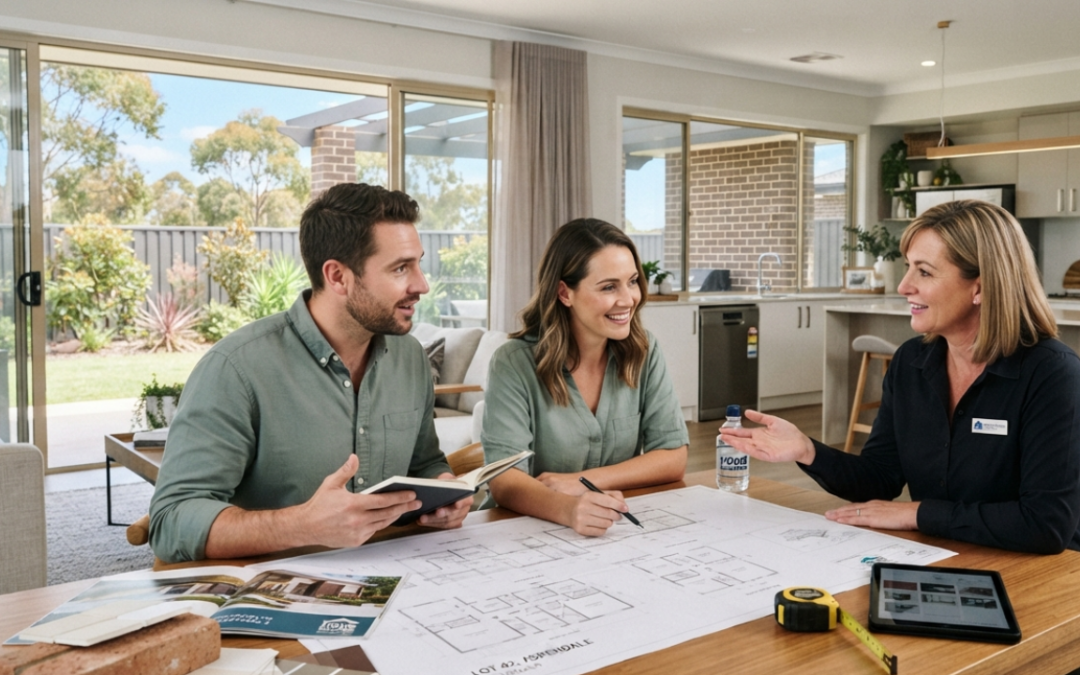
If you are currently in the process of researching home builders, you probably already know the feeling. You start with what feels like a manageable amount of information. A few websites, a couple of display home visits, some conversations with friends who have been through it. And then, fairly quickly, the volume of it all starts to feel genuinely overwhelming.
One builder’s website emphasises their premium inclusions. Another leads with competitive pricing. A display home creates a strong impression that feels almost like a decision in itself. Then you read a forum discussion that raises six considerations you had not even thought about yet, and the whole landscape expands again.
I spent a significant amount of time going through exactly that process — researching different Australian builders, including Granton Homes, and trying to work out what actually mattered and what was noise. And the most useful thing I came away with was not a definitive ranking of builders or a perfect checklist of features to look for.
It was a much simpler realisation. The best decision is not about finding the perfect builder. It is about understanding what actually matters most to you, specifically — and then evaluating your options against that understanding rather than against a generic standard.
Nobody Starts This Process From Exactly the Same Place
One of the first things worth acknowledging is that the advice, reviews, and experiences you read online about home builders — including whatever you read about Granton Homes — are always coming from someone with a different set of priorities and circumstances than yours.
Some people are building their first home and navigating the entire process from scratch, which shapes what they pay attention to and what questions they think to ask. Others are upgrading to accommodate a growing family, which puts different features and floor plan considerations at the front of the decision. Some buyers are thinking primarily about long-term investment value. Others are focused almost entirely on creating a daily living environment that suits a specific lifestyle. And those different starting points lead to genuinely different conclusions about what matters and what does not.
This is why other people’s experiences can be helpful — they surface considerations you might not have thought of, they highlight things that turned out to matter more or less than expected, they give a sense of what different builders are like to work with in practice. But they cannot replace your own research and your own honest assessment of what your household genuinely needs. Treat other people’s accounts as input, not as instruction.
How My Own Questions Changed the Longer I Researched
When I first started comparing home designs and builders, my thinking was dominated by the obvious surface-level questions. How many bedrooms? How large is the main living area? What is included in the advertised price? These are reasonable starting points, but they only tell a small part of the story of what it will actually be like to live in a home.
The longer I spent researching — visiting display homes, reading articles and forum discussions, thinking more carefully about real daily life rather than idealised versions of it — the more practical and specific my questions became.
Will this floor plan still genuinely work for the household in five years, or is it optimised purely for right now? Is there enough storage for real daily life — not the staged, everything-in-its-place version of domestic life, but the actual one? Does the kitchen connect naturally with the living and dining areas in a way that supports how the family really spends time together? How much natural light does the main living space receive throughout the day, and how does that affect the atmosphere of the home during the hours when it is most used? Can the design flex and adapt if the household’s needs change in the ways they realistically might?
These questions shifted the entire frame of my research. Instead of comparing homes primarily by what they looked like, I started comparing them by how well they would actually function for the household that would be living in them. And that shift made everything clearer.
Why Visiting Display Homes Is Worth the Effort
Online research is genuinely useful, particularly in the early stages when you are building a broad understanding of what is available and what different builders offer. Photos, virtual tours, and floor plan comparisons can tell you a lot about a design before you have set foot in it.
But there are things you cannot fully understand about a home until you are physically inside it. And those things turn out to matter.
The difference between how a hallway looks in a photograph and how it actually feels to move through. Whether the kitchen layout genuinely works for meal preparation or whether it looks good from one angle but creates practical inconveniences during actual cooking. Whether the living area connects to the outdoor space in a way that feels natural and comfortable or whether the connection exists theoretically but does not really work in practice. The quality of natural light at different times of day — something that photographs capture under controlled conditions that rarely represent the full reality.
Some of the most decisive observations I made during the whole research process came from simple things I noticed while walking through display homes — things that would never have shown up in a photo or a floor plan. The flow between rooms feeling slightly awkward in practice despite looking fine on paper. A storage solution that looked generous in the display configuration turning out to be less practical for how a real household organises itself. A room that photographs as light-filled being noticeably darker than expected during a mid-afternoon visit.
Those in-person observations are irreplaceable. Visit as many display homes as you reasonably can, and go more than once where you can — because the second visit with better questions almost always reveals things the first one missed.
Online Research Complements, But Does Not Replace, Real Experience
One of the most useful things online research does is introduce questions you would not otherwise have thought to ask. A forum discussion about home building practicalities, an article about floor plan considerations for different household types, a comparison of what different builders typically include as standard — all of these can surface considerations that genuinely improve the quality of the decisions you make.
The important thing is not to rely too heavily on any single source or too narrowly on sources that all point in the same direction. A balanced approach — reading broadly, taking in multiple perspectives, sitting with different views rather than immediately adopting the first strong opinion you encounter — consistently produces a clearer and more reliable understanding than a research process that confirms what you already thought before you started.
The same principle applies to reviews and accounts of specific builders. Single reviews, whether strongly positive or strongly negative, rarely tell the complete story. Looking at a range of experiences, noticing where consistent themes emerge across different accounts, and applying the relevant parts to your own specific situation is far more useful than treating any individual opinion as definitive.
Price Is Part of the Comparison — Not the Whole Thing
Budget is genuinely important in any home building decision, and it would be unrealistic to suggest otherwise. What you can afford determines what is feasible, and that constraint is real and should be taken seriously from the beginning.
But price as the primary or sole basis for comparing builders consistently produces decisions that look good initially and reveal their limitations later. Two homes with nearly identical price tags can offer genuinely different value depending on what is actually included, how efficiently the floor plan uses its available space, how much design flexibility exists, what the build quality is like across the elements that receive the most daily use, and what the overall experience of working with the builder through the construction process is like.
These factors shape the actual experience of building and living in the home in ways that matter significantly. A home that costs slightly less but has a floor plan that creates daily inefficiencies, or storage that turns out to be inadequate for the household’s real needs, or a build process that was more stressful and less transparent than it should have been — that home may not represent better value despite its lower headline price.
Looking beyond the initial number and evaluating what each option genuinely offers across the full picture consistently leads to better informed and more satisfying decisions.
On Granton Homes Specifically
Granton Homes was one of the builders that appeared consistently across my research — in comparisons, in discussions, in the shortlists of people who were going through a similar process. Rather than forming a strong opinion based on any single source of information, I found it more useful to take the same approach I used with every builder I was seriously considering.
Compare the available home designs and floor plans against the household’s real daily life scenarios rather than against abstract preferences. Visit display homes and evaluate them with practical questions in mind rather than just general impressions. Ask specific questions about standard inclusions, the design variation and customisation process, construction timelines, and what communication and support during the build period typically looks like. And read broadly across different accounts and experiences rather than relying on any single review or perspective.
That approach — applied consistently to every builder on the shortlist, including Granton Homes — gave me a much more reliable and balanced understanding than any single point of information could have provided.
What the People Who Had Already Built Kept Saying
One of the most consistently useful parts of the whole research process was talking to and reading accounts from people who had already built homes and were now living in them. And the things that came up most consistently across those conversations and accounts were not what I initially expected.
The impressive upgrades that had attracted attention during the design process featured relatively rarely. What came up most often were the practical details — the things that quietly but consistently shaped the daily experience of living in the home.
Better storage that kept the home feeling organised without constant effort. A kitchen that was genuinely functional for how the household really cooked rather than one that looked impressive in a showroom setting. Living spaces that were comfortable and flexible for the full range of daily household activities rather than optimised for a single use case. Floor plans that remained sensible and well-suited to the household’s needs as circumstances changed over the years. Natural light throughout the home that made the main living areas feel genuinely pleasant to spend time in across every season.
These are the features that improve daily life in real and consistent ways. And they deserve to be evaluated specifically and deliberately during the research and decision-making process rather than assumed or taken for granted.
Final Thought
Building a home is one of the most significant decisions most Australians will ever make, and it is genuinely worth taking the time to research properly before committing to anything. Not because the process is impossibly complicated, but because the decisions made during it will shape daily life for many years — and the quality of those decisions is directly influenced by the quality of the preparation that preceded them.
Whether you are exploring Granton Homes or comparing several builders alongside each other, the approach that consistently produces the best outcomes is the same. Understand your own household’s real priorities clearly before comparing options. Visit display homes in person and evaluate them with practical questions rather than general impressions. Compare builders on the full picture rather than on headline price alone. Read broadly across different experiences and perspectives. And give yourself the time the decision genuinely deserves.
A home is not judged by how it looked on the day you moved in. Its real value comes from how well it supports your household’s real daily life — every ordinary day, across all the years that follow. hat is worth researching for. And that is worth building for.