
One of the first questions I get asked once someone decides to build a home is: “How long is this whole thing going to take?”
It’s a fair question. But honestly, there’s no one-size-fits-all answer. The timeline depends on a bunch of things — how ready your land is, council approvals, the design you’ve picked, the weather, and how construction gets scheduled.
If you’re looking into builders like Granton Homes, I think it helps to understand what a typical building timeline actually looks like before you sign anything. That way you know what to expect.
Step 1: Picking the Right Home Design
Most people spend anywhere from a few days to a few weeks just comparing designs. During this stage, you’ll probably find yourself:
- Walking through display homes
- Comparing different floor plans
- Working out your budget
- Thinking about upgrades and customisations
It can feel slow at times, but I’d say taking your time here usually means fewer changes (and headaches) later on.
Step 2: Contracts and Paperwork
Once you’ve settled on a design, it’s time for the paperwork. This usually covers things like:
- Building contracts
- Site assessments
- Engineering reports
- Finance approval
- Locking in your final design choices
A lot of first-home buyers are surprised at just how much needs to happen before a single brick is laid.
Step 3: Council Approvals
This part really depends on where you’re building. Sometimes approvals come through fast. Other times, the council asks for more information or extra documents, and it takes a bit longer.
Honestly, this stage is often out of both your hands and your builder’s — you just have to wait it out.
Step 4: Construction Kicks Off
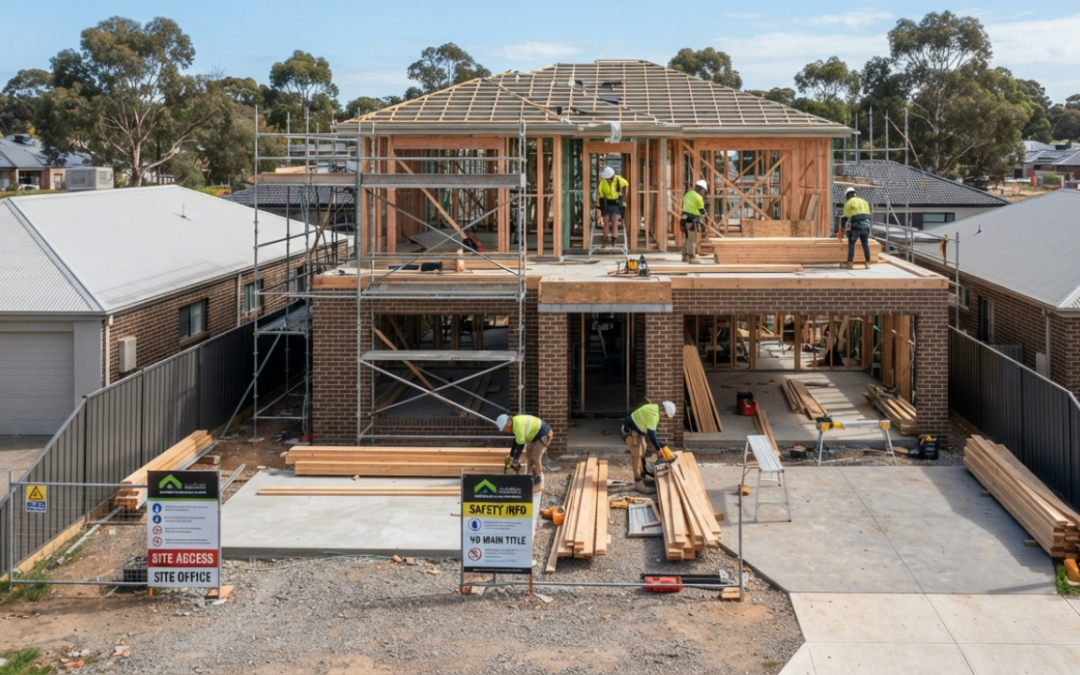
Once approvals are sorted, construction moves through a few key stages:
Site Preparation — The land gets prepped and the foundations are planned out.
Slab Stage — The concrete slab (or foundation) goes down.
Frame Stage — The frame goes up, and this is really when your home starts to take shape.
Roof and Exterior — Roofing, brickwork, or cladding gets done.
Internal Fit-Out — This is where a lot happens at once: electrical, plumbing, cabinets, flooring, painting, and fixtures.
Final Inspection — Before I hand over the keys, everything gets checked to make sure it meets the required standards and matches what was agreed.
Why Timelines Sometimes Shift
I know people expect construction to run like clockwork, but delays do happen sometimes. Usually because of:
- Heavy rain or bad weather
- Material shortages
- Not enough tradespeople available
- Design changes requested partway through
- Approval hold-ups
Once you know these things can happen, it’s a lot less frustrating if your schedule shifts a bit.
Questions Worth Asking Your Builder
Whether you’re talking to Granton Homes or anyone else, I’d suggest asking these early on:
- What’s the estimated construction timeline?
- How will I get progress updates?
- What usually causes delays?
- What happens if I want to change something mid-build?
- When should I expect each milestone to hit?
Good communication really does make the whole process a lot smoother.
Tips for an Easier Build
From what I’ve seen, homeowners who have the smoothest experience tend to:
✔ Lock in their floor plan before signing ✔ Keep copies of every document ✔ Respond quickly when a decision’s needed ✔ Leave a bit of flexibility in their timeline ✔ Focus on getting a quality home rather than rushing to the finish line
Final Thoughts
Building a home isn’t just a race to the finish. It’s about ending up with a place that actually works for you and your family for years to come.
If you’re looking into Granton Homes, I’d say understanding the timeline matters just as much as comparing floor plans or prices. Knowing what happens at each stage means you can prepare better, ask smarter questions, and feel more confident the whole way through. A realistic timeline, honest communication, and a bit of planning — that’s usually what makes for a smooth build.