
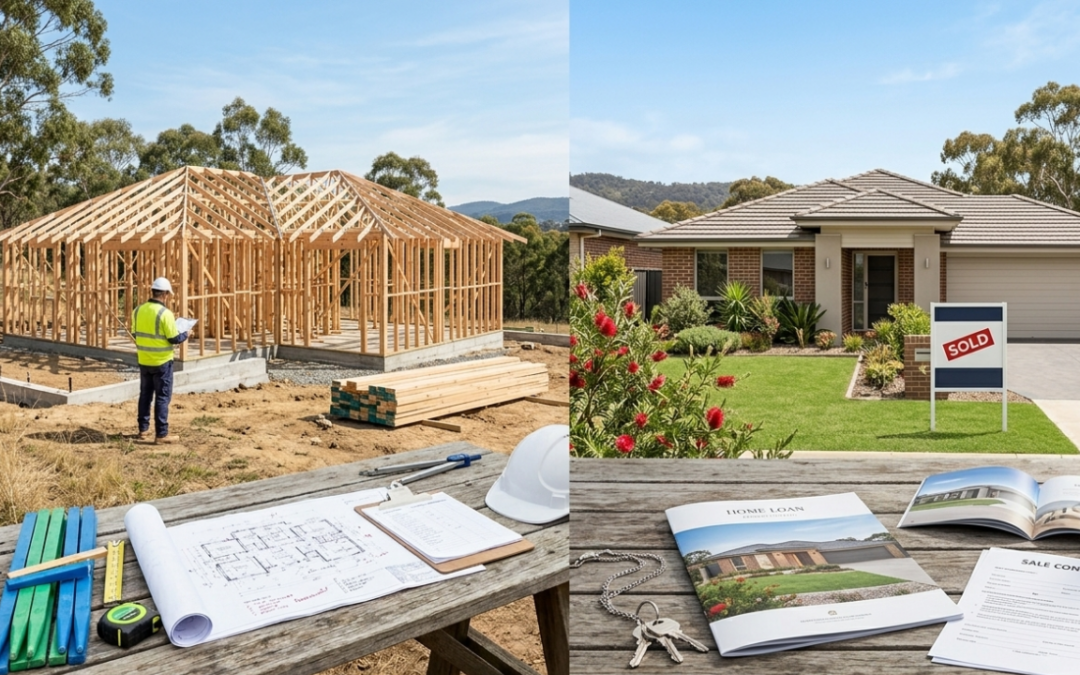
Owning a home in Australia is a dream for many, but before you get to the exciting part — decorating, settling in, making it yours — there’s a decision that trips up almost every buyer: do you build something new, or buy what’s already there?
It sounds simple on paper, but when you’re actually standing at that crossroads, it’s anything but. Both paths have genuine appeal, and both come with real trade-offs. The right answer isn’t the same for everyone, and anyone who tells you otherwise probably isn’t thinking about your life — they’re thinking about their own.
First, Know What You’re Actually Choosing Between
Building means you start with a blank slate. You pick the design, approve the floor plan, choose the finishes, and watch something take shape that didn’t exist before. It’s personal, and for many people, that’s the whole point.
Buying means you’re stepping into someone else’s completed vision. The walls are already up, the kitchen is already in — and you can walk through the front door next month if the paperwork clears. It’s immediate, and for plenty of people, that’s exactly what they need.
Why So Many People Choose to Build
The biggest draw of building your own home is control. Not just over what colour the walls are, but over how the whole space works — where the light comes in, how the rooms connect, whether there’s actually enough storage in the laundry. When you build, you’re not adapting to someone else’s habits. You’re designing around your own.
New homes also tend to be more energy-efficient, built to current standards, and — at least in the early years — cheaper to maintain. When everything is brand new, you’re not inheriting anyone else’s deferred problems.
This is exactly why builders like Granton Homes attract buyers who want that guided, structured experience. You get flexibility in the design without having to navigate the whole process alone.
That said, building isn’t without its frustrations. Construction takes time — often longer than you expect. Costs have a way of climbing when you start adding upgrades or when the site conditions aren’t quite what the original quote assumed. And there’s a very real thing called decision fatigue that sets in somewhere around the third month of choosing between nearly identical tile options. Go in prepared, and it’s manageable. Go in assuming it’ll be smooth sailing, and you might be caught off guard.
Why Buying Still Makes a Lot of Sense
The most obvious reason people buy existing homes is speed. You can see the property, make an offer, and be living there within weeks. There’s no waiting for council approvals or watching a slab get poured in the rain. If your timeline has any kind of pressure on it — a lease ending, a school enrolment, a job starting — buying is almost always the more practical choice.
Established homes also tend to sit in areas where the hard work has already been done. The roads are built, the shops are nearby, the schools have been there for decades. New estates can take years to develop that same sense of community and infrastructure, and not everyone wants to wait for it.
There’s also a straightforwardness to the buying process that appeals to people who simply don’t want a construction project in their lives right now. You see the house, you know the price, you make it happen.
The honest downside is that you’re buying someone else’s decisions. If the layout doesn’t work for you, if the bathroom is dated, if the previous owners made some unusual renovations — that’s what you’ve got. Changing it costs money. And sometimes, older homes come with issues that weren’t obvious at inspection, which is why a good building and pest report is never optional.
What Does It Actually Cost?
Cost comparisons between building and buying are tricky, because both numbers can move a lot depending on your choices.
Building can look affordable upfront, especially when you’re comparing base prices. But by the time you factor in upgrades, site costs, landscaping, fencing, and all the things that aren’t included in the initial quote, the final number often looks different from what you started with.
Buying tends to have a clearer upfront cost, but older properties sometimes carry hidden expenses — repairs, renovations, updates — that you discover after you’ve moved in.
The honest answer is that neither option is inherently cheaper. It depends almost entirely on how carefully you plan, how realistic you are about your budget, and how well you understand what’s included in what you’re paying for.
So Which One Is Right for You?
Building probably suits you better if you want a home that’s genuinely designed around how you live, you’re not in a rush, and you’re willing to stay engaged through a longer process. If having modern features, energy efficiency, and a fresh start matters to you, it’s worth the wait.
Buying probably suits you better if you need to move within a set timeframe, you want to be in an established area with existing amenity, or you just don’t have the capacity for a build right now. Convenience and certainty are real advantages — don’t let anyone dismiss them.
Some buyers end up splitting the difference: finding a good block of land in an area they already love, and building on it. That way, you’re not stuck with a home you didn’t choose, and you’re not waiting for a new suburb to develop around you. It’s not always possible, but when it works, it tends to be the best of both worlds.
What It Really Comes Down To
There’s no universally correct answer here, and anyone who tells you there is probably has something to sell you. The right choice is the one that fits your actual life — your timeline, your budget, your priorities, and how much uncertainty you’re comfortable sitting with.
Take the time to think it through properly before you commit. Talk to builders, talk to buyers agents, look at real numbers. Whether you end up building with someone like Granton Homes or buying an established property in a suburb you love, the decision will feel a lot better when you know it was made with clear eyes.