
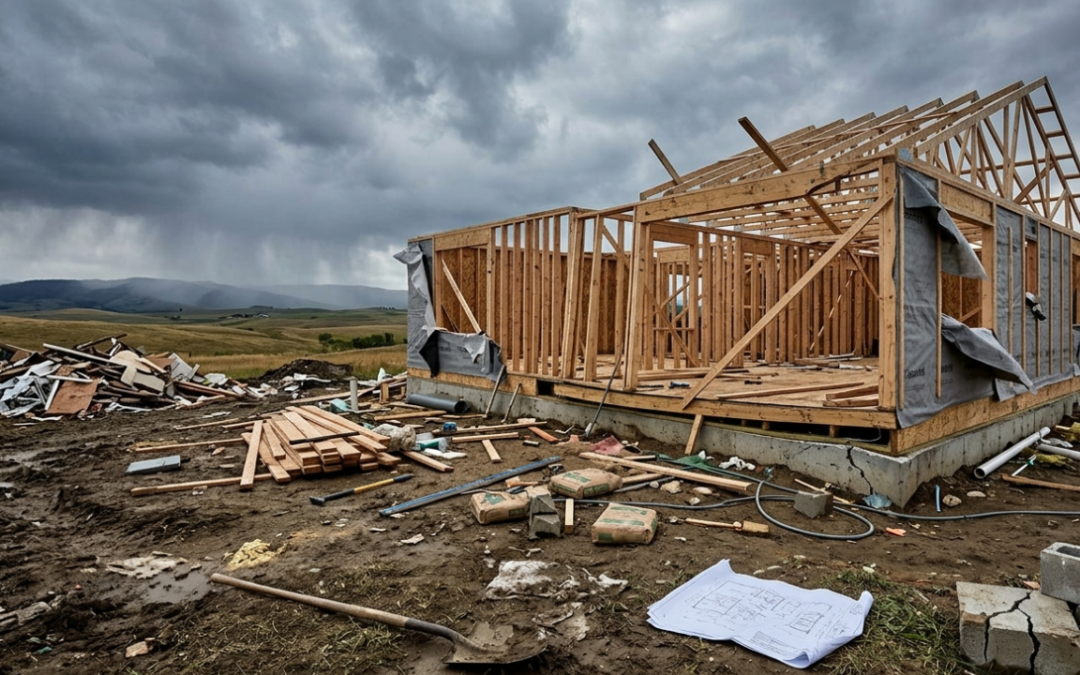
You go in with excitement, a rough plan, and a sense that if you just find the right builder and pick the right design, everything will work out. And for some people it does. But for a surprising number of others, the build that was supposed to be the most exciting project of their lives becomes a source of stress, unexpected costs, and decisions they wish they could take back.
The frustrating part is that most of the problems are not random. They are not bad luck. They are the same mistakes, made by different people, at the same points in the process — mistakes that were entirely avoidable with a bit of knowledge going in.
I have seen this pattern enough times to know that the people who have the best building experiences are not necessarily the ones who are lucky. They are the ones who went in knowing what to watch out for. So here it is — the honest list of what catches people out when building in Australia, and what you can actually do about each one.
Starting With the Wrong Number in Your Head
The budget mistake is so common that it almost deserves its own category of building problem.
Here is what typically happens. Someone sees a builder’s advertised price — say, $350,000 for a particular home design — and they build their financial planning around that number. They talk to the bank based on that number. They choose their block with that number in mind. They sign a contract with that number as the anchor.
And then the actual costs start appearing.
Site preparation — because the block turned out to need more work than anticipated. Upgrades — because the standard inclusions were not what they had imagined when they saw the display home. Approval costs — council fees, certifier fees, engineering documentation. Utility connections. Landscaping. Driveway. Fencing. Window furnishings. All the things that need to exist before a house is actually liveable that somehow did not make it into the base price conversation.
None of this is necessarily anyone’s fault. The base price is the base price — it covers what it covers and no more. The problem is assuming it covers more than it does.
The fix is simple but requires some discipline. Before you settle on a budget, have an honest conversation with your builder about the full cost picture. Ask specifically what is not included. Ask what the most common upgrades are and what they typically cost. Ask what site costs might look like based on the block you are considering. Get a realistic total before you plan around a number, not after.
And then add a contingency on top of that. Ten to fifteen percent is sensible. Something always comes up in a build, and having that buffer means it is a minor inconvenience rather than a crisis.
Not Reading the Inclusions List Carefully Enough
Related to the budget problem but worth treating separately, because this one catches people out even when they think they have been careful.
The base price of a home covers a defined specification — certain flooring, certain tapware, certain kitchen finishes, a certain level of appliances. That specification is documented in the inclusions list, and it is worth reading every line of it before you sign anything.
The reason this matters is that the display home you fell in love with was almost certainly not built to the base specification. Display homes are typically fitted out with upgraded finishes — stone benchtops instead of laminate, higher quality tiles, better tapware, more impressive fixtures — because they are designed to show what is possible, not what is standard.
When you sign a contract and then start the selections process, the gap between what you saw in the display and what comes with your base package becomes apparent. Every step up from the standard specification is an upgrade with a price tag. Some of those prices are modest. Others are not. And because you are making these decisions one at a time, it can be easy to lose track of how much you are adding to the total.
The practical response is to go through the inclusions list carefully before you sign, ask your builder to walk you through what the standard looks like versus the display, and decide upfront which upgrades are genuinely important to you and which ones you can live without. Granton Homes is transparent about what is included in their packages — use that transparency and ask the questions rather than assuming.
Choosing a Builder Based on the Wrong Things
The builder decision gets made in all sorts of ways. Some people go with whoever their neighbour used. Some go with whoever gave them the lowest quote. Some go with whoever had the nicest display home or the most professional-looking brochure.
None of those are particularly reliable ways to choose the person who is going to be responsible for building the most expensive thing you will ever buy.
What actually tells you something useful about a builder is their track record, their communication, their transparency, and how they treat you when you are asking questions rather than when they are trying to close a sale.
Look at homes they have actually built — not just photos on a website, but completed homes in person if you can arrange it. Talk to people who have built with them. Ask not just whether they are happy with the home, but whether the process itself was well-managed. Was communication consistent? Were they honest when problems came up? Would they use the same builder again?
Check their licence. In NSW, residential builders must be licensed through NSW Fair Trading. Verifying this takes five minutes and tells you something important.
Granton Homes has built a reputation specifically around the quality of the client experience as well as the quality of the homes — clear communication, a structured process, and genuine involvement with clients throughout. That kind of reputation is earned over time and is worth weighing properly. But do your own research regardless of which builder you are considering. The decision is too important to take on faith.
Rushing Through the Design Phase
This is the mistake that is hardest to reverse once it is made.
The design phase feels like a delay to a lot of first-time builders. You are excited to start. You want to see something happening. Spending weeks going back and forth on floor plans feels like it is slowing you down when you could be watching your home go up.
That instinct is completely understandable and almost completely wrong.
The design phase is the cheapest time in the entire build to change anything. A conversation about moving a wall during the design phase costs nothing. A variation order to move the same wall once the frame is up costs real money and delays the project. A discussion about adding a storage cupboard during design is a quick sketch. The same addition during construction is an unexpected cost that nobody budgeted for.
Every hour you spend during the design phase thinking carefully about how the home will work — where storage goes, how rooms connect, which direction different spaces face, how the indoor and outdoor areas relate to each other — is an hour that pays dividends for as long as you live in the home.
Granton Homes works collaboratively through the design process with their clients specifically because getting the design right before construction starts is fundamental to the quality of the outcome. Take that process seriously rather than treating it as something to get through quickly.
Designing for Today and Forgetting About Tomorrow
The home you are building right now will probably still be your home in ten or fifteen years. Your life in fifteen years will not look exactly like your life today.
Kids grow up. Parents age. Work arrangements change. Households evolve in ways that are impossible to predict precisely but entirely possible to design for in general terms.
A room that works as a nursery should also work as a study when the nursery phase is over. A ground floor bedroom that seems unnecessary now might be very useful if mobility becomes a consideration later. A dedicated work space that functions properly as a home office reflects the reality of how many Australians now work — and that reality is not going away.
None of this means trying to design for every possible future scenario. It means thinking a bit beyond the immediate and making sure the home has enough flexibility to adapt as life changes. Granton Homes thinks about this as part of the design conversation — not just what do you need right now, but what might you need this home to do in five or ten years?
It is also worth thinking about resale, even if selling feels like a very distant concern. Homes that are thoughtfully designed, well located, and built to a good standard hold their value better than ones that are not. The decisions you make during the build affect the asset value of the home for as long as you own it.
Going Quiet During the Build
Some buyers sign the contract, hand over the first progress payment, and then largely step back and wait to be told the home is ready. They assume the builder will handle everything and that their job is done until handover day.
This is a mistake, and it tends to produce worse outcomes than staying involved.
You do not need to be on site every day. You do not need to become an expert in construction sequencing or trade scheduling. But visiting the site regularly — even just once a week during active construction — keeps you connected to what is happening and means you are more likely to notice anything that needs attention while it is still straightforward to address.
Ask for regular updates. If your builder does not proactively provide them, request them. Understand what stage the build is at and what comes next. If something looks wrong, raise it immediately rather than waiting to see whether it sorts itself out. It almost never sorts itself out.
Granton Homes maintains communication with clients throughout the build — keeping them informed at each stage and making sure there are no surprises. But your involvement alongside that communication makes the process better, not worse. An engaged client and a communicative builder together produce better outcomes than either does alone.
Changing Your Mind Once the Build Has Started
Design decisions that get made during construction rather than before it are called variations, and they are expensive in ways that people consistently underestimate.
When you change something after the contract is signed, it is not just a matter of the cost of the change itself. There is the administrative cost of documenting the variation. There may be materials that have already been ordered that cannot be returned. There may be work that has been done that needs to be undone. There may be knock-on effects to the schedule that push out completion.
Some variations are genuinely unavoidable — something comes up during construction that requires an adjustment, or a problem is discovered that changes what is possible. Those variations are part of building and are handled as they arise.
But variations that happen because decisions were not made properly during the design phase are avoidable, and avoiding them saves real money and real time.
The answer is the same as it was for the design phase mistake above — be thorough before you sign. Go through every detail you can think of. Ask your builder what decisions commonly get left until mid-construction and make those decisions now. The more you lock in before the build starts, the smoother and cheaper the build will be.
Trusting Completely Without Verifying
A good builder deserves your trust. But trust and verification are not mutually exclusive, and relying entirely on your builder’s assessment of quality at every stage is not the safest approach.
Independent building inspections at key stages — typically before the slab is poured, at frame stage, at lock-up, and before handover — give you an objective view of what is happening that is separate from the builder’s own quality checks. A qualified building inspector looks at things with different eyes than the people doing the work, and they often catch things that get missed in the normal flow of construction.
This is not about distrust. It is about protecting an investment of several hundred thousand dollars with a modest additional cost that can identify issues while they are still easy and inexpensive to fix. Granton Homes builds to a high standard — but independent inspections are good practice regardless of which builder you are using, and any reputable builder will understand why you want them.
Treating the Timeline as a Fixed Date Rather Than a Range
Building a home takes longer than people expect, and delays happen in almost every project. Knowing this going in makes the experience significantly less stressful than discovering it for the first time when your completion date slips.
Weather delays concrete work and external stages. Trades are not always available exactly when they are needed. Materials sometimes have longer lead times than anticipated. Approvals take as long as they take, and councils have their own schedules that do not adjust to suit yours.
A builder who gives you a specific completion date and promises it will not move is either inexperienced or not being straight with you. A builder who gives you a realistic range and commits to communicating openly when things change is someone you can work with through the inevitable uncertainties of a complex project.
Plan your moving arrangements, your rental situation, and your financial commitments around the longer end of the range rather than the optimistic end. If the home is ready earlier, that is a pleasant surprise. If it takes as long as expected, you were prepared for it.
The Version of This That Goes Well
Here is the thing. Every mistake on this list is avoidable. Not because building a home is simple — it is not — but because the problems are predictable enough that you can see them coming and steer around them.
Go in with a real budget, not an optimistic one. Understand your inclusions before you sign. Choose your builder based on evidence rather than instinct. Spend the time on design that it deserves. Think past today’s needs into the years ahead. Stay involved during the build. Lock in your decisions before construction starts. Get independent inspections. And treat the timeline as a range rather than a deadline.
Do those things, and your build experience with Granton Homes or whichever builder you choose will be dramatically smoother than if you do not.
Building a home is one of the most significant things most people ever do. The version of it that goes well — where you move into something that works exactly the way you wanted it to, at roughly the cost you planned for, built by people you trusted throughout — is entirely achievable.