
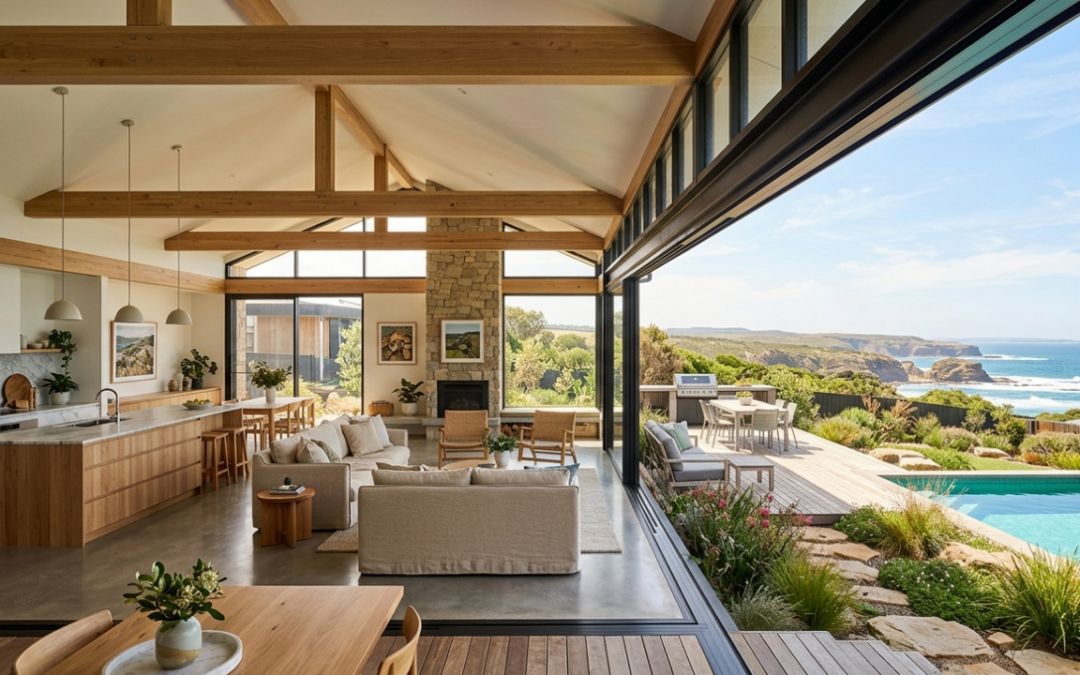
Something interesting happens when you ask Australians what they want from their homes. A decade ago, the answers were mostly about size. More bedrooms. Bigger living areas. A double garage. The assumption was that more square metres automatically meant a better home, and the market largely delivered on that assumption without asking too many questions.
The conversation has shifted. People are still thinking about size, but they are thinking harder about something else — how the home actually works. Whether it suits the way they live. Whether it will still suit them in ten years. Whether it feels comfortable on an ordinary Tuesday morning, not just when guests are over.
That shift is showing up in the homes being built across Australia right now. And if you are planning a new home — whether you are working with Granton Homes or still in the early stages of figuring out what you want — understanding where design thinking has moved is genuinely useful.
Here is what is actually shaping Australian homes in 2026, and why it matters more than just following a trend.
Open-Plan Living Why It Works and When It Does Not
Open-plan living has been popular in Australia for long enough now that it is almost assumed in new home designs. Kitchen, dining, and living areas flowing into one connected space rather than divided into separate rooms.
The reason it became popular is real. It creates a more generous feeling in a home without necessarily requiring more floor area. It keeps the person cooking involved in what is happening in the rest of the space rather than isolated in a separate room. It makes natural light easier to distribute across the main living areas. And it suits the Australian preference for relaxed, informal living over formal room-by-room separation.
But the best versions of open-plan design are not just about removing walls. They are about thinking carefully about how the zones within that open space relate to each other. Where the kitchen sits relative to the dining area. How the living zone connects to the outdoor area. Whether there is enough visual separation between cooking and relaxing that the spaces feel distinct even without walls between them.
Granton Homes thinks about these relationships carefully in the design process — not just drawing one big open space and calling it done, but working through how different activities will actually coexist within it. That level of thought is what separates open-plan layouts that feel genuinely good to live in from ones that just feel open.
The Indoor-Outdoor Connection Australia’s Best Design Advantage
No other country in the world has quite the same relationship with outdoor living that Australia does. The climate makes it possible for much of the year, and Australian culture has built around it — weekend barbecues, alfresco dinners, afternoons in the backyard that drift into evenings.
The best Australian homes are designed to make that outdoor connection effortless rather than something you have to work at.
What that looks like in practice is a living area that opens directly and generously to an outdoor entertaining space — not through a small sliding door in the corner, but through wide bi-fold or stacking doors that genuinely dissolve the boundary between inside and out. A covered alfresco area that is treated as a real room rather than an afterthought. Flooring that transitions seamlessly between inside and outside so the spaces feel continuous.
Granton Homes incorporates this indoor-outdoor thinking into their designs as a priority rather than an optional extra. In the Australian context it is not a luxury feature — it is simply how homes should work if they are going to suit the way most Australians actually live.
When you are thinking through your own design, pay attention to how the outdoor areas relate to the internal living spaces at every time of day. Where will the afternoon shade fall? Does the alfresco have enough coverage to be usable in summer? Can you see the backyard from the kitchen? These details matter more than they might seem during the design phase.
Natural Light The Design Element That Changes Everything
There is a reason homes that feel genuinely good to be in almost always have natural light working in their favour.
Natural light changes how a space feels more than almost any other single design element. A room with good natural light feels larger than it is, warmer on cool mornings, and more alive throughout the day. A room with poor natural light feels smaller and heavier regardless of how well it is decorated.
Getting natural light right is not just about putting in large windows, though that helps. It is about where those windows are positioned relative to the sun’s path across the sky, and which rooms benefit from light at which times of day. A bedroom that gets direct morning sun is a pleasant place to wake up. A living room with good afternoon light is a comfortable place to spend evenings. A study with north-facing light works without artificial lighting for most of the day.
Ventilation works alongside light in a well-designed home. Cross-ventilation — windows positioned to allow air to flow through the home from one side to the other — makes a real difference to how comfortable a house feels in Australian summers, and it reduces reliance on air conditioning. This is one of those things that costs nothing to get right during design and nothing to achieve on an ongoing basis once it is built correctly.
Granton Homes pays attention to orientation and window placement from the beginning of the design process — not as an afterthought but as a fundamental part of how the home will feel to live in year-round.
The Kitchen Worth Getting Right More Than Anywhere Else
The kitchen is the room that gets used the most, by the most people, for the most different purposes. It is where the day starts, where meals happen, where homework gets done on the bench, where people gather when guests arrive even though you told them to go sit in the lounge.
Getting the kitchen wrong is something you notice every single day. Getting it right is something you appreciate every single day.
Modern Australian kitchen design has moved towards layouts that prioritise how the kitchen actually works over how it looks in photographs. That means proper workspaces — not just impressive ones. It means storage that is genuinely functional, with things accessible where you need them rather than buried in deep corner cabinets that nobody can get into. It means considering the triangle between the fridge, the sink, and the cooking area so that the actual process of preparing food flows naturally.
Island benches have become standard in new builds for good reason — they add workable surface area, create a natural gathering point, and allow the person cooking to face the rest of the room rather than a wall. Walk-in pantries similarly earn their floor space because they make food storage accessible and organised in a way that overhead cupboards simply cannot match.
Granton Homes designs kitchens that work as the centre of the home rather than just looking the part. If you are designing a new home, spend more time on the kitchen than you think you need to. You will use it every day for years.
Flexible Rooms The Design Decision That Pays Off Over Time
The way we use homes has changed more in the last few years than in the decades before them. Working from home has gone from being unusual to being a normal part of life for a huge portion of the workforce. That shift has not reversed, and most indications are that it is not going to.
A home designed without a dedicated work space — a proper one, with a door, positioned away from the noisiest parts of the house, with enough space for a real desk and enough quiet to actually concentrate — is already starting to feel dated. Not because anyone demands a home office specifically, but because a room that can genuinely serve that purpose is now part of what makes a home functional for modern life.
Beyond work, flexibility matters because life changes. The room that is a nursery in year two might need to be a study in year seven and a teenager’s retreat in year twelve. A guest room might eventually become something else entirely. Designing spaces that can adapt — with enough size and the right proportions to serve different purposes at different times — is something Granton Homes thinks about as part of every design rather than leaving it to chance.
Storage The Honest Truth
Nobody gets excited about storage. It is not the thing you talk about when you are imagining your new home. It is definitely the thing you talk about two years after moving in when you are trying to figure out where everything is supposed to go.
Built-in wardrobes that actually fit your clothes rather than being too narrow for coat hangers. Linen cupboards that are accessible rather than being stuffed to the ceiling. Kitchen storage designed around what you actually own. A garage with enough space to park a car in as well as store the things that garages store.
These are unglamorous design priorities. They are also the ones that make a genuine difference to how comfortable and organised daily life feels in a home.
Granton Homes incorporates storage thinking into the design from the beginning — treating it as a functional requirement of the home rather than something to be figured out once the floor plan is otherwise done. If you are working through a design, push your designer on storage at every stage. You will not regret it.
Energy Efficiency Practical, Not Just Principled
There are good environmental reasons to care about energy efficiency in a new home. There are also straightforward financial reasons that will be relevant every quarter for as long as you live there.
A home that is properly insulated — in the walls, the ceiling, under the floor if appropriate — maintains its temperature more effectively and costs less to heat and cool. Windows that are sized and positioned for the climate, with appropriate glazing, reduce heat transfer in both directions. Cross-ventilation, as already mentioned, reduces the need for mechanical cooling. And a roof structure designed to accommodate solar panels — even if panels are not fitted at the outset — gives you options later as the technology becomes more accessible.
None of this requires building an unusual or highly specialised home. It requires a builder who is thinking about these things during the design process rather than treating them as add-ons. Granton Homes builds these considerations into the design conversation from the beginning, which means buyers get the benefit without having to push for it separately.
Keeping the Aesthetic Simple
There is a version of Australian home design that tries very hard to make a statement — dramatic facades, complex rooflines, busy material combinations. And then there is the version that is confident enough to be simple.
The homes that age well and feel good to live in over a long period tend to be the simpler ones. Neutral palettes that do not date. Clean lines that do not require constant updating to remain fresh. Materials that were chosen for quality and longevity rather than trend.
This does not mean boring. It means restrained. A home where the design serves the life happening inside it rather than competing with it for attention. Where the satisfaction comes from how well it works rather than how dramatic it looks from the street.
Granton Homes has a reputation for elegant, well-considered design that holds up over time homes that look as good in ten years as they did on handover day. That kind of design confidence is worth more than whatever is trending on social media this month.
Personalisation The Part That Makes It Yours
All of the ideas above are starting points, not specifications. What makes a home genuinely work for you is the layer of personalisation on top of the general principles — the specific decisions that reflect how your household actually lives.
Maybe that means a butler’s pantry positioned specifically for how you cook. A master bedroom oriented towards the morning sun because you are an early riser. A kids’ zone that is acoustically separated from the adult living areas. An alfresco that is big enough for the number of people you regularly have over.
These are the decisions that Granton Homes builds their design process around. Not handing you a standard plan and asking you to adapt to it, but starting with how you live and designing from there. Their team works through these details with clients specifically because the details are what determine whether a home feels truly personal or just generically fine.
Where This All Points
The direction of Australian home design right now is towards something that feels more considered and more honest than the old approach of maximising square metres and hoping for the best.
Homes that work with natural light rather than fighting against it. Spaces that connect inside and outside the way Australian life actually demands. Kitchens designed around cooking rather than photography. Rooms flexible enough to evolve as life changes. Storage that was actually thought through. Energy performance that is built into the structure rather than bolted on later.
And underneath all of it, a design that was shaped by who you are and how you live — not by what was easiest to build repeatedly across hundreds of identical homes.
Granton Homes is building in exactly this direction. If you are planning a new home and you want a design that reflects the way Australian life actually works rather than the way it looked in a brochure from fifteen years ago, the conversation starts with being specific about what you need — and finding a builder who will design around that.
The best thing about fun clicker upd remix is how quickly you can start playing. Good page for testing a new clicker game.
Just played click mort sim and liked the pacing. The clicker loop is quick, light, and good for a short browser session.
packing neko is one of those games that feels better once you get into the loop. Definitely worth opening for a quick run.