
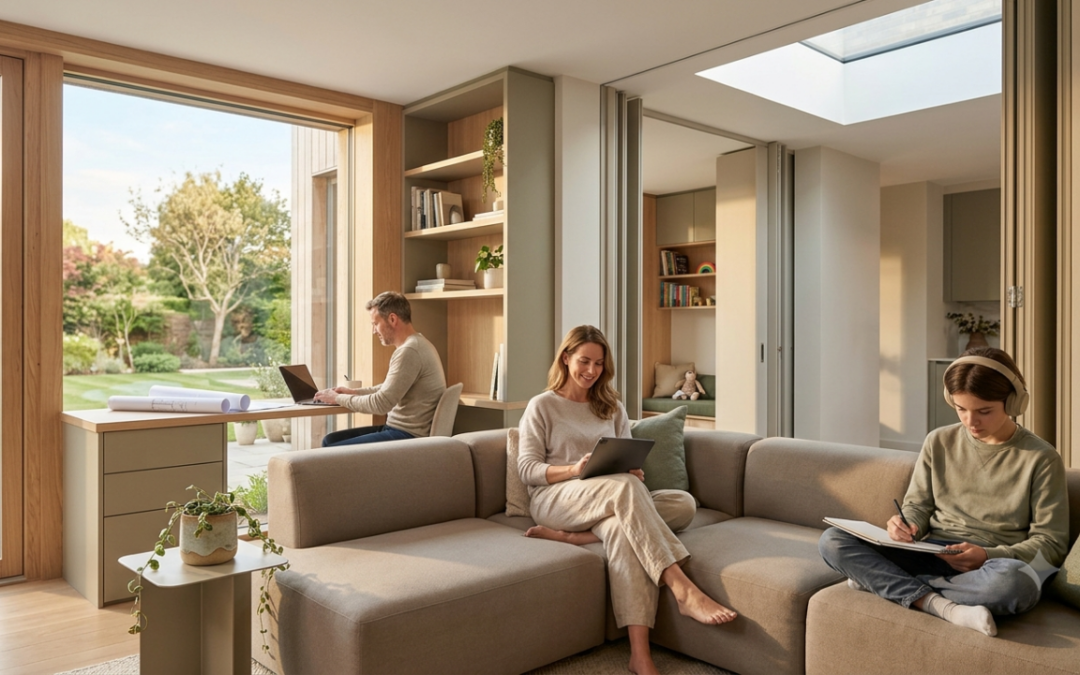
Not too long ago, the conversation around buying a home was fairly straightforward. How many bedrooms does it have? How big is the backyard? Is the kitchen modern enough? These were the questions that dominated, and the answers to them largely drove the decision.
But something has shifted across Australia in recent years. The questions buyers are asking have changed — and the answers they are looking for have changed with them. More homebuyers are now thinking about something that used to be an afterthought: whether the home can adapt as life changes around it.
Flexibility has become one of the most genuinely valued features in modern home design. Not flexibility as a vague concept, but the practical, daily kind — the ability of a home to serve different purposes at different times, to accommodate shifting needs without requiring expensive intervention, and to keep working well for the household across many different chapters of life.
At Granton Homes, that understanding sits at the heart of how homes are designed. A home should be built not just for the day you move in, but for the years that follow — and the changes those years will inevitably bring.
Why Multi-Purpose Spaces Have Become So Desirable
The idea of a home where every room serves exactly one fixed purpose is starting to feel outdated to a growing number of Australian buyers. Life is simply too varied and too changeable for rigid single-purpose configurations to remain genuinely useful across the full span of ownership.
A spare bedroom that functions as a home office during the working week and transitions easily to a comfortable guest room when family visits is genuinely more useful than one that can only ever do one of those things. An open living area that can accommodate family gatherings, children’s activities, quiet evenings, and weekend entertaining is genuinely more valuable than one optimised for a single use case.
Modern homeowners are becoming more intentional about how every part of their home is used — and less willing to maintain rooms that are rarely engaged with or that only serve one narrow purpose. The shift toward multi-purpose spaces reflects a more honest and more practical understanding of how household life actually works. Different days have different requirements. Different stages of life have different needs. A home that can respond to that variety is simply a more useful home.
How Remote Work Changed What Buyers Look For
The shift toward remote and hybrid work has had a genuinely significant effect on what Australian homebuyers expect from a home — and it shows no sign of reversing. For many households, working from home is no longer an occasional arrangement but a permanent feature of the weekly routine. And that changes what the home needs to do.
A dedicated workspace that is genuinely functional — properly lit, appropriately separated from household noise and activity, large enough to work effectively in — has moved from a nice-to-have to a genuine requirement for a growing number of buyers. But most households are not looking to simply add a room for the sole purpose of being an office. They want a space that can work as an office when that is what is needed and serve another purpose when it is not.
That is exactly the kind of flexibility that thoughtful floor plan design can provide. A layout that creates a productive work-from-home environment without sacrificing family space — that allows the household to compartmentalise work and home life even when both are happening in the same building — addresses a real and daily need for many Australian families in 2026.
Homes That Grow Alongside Families
Family needs have a way of changing in ways that are sometimes predictable and sometimes not. A young couple who builds a home with their current lifestyle in mind may find their requirements looking quite different in a few years — with children who need space and privacy, with aging parents who might need to visit for extended periods, with teenagers who want their own retreat within the household.
The traditional approach to those changing needs — significant and expensive renovation — is something more buyers are trying to avoid by making smarter initial design choices. A home that is designed with genuine adaptability built in can accommodate many of those changes without major structural intervention.
Children’s needs evolve across every stage of development, and the space requirements of a toddler are very different from those of a teenager. A home with flexible rooms that can be reconfigured and repurposed as the family moves through those stages provides considerably more practical value than one that fits perfectly at one moment and requires significant modification as the household evolves.
That adaptability is not just convenient — it is a meaningful form of long-term investment that reduces costs and disruption across the full span of family life.
Making Every Part of the Home Work Harder
One of the shifts that characterises how modern homeowners think about their space is a growing resistance to rooms that do not genuinely earn their keep. Maintaining a room that sits largely unused most of the time — that serves one narrow purpose on rare occasions — feels increasingly wasteful when the same space could be contributing to daily life in a more meaningful way.
This has driven real interest in design elements that maximise the genuine usefulness of every square metre. Open-plan layouts that support multiple activities across different times of day. Activity rooms that can flex between homework space, hobby area, and creative workspace depending on who needs what and when. Study nooks built into living areas that allow focused work without requiring a dedicated separate room. Versatile family areas that can be arranged differently depending on what the household is doing.
These design choices do not require a larger home — they require a more thoughtfully designed one. And the result is a home that feels more generous and more genuinely useful than its floor area alone would suggest, because more of it is actually being used in ways that contribute to daily life.
Designing for a Future That Cannot Be Fully Predicted
There is an honest limitation in any home buying decision — nobody can fully predict how life will change across the years of ownership. Work situations change. Family configurations evolve. Health circumstances shift. Interests and priorities develop in ways that are not always visible at the time of making the decision.
What flexible design can do is reduce the cost and disruption of adapting to those changes when they arrive. A home that was designed with adaptability in mind provides more options when life moves in a direction that was not fully anticipated — and more peace of mind in knowing that the home will not become a constraint during those transitions.
Whether the change is a shift to full-time remote work, the arrival of children, the need to accommodate a family member for an extended period, or simply the evolution of how the household wants to use its space as interests and priorities develop, a flexible floor plan gives homeowners more room to respond without the home imposing its own rigid limitations on what is possible.
Future-proofing a home is not about anticipating every specific change. It is about building in enough adaptability that the home remains a genuine asset across whatever changes come.
Why Practical Design and Visual Appeal Both Matter
Flexibility and practicality do not require sacrificing visual appeal or the design quality that makes a home genuinely attractive. The most successful modern home designs achieve both — spaces that are beautiful to look at and genuinely functional to live in, where good design choices serve the household’s practical needs and create an environment that feels considered and welcoming.
At Granton Homes, the belief is that thoughtful design always balances style with functionality. A home that looks good but does not work well for daily life falls short of what a home should be. A home that works well but has not been designed with care and quality falls short of what the household deserves. The goal is always both — practical living solutions delivered with the design quality and attention to detail that makes a home genuinely enjoyable to be in.
Flexible living spaces contribute to both sides of that balance. They improve how the home functions across changing needs and circumstances. And when they are designed well, they contribute to the overall quality and appeal of the home rather than detracting from it.
Final Thought
The modern Australian home is evolving in a direction that reflects how people’s lives actually work — varied, changeable, and requiring more from a living space than a fixed set of single-purpose rooms can reliably provide. The growing prioritisation of flexibility, adaptability, and practical design is not a trend that is likely to reverse. It reflects a genuine and lasting shift in how homeowners understand what makes a home valuable.
Homes designed with versatile living spaces — layouts that can adapt, rooms that can serve multiple purposes, floor plans that remain genuinely useful across different life stages — are simply better suited to the full span of real household life. They provide more options, create less constraint, and deliver more consistent satisfaction across the years of ownership.
That is what Granton Homes is committed to delivering for every Australian family — homes that combine modern design, practical flexibility, and long-term value, because a home that serves you well today and adapts to serve you well tomorrow is always worth building.