
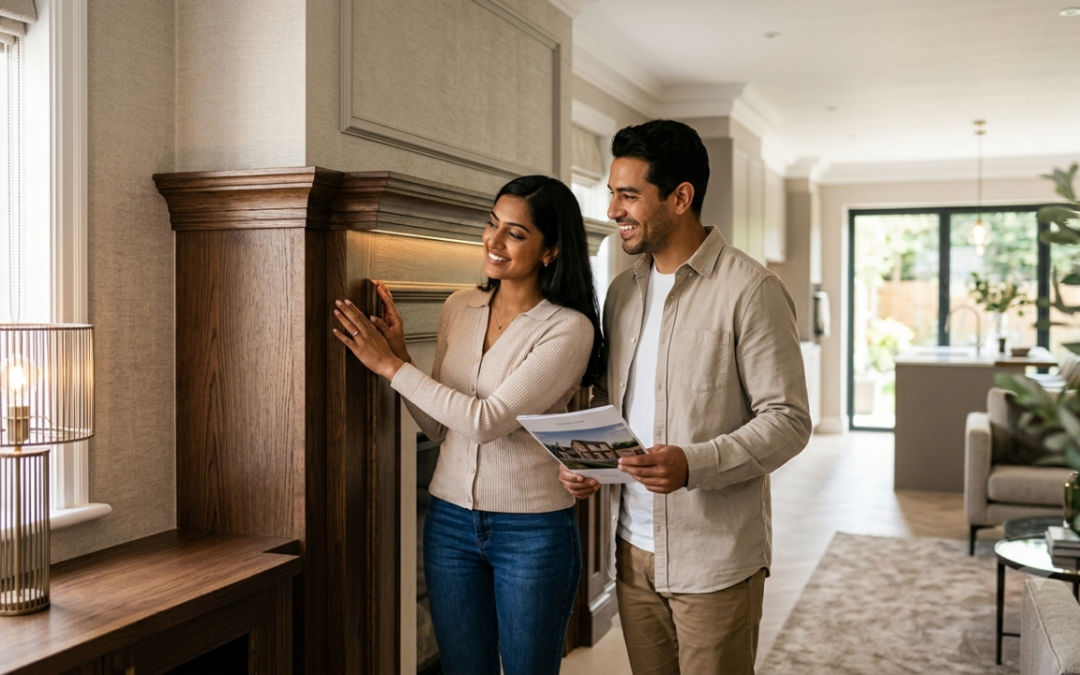
When most people start imagining their future home, the mind goes naturally to the big things. A spacious kitchen that feels generous and well-equipped. A modern design that looks current and considered. A beautiful exterior that creates a strong impression from the street. A living area large enough to accommodate family life comfortably.
These are the features that dominate early conversations about homes, and they deserve attention — they genuinely matter. But there is something that a significant number of homeowners discover after they have been living in their homes for a while, something that tends to catch people off guard when they first hear it.
The difference between a good home and a great home is rarely found in the big features. It is almost always found in the small ones. The details that did not seem particularly exciting during the inspection. The practical elements that generated no strong reaction during the search process. The quiet, functional choices that reveal their full value only in the context of real daily life.
That realisation — when it comes through experience rather than advice — has a way of permanently changing how people think about homes.
What Buyers Notice First and What Starts Mattering After
There is a predictable and very human pattern to how home buying decisions unfold. When visiting a property for the first time, attention goes immediately to what is most visible and most immediately striking. Room sizes that read as generous or limiting. Design finishes that look quality or dated. Flooring that feels premium or practical. Kitchens and bathrooms that impress or disappoint on first look.
These elements create first impressions, and first impressions are real — they influence how we feel about a space and they carry genuine information about quality and design intent. But they are formed in a single visit, under conditions that are rarely representative of what daily life in that home will actually feel like.
Once people start living somewhere, a different set of factors comes to the front. The visual elements that dominated the inspection fade into the comfortable background of routine. What comes forward are the practical details that are engaged with constantly — multiple times each day, across every week and every season of the year.
Whether the storage is genuinely adequate and positioned where it is actually needed. Whether moving between rooms feels natural and effortless or introduces small awkward moments that occur every single time. Whether the kitchen layout actually works for the way meals are prepared in real households rather than for how it looks in a photoshoot. Whether the laundry is positioned in a way that makes a repetitive daily task feel manageable or slightly more effortful than it needs to be.
These are the details that shape the lived experience of a home. And they deserve considerably more attention during the search process than they typically receive.
Everyday Convenience Is One of the Most Undervalued Things in a Home
There is a category of home features that is almost impossible to convey through photographs or marketing materials but that has an enormous impact on how enjoyable a home is to live in every day. These are the small practical conveniences that are easy to overlook when visual excitement is dominating the search process — and very hard to overlook once daily life has fully settled in and revealed their presence or their absence.
The location of storage relative to where it is actually used. Whether the home allows easy movement between the spaces that see the most traffic — kitchen to dining to living, bedroom to bathroom — without unnecessary detours or awkward layouts. Whether the kitchen has been designed with practical food preparation in mind or primarily to look impressive from the doorway. Whether the laundry placement makes the task of managing household washing feel like a simple part of the routine or a slightly illogical exercise.
None of these details generate strong reactions during an inspection. They are not the things buyers mention when they describe what attracted them to a home. But they are consistently among the things homeowners mention when they talk about what makes their home genuinely good to live in — or consistently frustrating in ways they did not anticipate.
Getting these small practical details right during the planning and selection process requires thinking about real daily life specifically rather than abstractly. It requires imagining not just how the home looks but how it will feel to move through it on a busy Tuesday morning, on a tired Friday evening, across a full Saturday of family activity. That kind of thinking produces much better decisions.
Storage Keeps Proving Its Importance in Ways Buyers Did Not Expect
If there is a single feature that homeowners most consistently wish they had thought about more carefully during the buying process, storage is a very strong contender. The pattern is remarkably consistent across generations of homeowners — storage gets underestimated before moving in and deeply, consistently appreciated or regretted afterward.
The practical reason for this is straightforward. A home without enough well-placed storage becomes progressively harder to live in as real household life fills the available space in the way it inevitably does. Things accumulate — possessions, equipment, the practical requirements of family life — and without proper places for them to go, they end up on surfaces and in corners where they create the visual and practical clutter that makes a home feel harder to manage and less comfortable to be in.
That clutter is not just an aesthetic issue. It creates real low-level stress that is easy to underestimate until you are living with it. The ongoing effort of managing a home that lacks good storage — constantly reorganising, finding temporary solutions, dealing with the visual noise of things that have nowhere proper to live — wears on people in ways that quietly affect how pleasant the home is to be in.
Conversely, a home with thoughtful, well-positioned storage — wardrobes that actually work for how the household stores its belongings, a kitchen pantry that supports real meal organisation, garage storage that handles the practical side of family life, a laundry that manages household washing efficiently — stays on top of itself without demanding constant attention. It feels calmer, more organised, and more genuinely comfortable. And that difference is felt every single day.
What Natural Light Does to a Home That Cannot Be Replicated Any Other Way
Natural light is one of those features that buyers often say they wish they had prioritised more clearly during the search process — and one of those features that buyers who did prioritise it consistently describe as one of the best decisions they made.
The effect of good natural light on how a home feels is both significant and daily. Spaces filled with genuine natural light throughout the day feel more open and more welcoming than spaces of identical size without it. They feel warmer and more alive. The atmosphere of the main living areas is lifted in a way that artificial lighting cannot fully replicate regardless of how sophisticated the system or how significant the investment.
Even rooms of modest size can feel considerably more enjoyable and more comfortable when they receive good natural light. The experience of spending an extended morning in a well-lit kitchen or a well-lit living area is simply different — better, more pleasant, more energising — than the same amount of time in the same space without that light.
These effects are felt every day, across every season, for as long as the household lives in the home. Getting natural light right requires attention during the design phase — to orientation, window placement, and how living areas are positioned relative to where light enters the home at different times of day. It is one of those decisions that is easy to make well early and genuinely difficult and expensive to address after the home is built.
Room Flow Is One of the Things That Makes a Home Feel Right
Room flow — the ease and naturalness with which people can move through a home and between its different spaces — is one of those qualities that is immediately sensed when it is present and immediately sensed when it is not, even if most people would struggle to articulate exactly why one home feels more comfortable to move through than another.
A home where the floor plan creates natural, logical connections between the spaces that need to relate to each other has a feeling of coherence and ease that is hard to achieve any other way. Movement through the home feels intuitive. Daily routines flow without introducing small friction points that occur every single time. The home responds to how people naturally want to use it rather than requiring the household to adapt to the home’s limitations.
When that room flow is missing — when the layout introduces awkward transitions, positions spaces in ways that do not make logical sense for how the household operates, or creates unnecessary complexity in simple daily movement — it creates a subtle but persistent sense of the home not quite working. It is not dramatic. But it is daily. And over months and years of living with it, it accumulates into something that meaningfully affects how much people enjoy their home.
Room flow is worth evaluating specifically and practically during any home comparison — imagining real daily scenarios moving through the space rather than simply walking through it once in an inspection mindset.
Spaces That Can Adapt Provide Value That Compounds Over Time
Life is not static, and the most practically valuable homes are the ones that can accommodate that reality without requiring major intervention every time something changes.
A room that can genuinely serve as a home office when that is what the household needs and transition comfortably to a guest bedroom when circumstances change. A study or activity area that adapts as children move through different ages and requirements. Living spaces that can be arranged differently at different stages of family life without any configuration feeling forced.
This kind of genuine flexibility provides a form of value that is easy to underestimate at the time of purchase and very easy to appreciate across the full span of ownership. Every time life changes in a way that the home can accommodate naturally rather than requiring expensive modification, the original decision to prioritise flexibility proves its worth again.
Why Practical Always Outlasts Trendy
Design trends move quickly. What feels fresh and current at the time of building can start to feel dated within a few years as the aesthetic moment passes. Homes built around specific trends often show their age sooner than their owners expected — and that creates its own quiet form of dissatisfaction.
Practical features do not have that problem. A layout that works well for daily life keeps working well regardless of what is fashionable. Natural light that fills the main living areas keeps being appreciated across every season and every year. Storage that serves the household’s genuine needs keeps serving those needs long after any particular design trend has run its course.
The buyers who focus on practicality, functionality, and everyday comfort during their search consistently end up in homes that remain genuinely satisfying for longer. The features that attracted them age well because their value was never tied to being current — it was tied to being genuinely useful. And useful does not go out of style.
Thinking About Five Years From Now
One of the simplest and most powerful questions any homebuyer can ask is whether the home they are considering will still be genuinely working well for them five years from now. Not just technically inhabitable — genuinely right for the household and the life they expect to be living.
That question shifts the frame from immediate preference to long-term fit. It encourages thinking about future family needs that are not yet present but are reasonably predictable. About how the home will accommodate lifestyle changes that seem likely. About whether the practical details that are easy to overlook today will still be providing genuine daily value across many years of real living.
The buyers who make a habit of asking that question — and who let the answers genuinely influence their decisions — consistently end up in homes they feel more satisfied with for considerably longer.
Final Thought
A great home is not built on a single impressive feature. It is built on the accumulation of many smaller decisions, each of which contributes something real to the quality of daily life over many years of genuine living.
Storage that keeps the home feeling organised without constant effort. Natural light that makes the main living areas genuinely pleasant to spend time in across every season. Room flow that makes daily movement feel effortless rather than slightly complicated. Flexible spaces that remain useful as life changes in the ways it always does.
These details do not generate the most excitement during a display home visit. They do not lead the marketing. They are not the things that create the strongest first impressions. But they are consistently the things that homeowners appreciate most after they have been living somewhere long enough for the first impressions to have faded and real life to have fully taken over.
The homes that deliver the greatest long-term satisfaction are almost always the ones designed around real life rather than around the impression they make on the day you first walk through.
That is what Granton Homes builds toward — homes where the details are right, because the details are what make the difference between a house that impressed once and a home that keeps feeling genuinely good to live in, day after day, year after year.