
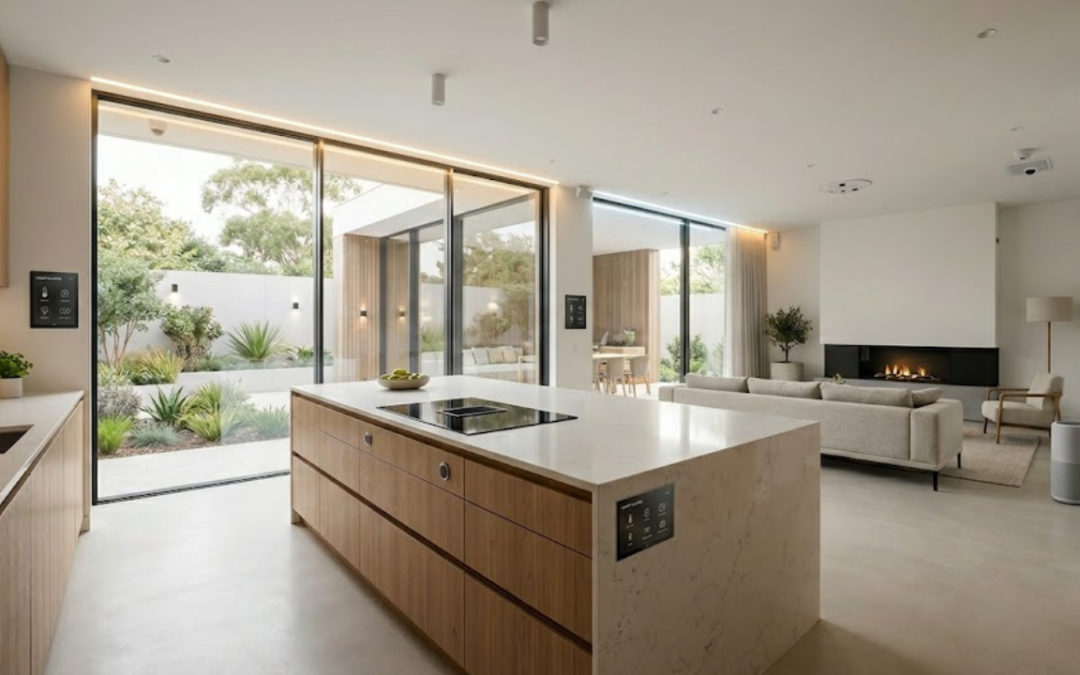
When people start putting together their home wishlist, the items that tend to appear at the top are fairly predictable. A bigger kitchen. A modern bathroom with quality finishes. A stylish exterior that makes a strong impression from the street. An open-plan living area that feels spacious and connected.
All of those things are genuinely appealing — and they matter. But many homeowners, after a year or two of actually living in their homes, arrive at a realisation that tends to catch people off guard when they hear it for the first time.
The most valuable feature in their home is not the kitchen. It is not the bathroom or the exterior or the appliances. It is something quieter and less visible than any of those things.
It is how well the home works in everyday life.
A beautiful home creates a strong first impression. A practical home delivers real value every single day, long after first impressions have faded into the comfortable familiarity of daily routine.
Why First Impressions Do Not Tell the Whole Story
The way most people make home buying decisions is heavily influenced by the experience of the first few minutes inside a property. The eye goes immediately to what is visible — paint colours and flooring, fixtures and appliances, design features that look fresh and considered and current. These things register quickly and create a powerful impression that can be hard to move past.
But here is the thing about first impressions in the context of a home. They are formed in a single visit, under conditions that are carefully curated to show the property at its best. Daily life is not a single visit. It is hundreds and thousands of ordinary days — mornings when the household is moving through its routines, evenings when everyone is winding down, weekends when the home is being fully lived in rather than briefly inspected.
What matters during those ordinary days is often quite different from what grabbed attention during the inspection. Homeowners consistently report that once real life settles in, their attention shifts away from the visual features that impressed them initially and toward the practical details that shape how easy and comfortable the home is to actually be in. Whether the layout supports the household’s routines or introduces subtle friction. Whether the storage is genuinely adequate or creates ongoing clutter and disorganisation. Whether the natural light makes the main living areas feel welcoming throughout the day.
These are the things that end up defining the experience of living somewhere. And they deserve considerably more attention during the search process than they typically receive.
What a Good Layout Actually Does for Daily Life
Of all the practical features that shape how a home functions, layout is perhaps the most foundational — and the most frequently underestimated during the buying process.
A home’s floor plan influences almost everything about how it feels to live in. Movement between rooms — whether it is natural and intuitive or subtly awkward in ways you only notice after the novelty has worn off. How the main living areas relate to each other and to the kitchen — whether they support how the family actually gathers and spends time together. How bedrooms are positioned relative to the rest of the home — whether the household gets the right balance of connection and privacy. How the home as a whole responds to the rhythms of daily life rather than requiring the household to adapt around its limitations.
A thoughtfully designed floor plan can make a home feel more spacious, more comfortable, and more genuinely organised than its actual dimensions would suggest. A poorly conceived one can make a larger home feel cramped and frustrating in ways that are hard to articulate but immediately felt once you are living with them. That is why many experienced homeowners place considerably more weight on layout than on size when they talk about what actually made their home work well for them.
The Small Conveniences That Compound Over Time
There is a category of home features that receives almost no attention during inspections and generates an enormous amount of appreciation — or regret — once daily life is fully underway. These are the small practical conveniences that do not photograph well, do not appear in marketing materials, and are very easy to overlook when visual excitement is dominating the search process.
How easily the main living areas connect and flow into each other. Whether storage is located in places that are actually convenient for how the household operates rather than just technically present. How the laundry is positioned relative to the rest of the home and whether that positioning makes one of the more repetitive household tasks feel manageable or unnecessarily effortful. Whether bedroom placement gives the household the quiet and separation it needs or creates more noise and activity than anyone wants.
These details seem minor in isolation. But they are engaged with constantly — multiple times each day, across every week, throughout every year of living in the home. Their impact compounds quietly and significantly over time. Getting them right during the planning phase costs nothing extra. Discovering their absence only after moving in can be frustrating in ways that persist for as long as the household stays in the home.
Natural Light Keeps Proving Its Value
If you ask homeowners who have been living in their homes for several years what they love most about the space, natural light comes up with remarkable and consistent frequency. And the more you think about why, the more sense it makes.
Natural light is one of the few features that simultaneously improves how a home looks and how it feels to live in. Rooms filled with good natural light feel more spacious than their actual dimensions, more welcoming than any interior design choice could achieve on its own, and more genuinely comfortable to spend extended time in. The atmosphere of the home throughout the day is lifted in ways that are hard to replicate artificially regardless of how sophisticated the lighting design is.
Beyond the aesthetic and atmospheric benefits, good natural light reduces the need for artificial lighting during the day — which has a real and ongoing impact on energy costs across the life of the home. It improves mood in ways that are well-documented and genuinely felt. And it makes the spaces where the family spends the most time feel alive and pleasant rather than merely adequate.
Getting natural light right requires attention during the design phase — to orientation, window placement, and how living areas are positioned relative to where light enters at different times of day. These decisions are straightforward to make correctly when addressed early and genuinely difficult to fix after the home is built. The investment of attention they require is among the most valuable a buyer can make.
Storage Shapes Comfort in Ways That Are Easy to Underestimate
Storage is consistently underestimated during the home buying process and consistently appreciated — or its absence consistently regretted — once daily life is fully underway. The pattern is so reliable it is almost predictable.
During the search, buyers naturally focus on what is visually engaging. The kitchen, the living areas, the master bedroom. Storage tends to register as a practical footnote rather than a central consideration. But once the household’s real accumulation of possessions, hobbies, equipment, and practical requirements is being managed every day, the quality of storage becomes one of the most significant factors in how comfortable and organised the home actually feels.
A home with genuinely good, well-placed storage — wardrobes that actually accommodate how the household stores its clothing and belongings, a kitchen pantry that supports real meal preparation, garage storage that handles the practical side of family life, a laundry designed with functional efficiency in mind — stays on top of itself with comparatively little effort. It feels more spacious, more organised, and more calm. And that translates into a meaningfully better daily living experience across every ordinary day the household spends there.
Why Flexibility Has Become So Genuinely Important
Life does not stay still for long. The household that moves into a home today may look quite different in five years — in size, in how members spend their time, in what they need different rooms to do. Work arrangements evolve. Children arrive or grow through stages that change what the home needs to accommodate. Interests and priorities shift in ways that are partially predictable and partially not.
Homes designed with genuine flexibility — spaces that can honestly serve different purposes as the household’s needs change — hold their value and their usefulness across those transitions far better than homes that are configured rigidly around a single moment in time.
A spare bedroom that can genuinely function as a home office when remote work demands it and transition comfortably to a guest room or nursery when circumstances change. A study or activity area that adapts as children grow through different ages and requirements. Living spaces that can be used differently at different stages without any of those configurations feeling forced or inadequate.
Flexibility is one of those qualities that is easy to overlook when present needs feel fixed and stable, and one that reveals its full value clearly and repeatedly every time life changes. Planning for it thoughtfully during the buying or design process costs very little in comparison to what it delivers across years of genuine usefulness.
Why More Research Is Leading to Better Decisions
The depth and quality of research that Australian homebuyers are bringing to their decisions has increased significantly in recent years. More time is being spent comparing floor plans across multiple builders. Display homes are being visited multiple times with evolving and increasingly specific questions. Homeowner reviews and experiences are being read carefully before any serious commitment is made.
All of that information has changed what buyers understand about what actually matters. The research process — when done with genuine curiosity rather than just as a formality before making a visual choice — consistently shifts attention from surface features toward the practical qualities that shape long-term satisfaction. Buyers who have done thorough research arrive at their decisions with considerably more clarity and confidence than those who moved quickly on first impressions. And that clarity tends to produce better homes.
Comfort Has Become the Real Goal
The definition of what buyers are trying to achieve when they buy or build a home has shifted in a way that reflects real and positive maturity. For many years, the aspiration was dominated by luxury and impressiveness — the most feature-packed home, the most premium finishes, the longest upgrade list. Those things have not lost all appeal. But they have been joined by something that matters more in the long run.
Comfort. The genuine, everyday kind that comes from living in a home that feels welcoming, that supports family life without demanding too much, that reduces daily stress rather than contributing to it, and that remains enjoyable to be in not just on special occasions but across all the ordinary days that make up a life.
This kind of comfort is what makes a home feel like home — not just a property that is owned but a place that is genuinely good to be in. And it comes not from impressive features but from practical ones. From a layout that works. From storage that keeps things organised. From natural light that lifts the atmosphere of every room it fills. From flexibility that allows the home to grow and adapt alongside the household.
Thinking Past the Present Moment
One of the most valuable habits any homebuyer can develop is consistently asking not just whether a home works well right now, but whether it will still be serving the household well in five or ten years.
The excitement of a new home is real and genuine. But it is temporary. What replaces it — once the novelty has fully settled into the familiar rhythms of daily living — is the ongoing experience of whether the home actually fits the life being lived in it. Buyers who factor future needs into their decision during the planning stage consistently end up in homes that remain genuinely right for them across different life stages rather than fitting perfectly for the present and gradually revealing their limitations as things change.
Final Thought
The most valuable feature in any home is not the appliance brand or the quality of the kitchen finishes or the impressiveness of the exterior. It is the ability of the home to support daily life — to make ordinary days feel easier, more comfortable, and more genuinely enjoyable for the people living in it.
Practical layouts, good natural light, thoughtful storage, and genuine flexibility rarely appear at the top of anyone’s initial wishlist. But they consistently deliver more real, lasting value than any luxury upgrade — because they are engaged with every day, across every year, throughout the full span of time the household spends in the home.
The best homes are not designed to impress visitors. They are designed to serve the people inside them — quietly, consistently, and well.
That is what Granton Homes is committed to building — homes that look right and feel right, because both matter, but that never sacrifice the second for the sake of the first.