
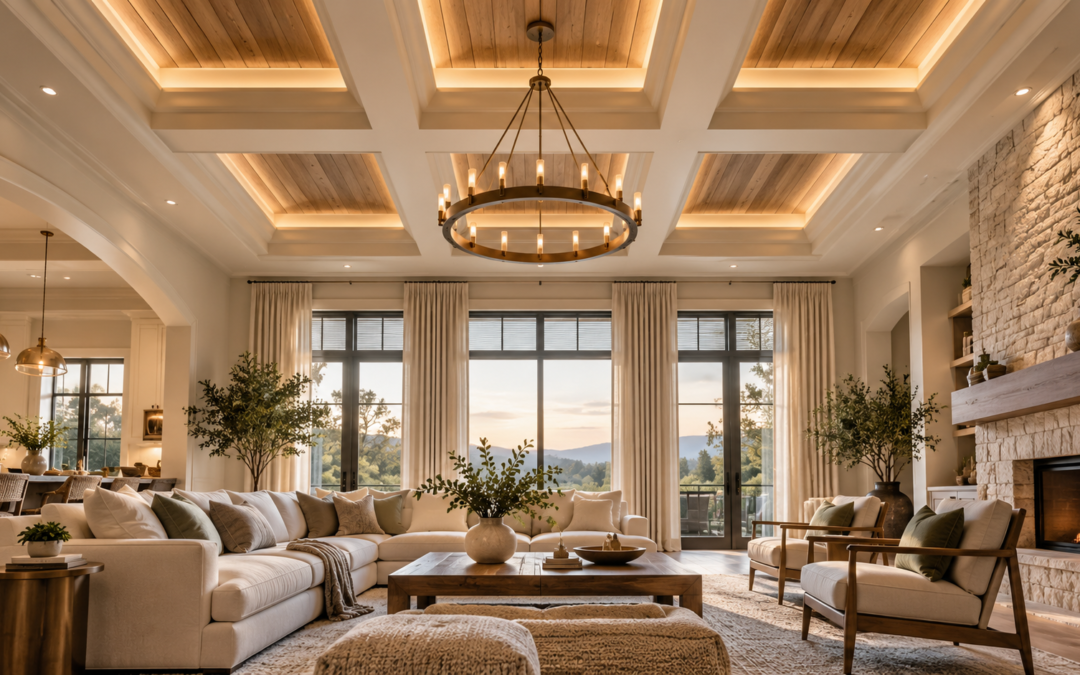
When you think about designing a new home, what do you usually notice first?
The kitchen?
The flooring?
The windows?
Maybe the colour of the walls?
But how often do you think about the ceiling?
Most people probably do not give it much thought. Yet the ceiling is one of the largest surfaces inside a home. Could it have more influence on the way a room feels than we realise?
Could a Ceiling Change the Feeling of a Room?
Imagine walking into two rooms with exactly the same floor area.
One feels open and comfortable.
The other feels smaller and more enclosed.
Why might they feel so different?
Could ceiling height, lighting, proportions and the relationship between the walls and ceiling play a part?
A ceiling does not simply sit above a room. It can affect how much visual space the room seems to have.
So, when planning a new home, should the ceiling be considered as part of the overall design rather than an afterthought?
Does Every Room Need the Same Ceiling Design?
Why should every room necessarily look or feel the same?
A living area may benefit from a more open feeling, while a bedroom might feel more comfortable with a softer and more intimate atmosphere.
A kitchen could need strong lighting and a practical layout, while a hallway may need a completely different approach.
Could different ceiling treatments help create different moods without changing the basic purpose of each room?
This does not mean making every room complicated.
Sometimes, simple design decisions can have a noticeable effect.
Could Lighting Make the Ceiling More Important?
What do you notice when you enter a room in the evening?
The furniture?
The walls?
Or the lighting?
Lighting and ceilings are closely connected.
Downlights, pendant lights, feature lighting and natural light can all change how a ceiling is experienced.
A well-planned lighting arrangement could make a room feel warm and comfortable, while poor placement may create dark areas or unnecessary glare.
So perhaps the question should not only be:
“Where should the lights go?”
Maybe it should also be:
“How should the ceiling work with the lighting?”
What Happens When the Ceiling Meets the Rest of the Home?
A home is made up of many individual elements, but do they feel connected?
Think about the transition from the hallway to the living room.
Or from the kitchen to the dining area.
Or from the living area towards an outdoor space.
Could ceiling design help create a visual connection between these areas?
In an open-plan home especially, the ceiling can become part of the way different zones are defined.
A change in lighting or ceiling detail could subtly separate spaces without putting up another wall.
Could this make an open-plan layout feel more organised?
Could a Simple Ceiling Be the Better Choice?
More detail does not always mean better design.
A ceiling with too many decorative elements may compete with furniture, lighting and other features.
Would a simpler ceiling allow other parts of the room to stand out?
For some homeowners, the answer may be yes.
The right choice could depend on the style of the home, the size of the room and how the space will actually be used.
This is why there may not be one perfect ceiling design for every home.
What About the Way a Home Feels During the Day?
A ceiling can also interact with natural light.
During the morning, sunlight may enter from one direction.
During the afternoon, the same room may look completely different.
In the evening, artificial lighting takes over.
Could the ceiling and lighting design help the room work comfortably through all three stages of the day?
This is an interesting question for anyone planning a new home.
Instead of thinking about a room as a fixed picture, perhaps it makes more sense to think about how it will change throughout the day.
Could Ceiling Design Support Your Home’s Style?
Every home has its own personality.
Some homeowners may prefer clean and contemporary spaces.
Others may enjoy more traditional details.
Some may want something warm and relaxed.
Could the ceiling quietly reinforce that overall style?
With a considered approach, ceiling details can work alongside flooring, wall finishes, lighting and furniture rather than competing with them.
When exploring home designs with Granton Homes, could looking at the ceiling as part of the complete design help create a more connected interior?
Should You Think About the Ceiling Before Construction Begins?
By the time construction starts, many design decisions have already been made.
So why wait until then to think about the ceiling?
It may be worth considering questions such as:
- How should each room feel?
- Where will natural light come from?
- What type of lighting will be needed?
- Should different areas feel visually connected?
- Would a higher or more open feeling suit the space?
- Should the ceiling remain simple or include a feature?
- Will the ceiling design work with the home’s overall style?
These questions do not necessarily lead to complicated solutions.
They simply encourage homeowners to look at the home as a complete space.
Could You Notice a Good Ceiling Without Realising It?
Perhaps that is what makes ceiling design interesting.
A well-integrated ceiling may not be the first thing you notice.
Instead, you may simply feel that the room is comfortable, balanced and easy to spend time in.
And maybe that is the real purpose of good design.
It does not always need to demand attention.
Sometimes, the best details are the ones that quietly improve the way a home feels.
For homeowners planning a new home with Granton Homes, looking beyond the obvious features could open up new design possibilities.