
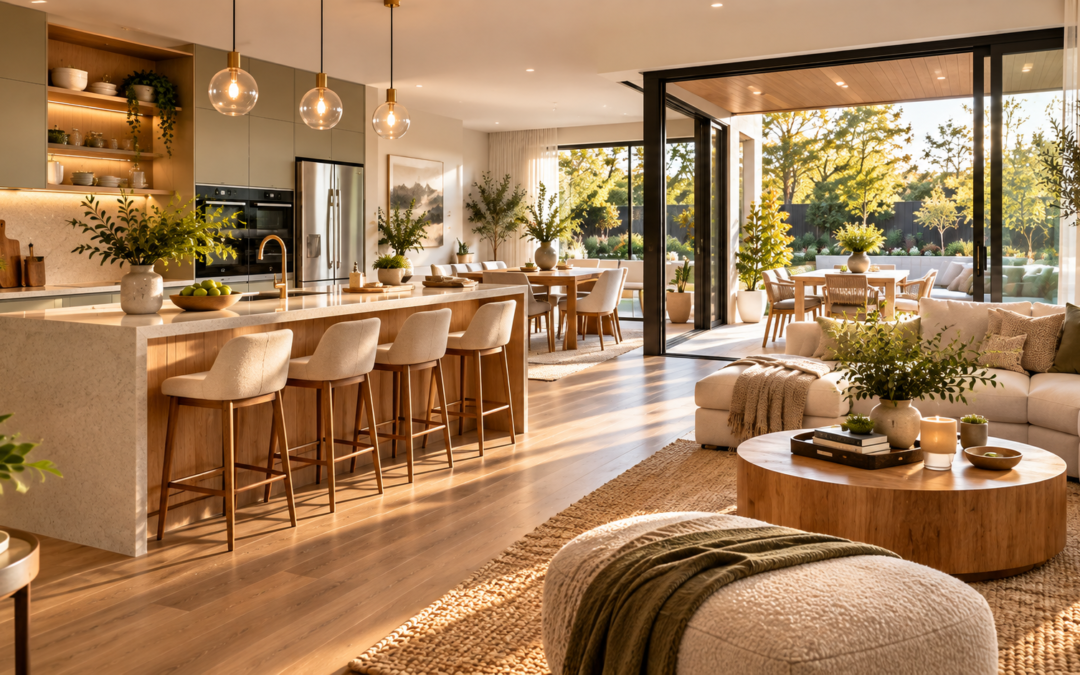
Have you ever noticed how many small decisions you make at home every day?
Where should this go?
Where should we sit?
Which room should we use?
Where can I put this?
Should I cook here or there?
Where should I work?
Which door should I use?
Most of these decisions are so small that we barely notice them.
But what if a well-planned home could make some of these choices feel more natural?
Could good home design actually reduce the number of things you have to think about?
Why Do Some Homes Feel Easy to Use?
Have you ever walked into a home and immediately understood how it works?
You know where to sit.
You know where to put your things.
You know how to reach the kitchen.
You know where guests would naturally go.
Nothing feels complicated.
What creates that feeling?
Could it be the way the rooms connect?
Could it be the position of furniture and doors?
Could it simply be that the home matches the way people naturally move?
Where Do You Put Things When You Come Home?
Imagine walking through your front door after a long day.
You have keys.
A bag.
Maybe some shopping.
Where does everything go?
Do you have to think about it?
Or does each item already have a natural place?
Could a well-planned entry area make this routine easier?
Perhaps good design is not always about adding more features.
Could it sometimes be about removing unnecessary decisions?
Could Your Kitchen Make Cooking Simpler?
Think about preparing a normal meal.
Where do you keep the ingredients?
Where do you prepare them?
Where is the cooking area?
Where do you clean everything afterwards?
Do you constantly walk back and forth?
Could a better arrangement make the process feel more natural?
A kitchen does not need to be complicated to work well.
Could the right layout simply allow you to do things in the order you naturally do them?
What Happens When Two People Need the Same Space?
Imagine one person is cooking.
Another wants to make coffee.
Someone else needs to reach the refrigerator.
Could everyone move around comfortably?
Or does one person always have to stop so another can pass?
Could small planning choices reduce these everyday interruptions?
Wouldn’t that matter when the same routine happens hundreds of times a year?
Where Does Granton Homes Fit Into This Idea?
When exploring home designs with Granton Homes, homeowners can think about more than the number of rooms or the appearance of a space.
Could the design make everyday choices easier?
Where will your morning routine happen?
Where will your family naturally gather?
Which spaces need to connect?
Which areas should remain separate?
Where will everyday belongings go?
Could asking these questions help create a home that feels more intuitive to use?
Could a Home Guide You Without You Thinking About It?
Think about a well-designed supermarket.
You generally know where to go.
You follow the natural flow.
Could a home work in a similar way?
Maybe the entrance naturally leads towards the main living area.
The kitchen connects easily with dining.
The outdoor area is easy to reach.
Private rooms are positioned away from busy spaces.
Could good design quietly guide you without making you think about every step?
Do You Have Too Many Choices at Home?
Modern homes can offer many possibilities.
Multiple living areas.
Extra rooms.
Large kitchens.
Outdoor spaces.
Home offices.
Guest rooms.
But could having too many options sometimes make a home less useful?
What if you rarely use half the spaces?
Could a simpler home that fits your actual routine be easier to live in?
Maybe the goal is not to have a place for everything.
Could it be to have the right place for the things you actually do?
Could Flexible Rooms Reduce Future Decisions?
What happens when your needs change?
A room that is an office today could become a guest room later.
A spare space could become a hobby area.
A larger living area could be divided differently as your family changes.
Could flexibility mean that you do not have to make another major decision every time your lifestyle changes?
What Does Your Current Home Make Difficult?
This could be one of the best questions to ask before choosing a new home.
What frustrates you today?
Do you constantly search for your keys?
Is the laundry too far from the bedrooms?
Does the kitchen feel crowded?
Is there nowhere comfortable to work?
Do guests always end up in the same place because other spaces do not work?
Could these frustrations become a useful checklist for your next home?
Could Less Movement Mean More Convenience?
How many unnecessary trips do you make around your home?
Walking back because you forgot something.
Going upstairs for an item.
Crossing the entire house to reach the laundry.
Moving furniture because there is no clear pathway.
Could better planning reduce some of these small inconveniences?
You may not notice one unnecessary trip.
But what about hundreds of them?
What About Your Family’s Different Routines?
Not everyone in a household follows the same schedule.
One person may wake up early.
Another may work late.
Someone may spend most of the day at home.
Someone else may be out most of the time.
Could a home support different routines without making everyone adjust to the same pattern?
Could shared spaces and private spaces work together?
Could Design Help You Decide Where to Spend Time?
What if the home naturally encouraged you to use the spaces you value?
A comfortable outdoor area might encourage more time outside.
A welcoming kitchen might encourage people to cook together.
A quiet corner might make reading easier.
A well-connected living area might encourage conversation.
Could design influence not only what you do, but where you naturally choose to do it?
Does Every Space Need to Be Used Every Day?
What if one room is used only occasionally?
Does that automatically make it a waste?
Not necessarily.
A guest room may be important even if guests only visit sometimes.
A workspace may become useful during certain periods.
A flexible room may become valuable when life changes.
Could the real question be whether a space has a meaningful purpose when you need it?
What Would You Simplify in Your Current Home?
Imagine you could make three everyday decisions easier.
What would you choose?
Getting ready in the morning?
Cooking?
Working?
Cleaning?
Organising belongings?
Having guests?
Getting outside?
Could those answers tell you more about your ideal home than a list of standard features?
Could a Home Feel Better When You Think Less About It?
This may sound strange.
But shouldn’t some parts of your home simply work?
You should not have to think about where to walk.
You should not have to wonder where to put everyday items.
You should not constantly work around awkward spaces.
Could the best home design be one that quietly supports your routine without demanding your attention?
Final Thought
A home can be beautiful.
It can be spacious.
It can have impressive finishes.
But could another quality be just as important?
Could it be easy to live in?
When considering Granton Homes, perhaps it is worth looking at your future home from a different perspective.
Not only:
“What does this home have?”
But also:
“What decisions will this home make easier for me?”
Where will I put my things?
Where will I work?
Where will I relax?
How will I move through the house?
Where will my family naturally gather?
Could the layout support different routines?
And finally:
Could my home be designed so well around my everyday life that I spend less time thinking about how to use it—and more time simply living in it?
Maybe the best home is not the one that gives you the most choices.
Maybe it is the one that makes the right choices feel obvious.