
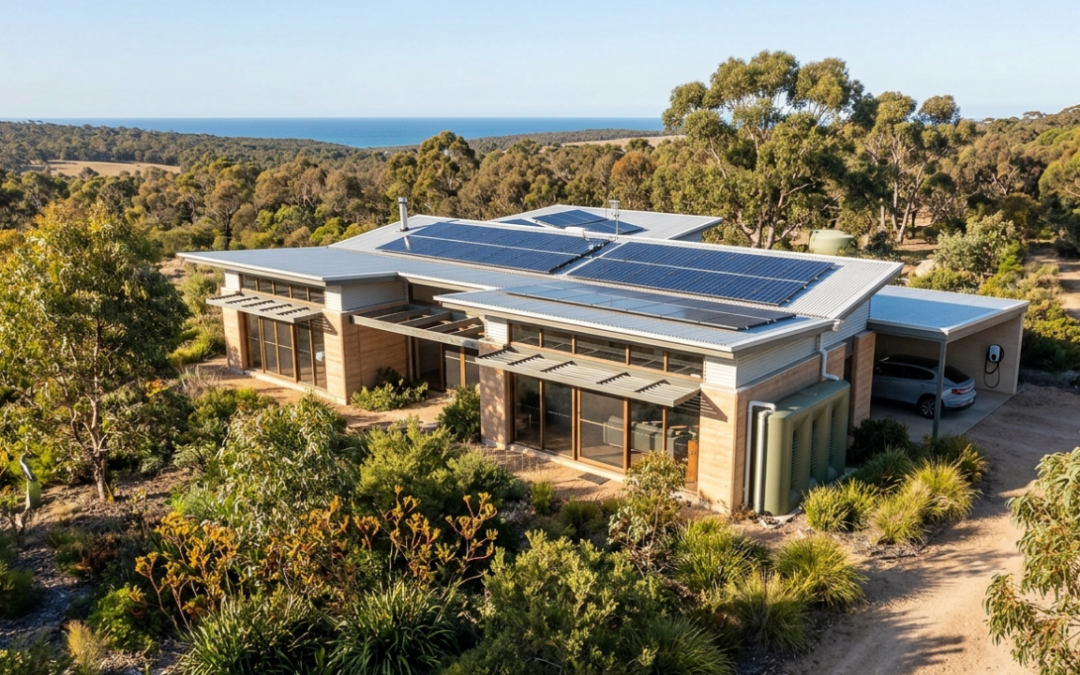
Energy efficiency has become such a buzzword in the building industry that it has almost lost meaning. Every builder mentions it. Every brochure has something about sustainability or green design or eco-friendly living. And then you move into the home and discover that your energy bills are not meaningfully different from what you were paying before, because the “energy efficient” features were mostly cosmetic rather than structural.
Real energy efficiency is not a marketing label. It is a set of specific design and construction decisions that genuinely affect how much energy your home uses — and therefore how much you pay — every single day you live there. Some of those decisions cost nothing extra if they are made during the design phase. Others require investment upfront that pays back over time.
Understanding the difference between the two, and knowing what to actually look for when building or upgrading a home in Australia, is what this is about.
What Energy Efficiency Actually Means in Practice
Before getting into specifics, it is worth being clear about what we are actually talking about.
An energy efficient home is one that stays comfortable — warm enough in winter, cool enough in summer — without requiring large amounts of energy to maintain that comfort. The ideal is a home that uses the climate intelligently, working with the sun and the wind rather than fighting against them with mechanical heating and cooling that runs constantly and costs a fortune.
This sounds obvious when you say it out loud. But the default approach to home building — particularly the volume-built approach — has historically not prioritised this. Homes got built in whatever orientation the block allowed, with windows placed for symmetry or street appeal rather than solar gain, with insulation that met minimum code requirements rather than what would genuinely perform well, and with no real thought given to how the home would behave thermally across the seasons.
The result is Australian homes that are uncomfortable for large parts of the year and expensive to fix with air conditioning and heating. Many people just accept this as normal. It does not have to be.
Builders like Granton Homes think about energy performance as part of the design process rather than as an afterthought. That difference shows up in how the home actually lives — not just in how it is described on a brochure.
Orientation — The One That Costs Nothing and Makes the Biggest Difference
If you are building a new home and you only take one piece of advice from this entire article, make it this one.
How your home is oriented on the block — which direction the main living areas face, where the windows are positioned relative to the sun’s path — has more impact on energy performance than almost any other single decision. And unlike most other energy efficiency measures, getting orientation right during the design phase costs nothing extra.
In Australia, north-facing living areas are the gold standard. A home with the main living spaces facing north receives good winter sun — low in the sky, coming in through the windows and warming the space naturally — while summer sun, which is high in the sky, can be blocked with appropriate roof overhangs or eaves without blocking the winter sun that is coming from a lower angle.
This is passive solar design, and it is not complicated. It is just a matter of thinking about sun angles when the floor plan is being developed and making sure the orientation of the home on the block supports it rather than working against it.
The opposite — a home with living areas facing south, or with windows positioned without any consideration of solar angles — is a home that will be cold in winter regardless of how good the heating system is, hot in summer regardless of how powerful the air conditioning is, and expensive to run year-round. This is not a problem you can fix after the home is built without significant expense.
If you are working through a design with Granton Homes, have a specific conversation about orientation and solar access early in the process. Where will the winter sun enter the home? How will summer sun be managed? How does the orientation of the block affect what is possible?
Insulation — What Is Actually Sufficient and What Is Just Minimum Code
Australian building code sets minimum insulation requirements for new homes. Meeting those minimums is not the same as building a well-insulated home.
Insulation works by slowing the transfer of heat between inside and outside. In winter, it keeps the heat you have generated inside rather than letting it escape through the walls and ceiling. In summer, it slows the rate at which heat from outside works its way into the living spaces. The better the insulation, the less work your heating and cooling systems have to do, and the lower your energy bills.
The R-value is the number used to measure insulation performance — higher is better. The minimum requirements in the Australian National Construction Code vary by climate zone and building element, and they have increased over time as standards have improved. But for a home that genuinely performs well thermally, going above the minimum in the ceiling and walls makes a meaningful difference to ongoing comfort and running costs.
Ceiling insulation is the most important because heat rises and the ceiling is where the most thermal transfer happens. Wall insulation comes next. Underfloor insulation matters more in cooler climates and in homes elevated off the ground.
The cost of upgrading insulation during construction — when the walls are open and the ceiling is accessible — is relatively modest compared to the ongoing benefit. Retrofitting insulation after a home is complete is much more expensive and disruptive. This is another decision that is far easier and cheaper to make during the build than to try to fix afterwards.
Ask your builder specifically what insulation specification they use as standard and what upgrading to a higher R-value would cost. In most cases the additional cost is modest relative to the long-term benefit.
Windows — More Important Than Most People Realise
Windows are one of the most significant points of thermal transfer in any home. A large single-glazed window can lose as much heat overnight as an entire insulated wall loses in a day. Getting windows right matters.
Double glazing — two panes of glass with a gap between them — significantly reduces heat transfer compared to single glazing. It keeps heat in during winter and slows heat gain during summer. It also reduces condensation and improves acoustic performance, which is a pleasant secondary benefit.
In Australian climates, double glazing was historically seen as necessary only in the colder southern states. That view has shifted as energy performance expectations have risen and as the cost of double glazing has come down. For a new build anywhere in Australia, double glazing is worth taking seriously.
Window placement is equally important as glazing specification. Large north-facing windows with appropriate roof overhangs capture winter sun while managing summer sun. Large east-facing windows can create uncomfortable glare and heat gain in the morning. Large west-facing windows create significant afternoon heat problems in summer. None of this means you cannot have windows facing east or west — it just means the sizing and shading need to be thought through.
Granton Homes incorporates window placement as part of the overall design thinking rather than just positioning windows for aesthetics. If a window is going to cause a thermal problem, that is worth knowing during design rather than discovering after handover.
Ventilation — The Free Cooling System Nobody Talks About Enough
Before mechanical air conditioning existed, Australian homes were designed to stay cool through ventilation. Wide verandahs, high ceilings, louvred windows, and thoughtful orientation allowed air to move through the home and carry heat away.
A lot of that thinking disappeared when air conditioning became standard. Homes got designed around the assumption that you would just run the aircon when it got hot, and natural ventilation became less of a priority.
The problem is that running air conditioning constantly is expensive. And in many parts of Australia, there are significant periods of the year where the outdoor temperature is actually comfortable — where opening windows and allowing air to flow through the home would maintain comfortable indoor temperatures without any mechanical cooling at all.
Cross-ventilation is the key concept. It requires windows or openings on opposite or adjacent sides of the home so that when a breeze is present, air flows through rather than just into the home. This requires thinking about it during the floor plan stage — the positions of windows and doors relative to prevailing breezes in your area.
A home designed for good cross-ventilation can be genuinely comfortable through large parts of the Australian autumn and spring without running the aircon at all. Over years of living in the home, that adds up to meaningful savings.
Solar — Worth Doing, But Do It in the Right Order
Solar panels are the energy efficiency feature that most people think of first, and they are genuinely valuable. The economics of rooftop solar in Australia are strong — high electricity prices, good solar radiation across most of the country, and government incentives that reduce upfront cost.
But here is the thing that often gets lost in the solar conversation. If you put solar panels on a poorly insulated home with single-glazed windows that faces the wrong direction and has no cross-ventilation, you are generating electricity to offset a heating and cooling load that did not need to be that large in the first place. You are solving an efficiency problem with generation rather than fixing the underlying issue.
The right order is to reduce the energy demand of the home first through good design — orientation, insulation, glazing, ventilation — and then add solar generation on top of a home that does not need as much energy. That combination is far more powerful than solar panels on a thermally poor home.
If you are building with Granton Homes and you are interested in solar, make sure the roof design and orientation support good solar panel placement. North-facing roof sections with minimal shading and appropriate pitch are what you want. A solar-ready home — where the structural and electrical elements are in place for easy future installation even if you are not installing panels immediately — is a sensible approach if budget is a constraint.
Lighting and Appliances — Important But Not the Main Event
LED lighting throughout the home is now effectively standard in new builds, and for good reason. The energy consumption of LED lighting compared to older technologies is dramatically lower, and the quality of light has improved to the point where there is no meaningful downside to making the switch.
Efficient appliances — dishwashers, washing machines, refrigerators — make a real contribution to overall energy use and are worth paying attention to when making selections. The energy star rating system makes comparison straightforward.
These things matter, but they are not the main event when it comes to energy efficiency. The design decisions — orientation, insulation, glazing, ventilation — have a far larger impact on the ongoing energy performance of your home than any combination of efficient lighting and appliances. Get the big things right first, and then layer these smaller efficiencies on top.
Water Efficiency — The Part of the Conversation That Gets Left Out
Energy and water are connected in ways that are easy to overlook. Your hot water system is typically one of the largest individual energy consumers in a home. A heat pump hot water system uses significantly less energy than a conventional electric system to produce the same amount of hot water — the difference in running costs over a decade is substantial.
Water-efficient fixtures — showerheads, tapware, toilets — reduce water consumption directly, which matters both for water bills and for environmental reasons. Rainwater collection systems can meaningfully reduce reliance on mains water for garden irrigation and, in some configurations, for toilet flushing.
None of these things are exotic or expensive additions to a new build. They are straightforward choices that pay back over time, and they are worth discussing with your builder during the design and selection phase rather than being left as afterthoughts.
The Investment Question — Does It Actually Pay Off?
The honest answer is yes, with some nuance.
Some energy efficiency features pay back relatively quickly — good orientation costs nothing extra, appropriate insulation has a modest upfront cost and clear ongoing benefit, LED lighting is effectively standard. These are not really investment decisions in the sense of weighing upfront cost against future return — they are just good practice.
Other features — double glazing, solar, heat pump hot water — involve more meaningful upfront cost and longer payback periods. The payback periods vary depending on your specific circumstances, energy usage patterns, local electricity prices, and how long you plan to stay in the home. For most Australian homeowners, these investments do pay off over a reasonable time horizon.
What is also true is that energy efficient homes are increasingly what buyers look for when purchasing, which means the investment in efficiency tends to be reflected in property value. A home that is demonstrably cheaper to run is a better asset, and the market is gradually recognising that.
Granton Homes works with buyers to understand which energy efficiency features make sense for their specific situation — their budget, their climate zone, their priorities. Not every feature makes equal sense in every context, and the conversation should reflect that rather than treating energy efficiency as a fixed package.
What This Looks Like Put Together
The best energy efficient homes in Australia are not the ones with the most technology bolted onto them. They are the ones where the fundamentals were thought through carefully during the design phase — where orientation was considered, where insulation was specified above the minimum, where windows were placed and sized intelligently, where ventilation was designed in rather than hoped for.
Get those things right and you have a home that is genuinely comfortable without fighting the climate constantly. One that costs meaningfully less to run. One that will continue to perform well for as long as you live in it.
Layer good solar, efficient systems, and water-saving fixtures on top of that foundation and you have something genuinely impressive — a home that produces much of its own energy, uses what it needs efficiently, and costs far less to live in than the standard Australian home of a generation ago.
That is what Granton Homes is building towards. And it is what you should be asking for when you are planning a new home.