
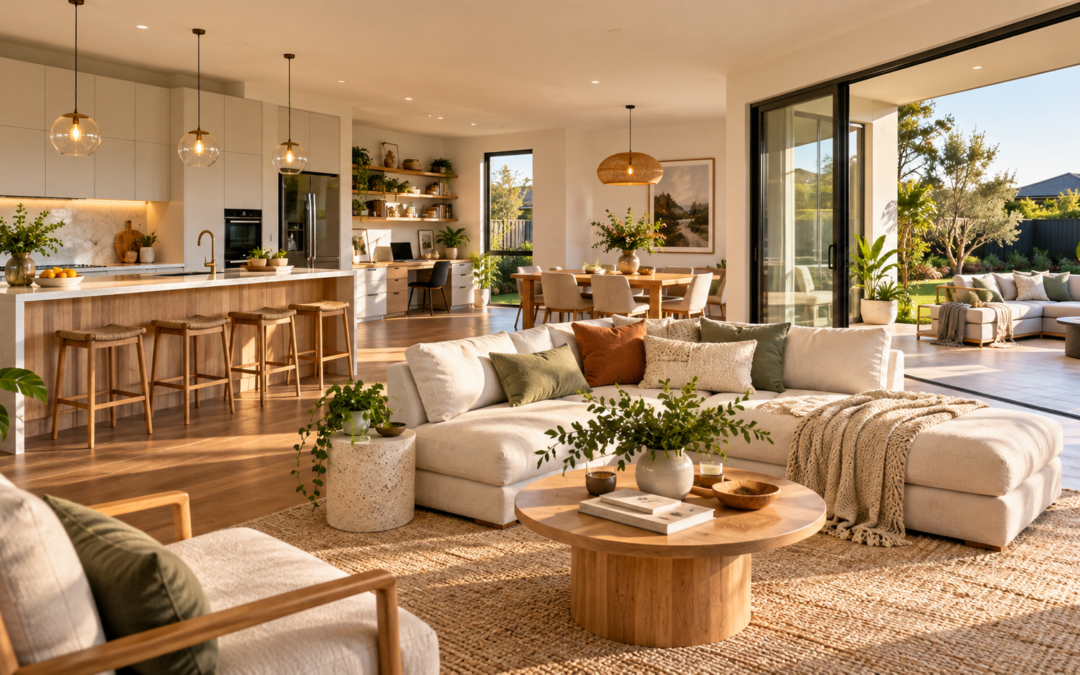
When most people picture their dream home, they think of a lazy Sunday morning, friends over for dinner, kids running around the backyard. It’s a nice picture. But what about Monday morning, when everyone’s rushing to get ready, the kitchen’s chaos, the laundry’s piling up, and someone’s trying to squeeze in a work call from the dining table?
The truth is, how your home handles an ordinary weekday might matter just as much as how it looks on a perfect Sunday.
What Does Your Home Actually Look Like on a Monday Morning?
Watch your family move through the house when everyone’s in a rush. Who’s up first? Where does everyone get ready? Where do the shoes and school bags end up? Is there a queue for the bathroom? Where does breakfast happen? These sound like small details, but they’re often where a home’s layout gets tested the most. A home can be beautiful and still make busy mornings harder than they need to be or it can be designed to make those mornings easier.
How Much Time Do You Really Spend at Home During the Week?
If you work from home, probably a lot. If you’re out the door early and back late, your needs look completely different. Someone working remotely might care most about a quiet space to focus. Someone else might just want a kitchen that works well and a living area to unwind in. There’s no single layout that suits everyone. It helps to start by understanding your own routine rather than copying someone else’s.
And What About Weekends?
Weekends matter too, obviously. Maybe you love having people over. Maybe your family spends most of it outdoors, or finally sits down together for a proper meal. Can your home handle that without feeling cramped?
An open living space helps when you’re entertaining. A good indoor-outdoor flow makes gatherings easier. A flexible room comes in handy when guests stay the night. The trick is finding a home that works for everyday life and still rises to the occasion when needed.
Are You Designing for Real Life, or for Special Occasions?
Worth asking before you settle on a design: do you actually host people often enough to need a big entertaining space, or do you just like the idea of it? Would a formal dining room get used weekly, or sit empty most of the year? Would that extra living room become the family’s favourite spot, or just extra square footage to clean? There’s nothing wrong with wanting more space just make sure there’s a reason behind it.
Can Your Home Handle Different Routines at Once?
What happens when one person’s working, another’s watching TV, someone’s cooking, a kid’s trying to study, and a guest just walked in? Can everyone find their own comfortable corner? This is where flexible design earns its keep. A home doesn’t always need more rooms sometimes it just needs spaces that can flex to different uses without everyone feeling boxed off from each other.
Where Granton Homes Comes In
With Granton Homes, you can choose from established designs or go custom based on what you actually need. But the most useful conversation happens before you pick a design at all: What does your weekday look like? What about your weekend? Which rooms get used daily, and which only occasionally? Where does the family naturally end up? Where do you need some privacy? And could your needs shift down the track? Answering these turns a floor plan into something that actually fits your life.
What’s the Most-Used Room in Your Current Home?
For a lot of households, it’s the kitchen. People cook there, talk there, grab a coffee there, help with homework there sometimes even work from there. Is it the layout? The light? How it connects to the rest of the house? Or just that it feels comfortable? Figuring out why your current home works gives you a head start on planning the next one.
If You Could Change One Thing, What Would It Be?
More storage? A better kitchen layout? A quieter place to work? More natural light? Easier outdoor access? A bigger bedroom or maybe just less wasted space? That one answer is often more useful than trying to copy every feature from someone else’s house.
Can a Home Grow With You?
Jobs change. Families grow. Kids become teenagers. You might start spending more time at home, or pick up a new hobby that needs its own space. A flexible room can shift from home office to guest room to hobby space as life changes. You can’t plan for everything, but building in some flexibility means the home stays useful for longer.
Is Bigger Really the Point?
Would you rather have a big house, or one where every room actually earns its place? More space sounds appealing, but it also means more to clean, furnish, and maintain. A smaller, well-planned home with good storage and a few flexible spaces can end up feeling more comfortable than a larger one with rooms that barely get used. There’s no universal answer here. It comes down to how you actually live.
What to Look for Before Choosing a Design
Instead of just counting bedrooms and bathrooms, picture yourself moving through the house day to day. Carrying groceries in. Getting ready on a rushed Monday. Kids coming home from school. Working from the study. Hosting friends on a Saturday night. A quiet coffee on a Sunday morning. If a design holds up across all of that, that tells you something worth paying attention to.
The Bottom Line
Maybe the question isn’t whether weekdays or weekends matter more it’s whether your home can handle both. A good home should make busy days easier and relaxed days better.
So before you choose your next home, it’s worth asking: what does my busiest day look like, and what does my best weekend look like? Does the same home work for both? And maybe the real test is this will you still enjoy this home on an ordinary Monday? Because a home isn’t just where you spend your best days. It’s where you live all the days in between.