
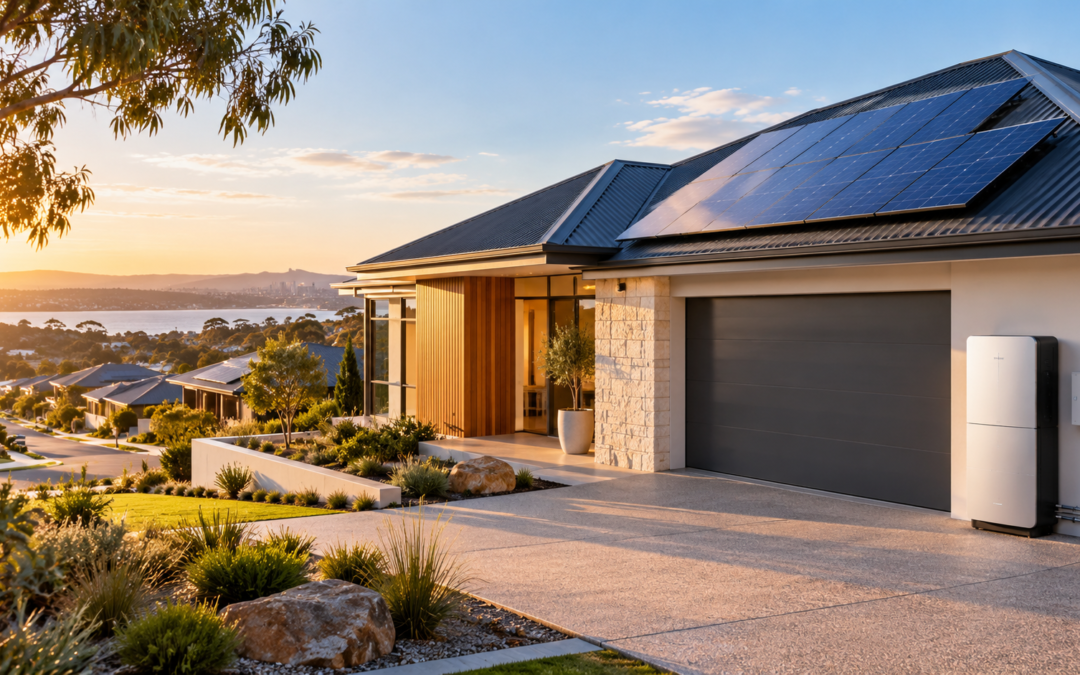
Imagine your new home making its own electricity and helping you cut down on power bills. Power costs are on a lot of people’s minds right now, so it’s no surprise that solar panels and home batteries come up often when people plan a new build.
But do you really need both? Are solar panels enough on their own, or is a battery worth the extra money?
It depends on how much power you use, what your roof looks like, your budget, and how you plan to live in the home. Before you lock in your specifications, here are eight questions worth asking.
Are Solar Panels Worth Considering for a New Home?
If you’re building from scratch, should you think about solar early?
Yes, it’s worth a look. Solar panels turn sunlight into electricity, and your household can use that power to run appliances during the day. That can mean buying less electricity from the grid.
How much you actually save depends on a few things: which way your roof faces, whether anything shades it, the size of the system, and how much power your family uses.
Think about how much electricity you’re likely to use, and when. If you use more power during the day, solar may work well for you. If most of your use is in the evening, the picture looks a bit different.
When you’re looking at designs with Granton Homes, ask how the roof layout and electrical plan can fit a solar system. Also check which options are available for your project.
What Is the Difference Between Solar Panels and a Home Battery?
Do they do the same job?
No. Solar panels make electricity when the sun is out. A battery stores electricity so you can use it later.
Here’s an example. Your panels might make more power than you need around midday. A compatible battery can save some of that extra power and let you use it in the evening, when the panels have stopped producing.
Without a battery, the extra power usually goes back to the grid. This depends on your system and your electricity plan.
The real question is whether storing that power is worth the extra cost for your household.
And just because you’re getting solar doesn’t mean you have to buy a battery.
Can a Home Battery Actually Reduce Electricity Bills?
This is one of the most common questions people ask before buying a battery.
It can help. A battery stores the solar power you make during the day, so you can use it later instead of buying from the grid.
But how much you save depends on your energy use, your electricity tariff, how much solar power you generate, and what the battery costs to install.
Also look at the battery’s usable capacity, how efficient it is, the warranty, and how long it’s expected to last.
Before you buy, ask an accredited installer to look at your likely energy use and give you a realistic idea of the savings.
It’s also smart to compare a few quotes and check whether any government incentives apply to you.
Do You Need a Battery If You Already Have Solar Panels?
Say your new home has solar panels, but your family is out most of the day and uses most of its power after sunset. Would a battery make sense?
Maybe. It depends on how much extra solar power you’d have and what it costs to store it.
If you use most of your solar power during the day, a battery may not add much. A household that sends a lot of extra power back to the grid could get more out of one.
Compare what you’d earn from sending power to the grid with what you could save by storing it and using it later.
Don’t pick a battery just because of the capacity on the label. Ask for an assessment based on how you’ll actually use power.
A battery that’s the right size is often more useful than the biggest one you can buy.
Can a Home Battery Keep Your House Running During a Blackout?
If the grid goes down, will your lights, fridge and other appliances keep working?
Not always. Many solar and battery setups don’t provide backup power during an outage.
Some systems need extra equipment, the right electrical setup, and a separate backup circuit. What you can run during a blackout also depends on the size and design of the system.
If backup power matters to you, talk about it before you choose your equipment.
Ask which circuits will stay on, how long the battery might last with different loads, and whether the system can run safely during an outage.
Don’t assume a battery means your whole house will have power in every blackout.
Should You Plan for Solar Before Construction Begins?
Does planning early make things easier?
It does. It lets you think through important details before the house is built.
Your roof design, the amount of roof space, shade from nearby trees and buildings, where the inverter goes, and the electrical layout can all affect your options.
You might also want to add a battery later if your budget is tight right now.
But don’t assume it will all work together later. Ask your solar installer which inverter and system setup suits your plans, and what extra equipment you might need down the track.
When you go through specifications with Granton Homes, ask which solar-related provisions or upgrades are available, what’s included, and whether installation is part of your building contract or something you arrange separately.
Get these details in writing. It makes budgeting much easier.
How Much Roof Space Does a Solar System Need?
Is every roof right for the system you want?
Not always. The usable space depends on the shape of the roof, which way it faces, its pitch, shading, and anything that gets in the way.
Your installer will work out where the panels can go to produce power well. Roof access, safety rules, and where other equipment sits can also change the final layout.
If you’re still choosing a design, ask how the roof can fit solar panels without hurting other things that matter to you.
Think about your future needs too, like charging an electric vehicle or adding more appliances.
Plan your solar system around how much power your home will need, not just around how many panels can fit on the roof.
What Should You Ask Before Investing in Solar and Battery Storage?
Before you commit, make sure you understand the full cost and what the system can realistically do.
Here are some good questions to ask:
- What size solar system suits my household’s expected power use?
- Will a battery save me enough to justify the cost?
- What are the installation costs and ongoing charges?
- Will the system work with my home’s electrical setup?
- Can the battery provide backup power in an outage?
- What warranties cover the panels, inverter and battery?
- Is the installer properly accredited?
- Are there any current rebates or incentives I could get?
Ask for written quotes from more than one trusted provider. Compare systems of the same size, with similar equipment, warranties and installation terms.
Government incentives and eligibility rules can change, so check the current rules before you count on any rebate.
Final Thoughts: Should You Add Solar Panels and a Battery to Your New Home?
Solar panels and home batteries can help some Australian households manage their power use and rely less on the grid. But the right system depends on your habits, your roof, your budget, and your long-term plans.
A battery isn’t right for everyone. For some buyers, solar panels alone are a sensible place to start.
Whether you’re looking at designs with Granton Homes or planning your home’s electrical specifications, think about solar early, so you know your options before building starts.
Before you choose, ask yourself one last thing: Am I picking solar and a battery because they suit my household, or just because they’re popular?
The best decision starts with knowing how much power you’ll use, comparing the full costs, and choosing equipment that suits your home.
Note: Solar performance, installation costs, battery savings and government incentives vary by property, system and location. Get advice from an accredited installer and check current government guidance before you buy.