
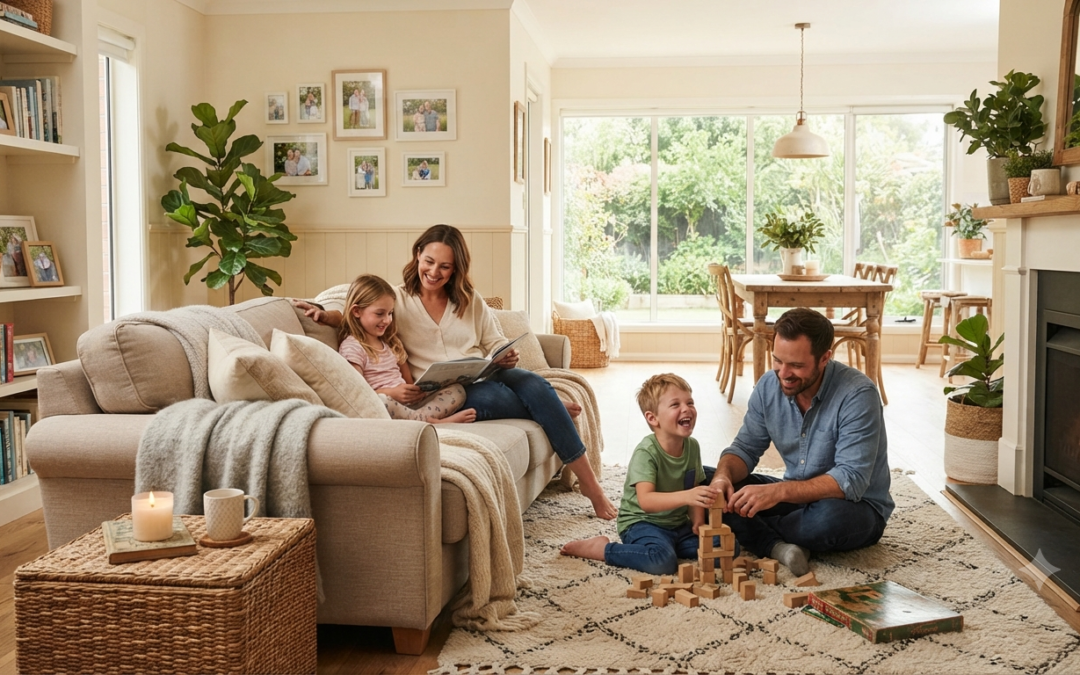
Moving into a new house is exciting.
For months, you’ve probably been staring at floor plans, picking finishes, comparing colours, and picturing what the finished place will look like.
Then the day finally comes.
Boxes everywhere, furniture getting shuffled around, everything still smells new.
But give it a few weeks, and something shifts.
You stop treating the house like a project and just start living in it.
That’s usually when you find out whether the home actually works for you.
A Beautiful House Isn’t Always a Comfortable One
Photos show you how a home looks. They don’t really tell you how it feels to live in.
A room can look amazing in pictures and still have an awkward layout. A big kitchen can look impressive and still lack proper storage. A gorgeous bedroom might not even fit the furniture you already own. That’s why how a house actually functions matters just as much as how it photographs.
Picture Your Normal Day
One of the best ways to judge a home’s design is to walk through an ordinary day in your head.
Where do the keys end up? Where do the shoes and bags go? Can you actually move around the kitchen without bumping into someone? Can everyone get ready in the morning without stepping on each other’s toes? Is there a quiet spot to work? Can you sit and relax without feeling like you’re parked in the middle of a hallway? These little things add up more than people expect.
Storage Is the Thing You Notice Later
An empty house looks huge. Every room feels spacious.
Then you move in and suddenly there’s clothes, appliances, cleaning supplies, books, tools, and all the other stuff that comes with everyday life.
That’s when storage stops being an afterthought. A proper pantry, built-in wardrobes, decent linen storage, a laundry that’s actually planned out properly none of this gets much attention on a display-home tour, but it’s often what ends up mattering most once you’re actually living there.
Light Changes How a Room Feels
Natural light makes a bigger difference than most people expect. Two rooms can be the exact same size, and the one with better daylight will feel completely different.
Think about how the sun moves through the house across the day. Where will you eat breakfast? Where do you want to hang out in the afternoon? Which rooms need to stay private? Questions like these are worth asking when you’re comparing designs.
Don’t Overlook the Outdoor Space
For a lot of Australian households, the outdoor area basically works as another room. It’s where breakfast happens, where friends come over, where the kids play, where you sit at the end of a long day.
You don’t need a massive backyard for this to work. What matters is whether the space actually suits how you live.
Build for the Life You’re Actually Living
If Granton Homes is on your shortlist, it’s worth going beyond the usual “how many bedrooms do we need” conversation.
Think about what your household really needs day to day. Maybe you work from home. Maybe you love cooking. Maybe you need somewhere quiet to escape to. Maybe outdoor entertaining is a big deal for you. Maybe extra storage matters more than an extra living room.
There’s no one-size-fits-all version of the “perfect” home it depends entirely on how you live.
What About Down the Track?
Your home might need to do a different job five or ten years from now. Kids grow up. Work situations change. Families expand or shrink.
That’s where a flexible room comes in handy. A study today could be a bedroom tomorrow. A spare room could turn into a hobby space. A big open living area could eventually get split into separate zones.
Thinking about that flexibility early on can help your home stay useful for a lot longer.
The Little Things Usually Matter Most
Ask people what they love most about their home, and it’s rarely the most expensive feature.
It’s usually something small a pantry that actually works, a power point in exactly the right spot, a quiet reading corner, a laundry that doesn’t drive you crazy, a shaded bit of outdoor space, a cupboard placed exactly where you need it.
These are the details that quietly become part of everyday life.
Final Thoughts
A house doesn’t become a home just because the build is finished.
It becomes a home once the space starts working with your life, not against it.
So if you’re weighing up Granton Homes against other builders, don’t just ask “does this house look good?”
Ask “will this house actually make everyday life easier?”
That one question can shape better decisions about layout, storage, light, outdoor space, and flexibility.
Because at the end of the day, the best home isn’t the one that impresses everyone on day one.
It’s the one you still love living in years down the track.
Discussion
If you’ve already built or bought a home:
What’s one thing you didn’t think would matter much but now can’t imagine living without?