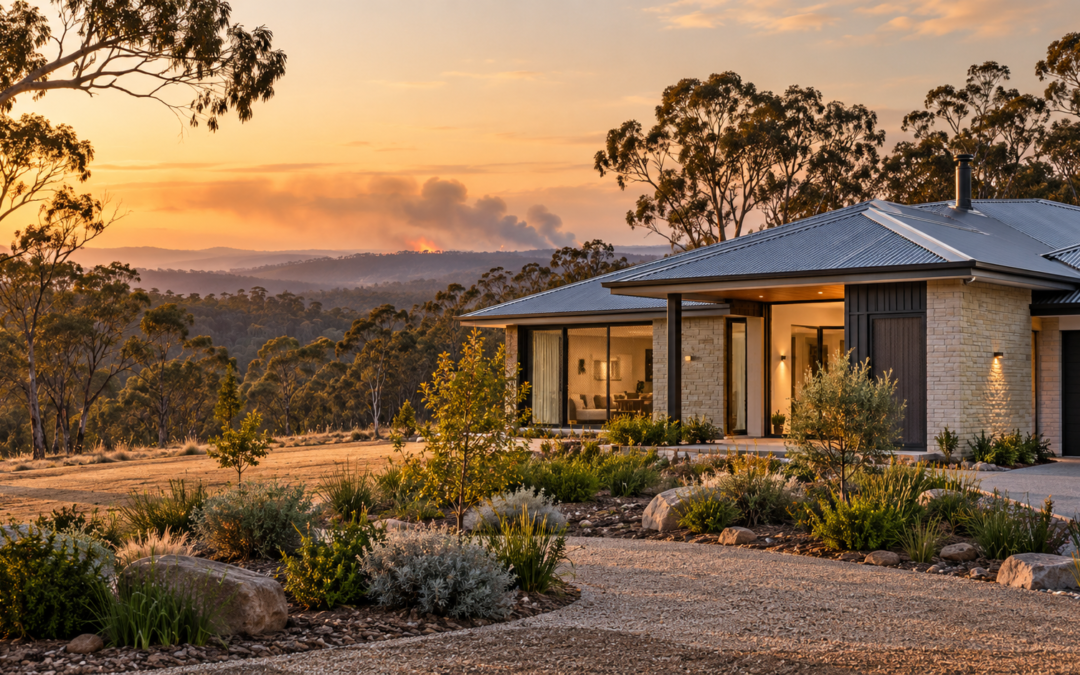
If you’re planning to build a new home in Australia, here’s a question worth asking early: is your block in a bushfire-prone area?
Most buyers get caught up in the floor plan, the kitchen, the bedrooms and how the house will look from the street. That’s fair. But if your land is exposed to bushfire risk, there can be extra requirements that change the materials, the building methods and even the overall design of your home.
That’s where a Bushfire Attack Level rating comes in. You’ll usually hear it called a BAL rating.
If you’re exploring home designs with Granton Homes, getting your head around BAL ratings now will help you ask better questions before the plans are locked in.
What Is a Bushfire Attack Level (BAL) Rating?
A BAL rating tells you how exposed a building could be to bushfire hazards. These include radiant heat, flying embers and, at the higher levels, the chance of direct flame contact.
To work it out, an assessor looks at a few things: the vegetation around the site, how far that vegetation is from the proposed house, how steep the land is, and the local fire weather conditions.
The end result decides which bushfire-resistant building requirements apply to your property.
It’s also worth knowing that a BAL isn’t really a rating for the land on its own. It relates to the exact spot where the building will go, and it depends on the assessment method being used.
Does Every New Home Need a BAL Assessment?
No, not every property carries the same level of risk, and the rules differ depending on where you’re building.
If your block sits near bushland, grassland or any other thick vegetation, check whether it falls inside a designated bushfire-prone area. Your local council or building authority is the best place to start, as they can explain the planning controls that apply. And if an assessment is needed, or just a smart move, a qualified bushfire practitioner can assess your proposed building site.
Either way, it makes sense to find out whether bushfire rules could affect your project before you commit to a design.
What Are the Different BAL Ratings?
Australian bushfire construction guidance uses a handful of BAL categories. Each one points to a different level of possible exposure, and each one comes with its own construction requirements.
Here are the main ones:
- BAL-LOW: The risk is considered low enough that the special construction measures for the higher categories aren’t required.
- BAL-12.5: Mostly about the risk of ember attack, along with lower radiant heat.
- BAL-19: A higher level of exposure than BAL-12.5.
- BAL-29: Higher again, with more radiant heat and a greater ember risk.
- BAL-40: Very high exposure.
- BAL-FZ: Short for Flame Zone. This is the top category, linked to the highest level of bushfire exposure.
Every category has specific requirements under the relevant Australian Standard and the building regulations in your area. What your home actually needs will depend on your assessment and the rules that apply to your project.
Can a BAL Rating Change Your Home Design?
Yes, it can. Depending on the level assessed, some of the materials and construction details in your new home may need to change. The requirements can affect:
- External walls and cladding
- Windows, glazing and external doors
- Roof coverings, eaves and other roof details
- Screens and openings where embers might get in
- Decks, verandahs and other attached structures
None of this means you can’t have a good-looking, modern home in a bushfire-prone area. You absolutely can. The design just has to take the site’s risk into account and meet the rules.
If you’re talking through your preferred design with Granton Homes, ask which site-specific assessments and building requirements need to be considered before the plans are finalised.
Does the Position of Your House on the Block Matter?
It can. Where the house sits on the block has an effect on how exposed it is to bushfire hazards.
For instance, the distance from nearby vegetation and the slope under or around the building can change the assessment. On some blocks there’s enough room to try a few different positions.
That said, moving the house further from the vegetation won’t automatically take away the need for an assessment, and it doesn’t guarantee a lower BAL rating either.
So before you decide where the house goes, get advice from the right professionals and check for any planning restrictions on your property.
Can Landscaping Help Reduce Bushfire Risk?
Landscaping can play a part in managing bushfire risk, but it shouldn’t be treated as a replacement for the building measures you’re required to follow.
How you design the garden, manage the vegetation and choose materials around the home can influence how exposed the property is to certain hazards. Depending on your location and local advice, you might think about:
- Clearing dry leaves and other things that can burn
- Keeping the vegetation around your property well maintained
- Not letting flammable material build up near the house
- Keeping gutters and roof areas free of debris
- Following your local fire service’s advice on preparing your property
What works best will depend on your site, the vegetation around it and the local conditions.
Should You Check the BAL Rating Before Choosing a Builder?
Knowing your site’s bushfire requirements early puts you in a much better position to make decisions about the design and the build.
If the assessment turns up extra requirements, they can affect what materials you pick, how things are detailed and how the whole project is planned.
Before you go any further, it helps to ask:
- Is my property in a designated bushfire-prone area?
- Is a BAL assessment required for what I want to build?
- Who arranges the assessment, if I need one?
- Could the rating affect the house design I like?
- Which construction materials and details might be required?
- Are there any extra planning or approval steps?
If you’re researching designs with Granton Homes, these questions can help you figure out what needs to be confirmed for your particular site. Whatever the options and requirements turn out to be, have them checked by the right professionals before construction starts.
Final Thoughts
So, does a BAL rating affect your new home design?
It can. The rating helps decide the construction requirements for homes facing different levels of bushfire risk. If you understand those requirements early, it’s easier to plan your materials, building details and site layout.
Every property is different, so try not to assume that one design or one set of materials will suit every location. Check the local requirements for your own block.
And if you’re planning a new home with Granton Homes, look into your property’s bushfire-related requirements before you finalise your design.