
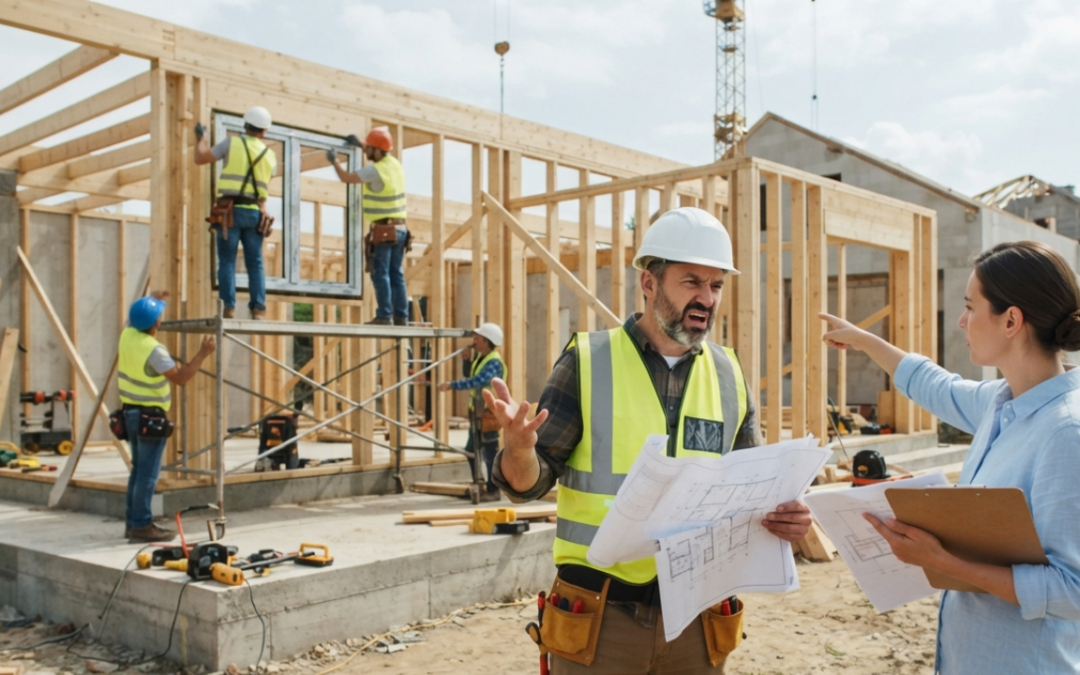
Ask anyone who has been through the home building process what they found most challenging, and the answers you get are often not what you might expect. The construction itself. The design decisions. The timeline. These things come up, of course. But one issue surfaces in almost every honest account of the home building experience, across builders and across different types of projects.
Communication. Or more specifically, the lack of it at the wrong moments.
Waiting too long for updates and not knowing where the project stands. Discovering that something assumed to be included in the contract is actually considered an optional upgrade. Not understanding what decisions need to be made and when, and then being caught off guard by a deadline. Feeling uncertain about who to contact when a question arises during construction.
These are not dramatic failures. They are often small gaps mismatched expectations, assumptions that were never tested, information that did not get shared at the right time. But they have a real effect on the experience of building a home, and they add a layer of stress to what should be one of the most rewarding things a person does.
The encouraging part is that most of them are genuinely preventable. Not through luck, and not by finding a builder who operates perfectly without any gaps. But through better preparation, clearer questions asked earlier in the process, and more realistic expectations about what the journey involves.
Why the Communication Gap Exists in the First Place
Understanding why communication problems happen in home building helps with knowing how to prevent them.
The most fundamental reason is a difference in perspective and experience. For the homeowner, this is most likely the first time they have been through this process possibly the only time in their life. Everything is new. Every decision carries weight. And because the whole experience is unfamiliar, it can be hard to know what questions to ask or what information to proactively seek out.
For the builder, the situation looks entirely different. They are managing multiple projects simultaneously, each at different stages of construction. They have been through this process many times, which means they have a very clear internal understanding of how things work but that understanding is not always communicated to clients who are experiencing everything for the first time.
This combination a first-time client with no baseline for what to expect, and a builder whose familiarity with the process makes it easy to assume certain things do not need to be explained is exactly where misunderstandings take root.
A client assumes a particular fitting or feature is included in the standard package based on how it was presented in the display home. The builder categorises it as an upgrade. Nobody explicitly addressed the difference, and the client does not discover it until much later in the process when the implications are harder and more expensive to address.
These situations are not usually the result of bad faith on either side. They are the result of assumptions that were never questioned. And questioning them specifically, systematically, before anything is signed is one of the most effective things a buyer can do.
The Questions Worth Asking Before Construction Begins
Many buyers hold back on asking questions because they do not want to seem difficult, or because they are not sure whether a question is reasonable, or simply because the excitement of the process makes it easy to defer detailed questions until later when things seem more real.
Later, in the context of a home building project, tends to be a more expensive and more stressful time to discover that something was not what you assumed. The habit of asking specific questions early before anything is committed to paper consistently proves its value across the full span of the project.
What exactly is included in the quoted price? This question sounds basic, but the answer frequently reveals important information that changes the picture of what is actually being purchased at that price. Understanding specifically what is included and what is treated as an upgrade creates a shared baseline that prevents the most common category of mid-project surprise.
What happens if design changes are requested after contracts are signed? Change requests during construction are common, but the process and cost implications vary significantly between builders. Knowing what that process looks like before you are in the middle of it means you can make more informed decisions about what to finalise during the design phase and what flexibility you have if your thinking evolves.
How will updates on the project’s progress be communicated, and how often? This is one of the questions that most clearly distinguishes the building experience that feels manageable from the one that feels anxious and uncertain. Knowing in advance whether updates will come weekly or only when something specific happens, who will communicate them, and through what channel, sets an expectation that makes the waiting much less stressful.
Who is the right contact for different types of questions during construction? Having a clear understanding of who to call or email when a specific type of question arises prevents the confusion and frustration of reaching out to the wrong person and getting passed around before reaching someone who can actually help.
Which decisions need to be made and finalised before work begins? Being surprised by a decision deadline during construction when choices were assumed to be still open is a common source of stress that can be largely eliminated by understanding the decision timeline upfront.
These questions are not difficult to ask. They do not require any special expertise. But the habit of asking them specifically and recording the answers creates a foundation of shared understanding that makes the rest of the project considerably smoother.
What Display Homes Do Not Tell You
A display home visit is an excellent experience for understanding how a particular design looks and feels in three dimensions. The layouts that were abstract on a floor plan become concrete. The size of rooms that seemed adequate or generous on paper become real and assessable. The overall atmosphere of a design how it feels to be inside it becomes available in a way that no photo or diagram can replicate.
But a display home visit is primarily a design experience. It shows you what the finished product can look like. It does not tell you much about how the process of getting there works.
The questions that shape the experience of the home building journey how communication is handled, what the construction timeline looks like at different stages, what warranties cover and for how long, how variations and changes are managed, what the site visit process looks like, how problems and unexpected situations get addressed when they arise these are not answered by walking through a beautifully staged display home. They require a different kind of conversation.
Making a point of asking these process questions explicitly — not just the design and inclusions questions, but the communication and timeline and expectation questions — creates a much more complete picture of what building with a particular builder will actually be like. And that picture is just as important as the design itself to how the overall experience unfolds.
How to Compare Builders Beyond the Brochure
When most buyers think about comparing builders, price and design tend to dominate the comparison. Both are genuinely important, and it would be unrealistic to suggest they should not feature prominently. But they do not fully capture what makes one builder a better fit than another for a specific household and a specific set of priorities.
The communication process a builder follows during construction — how proactively they keep clients informed, how accessible they are when questions arise, how transparently they handle the inevitable variations and unexpected situations that arise during any significant building project — shapes the day-to-day experience of the building journey in ways that are felt consistently across the full span of the project.
Standard inclusions and what is genuinely in the base package determine not just the price comparison but the realistic total cost and the practical quality of the finished home. Floor plan flexibility and how the variation process works affects whether the home can be adapted to better fit the household’s specific needs. The approach to customer support during construction affects how confident and how informed the homeowner feels throughout the process.
If Granton Homes is part of your research — alongside other Australian builders you are seriously considering — including these kinds of questions in your evaluation gives a considerably more complete picture of what building with them would actually be like than a comparison of brochures and display home impressions alone.
One Simple Habit That Makes a Real Difference
Among all the practical suggestions that come up in discussions of how to navigate the home building process more smoothly, one of the simplest and most consistently useful is this: keep your own record.
A notebook, a digital document, a simple notes app on your phone — the format matters less than the habit. Record the questions you ask and the answers you receive. Note the design decisions that are made and when they are made. Document upgrade discussions and what was decided. Track important dates and deadlines. Keep a record of who you spoke to and what was said in conversations that might matter later.
This habit costs almost nothing. It does not require any special organisation or prior planning experience. And it pays dividends across the full duration of the project by reducing confusion, providing a clear record when different accounts of what was agreed start to diverge, and simply making every subsequent conversation more efficient because the relevant background is immediately accessible.
The most common version of the communication problem that causes the most stress in home building is not dramatic disagreement — it is genuine uncertainty about what was said or agreed, by whom, and when. A simple personal record addresses that uncertainty before it becomes a problem.
Managing Expectations About How the Process Goes
Something worth acknowledging honestly is that home building projects rarely go entirely according to the original plan. Weather can cause delays. Material availability can shift. Approvals can take longer than anticipated. Site conditions can reveal complications that were not visible during the initial assessment.
None of these things means the experience is failing. They are normal features of any significant construction project, and the most satisfied homeowners are almost never the ones who expected everything to go perfectly. They are the ones who had a realistic understanding of what the process involves, maintained clear communication with their builder throughout, and approached unexpected situations as problems to be solved together rather than as failures of the process.
That mindset — realistic expectations held alongside a commitment to clear and proactive communication — consistently produces a calmer and more manageable building experience than either unrealistic optimism or excessive anxiety.
Final Thought
A home building project is one of the most significant undertakings most people will ever take on. Getting it right — in terms of both the home that results and the experience of building it — depends on much more than choosing the right floor plan or the right finishes.
Clear communication, established from the very beginning of the relationship with a builder, is one of the most significant factors in determining whether the overall experience feels manageable or stressful. Not because it eliminates every challenge or prevents every unexpected situation. But because when communication is clear and expectations are genuinely shared, challenges and unexpected situations can be addressed together rather than becoming sources of confusion and frustration.
Whether you are comparing Granton Homes with other Australian builders or beginning your research for the first time, do not underestimate how much the communication approach matters. A practical floor plan is important. A realistic budget matters. Good design quality makes a real difference. But the transparency, accessibility, and proactiveness of the communication throughout the building process is what determines whether the overall experience feels like an adventure or an ordeal.
The best building experiences are not the ones where nothing goes wrong. They are the ones where what does go wrong gets discussed, addressed, and resolved — clearly, promptly, and with genuine respect for the homeowner’s investment in what they are building. That is worth looking for in a builder. And it is worth asking about specifically before you commit to one.