
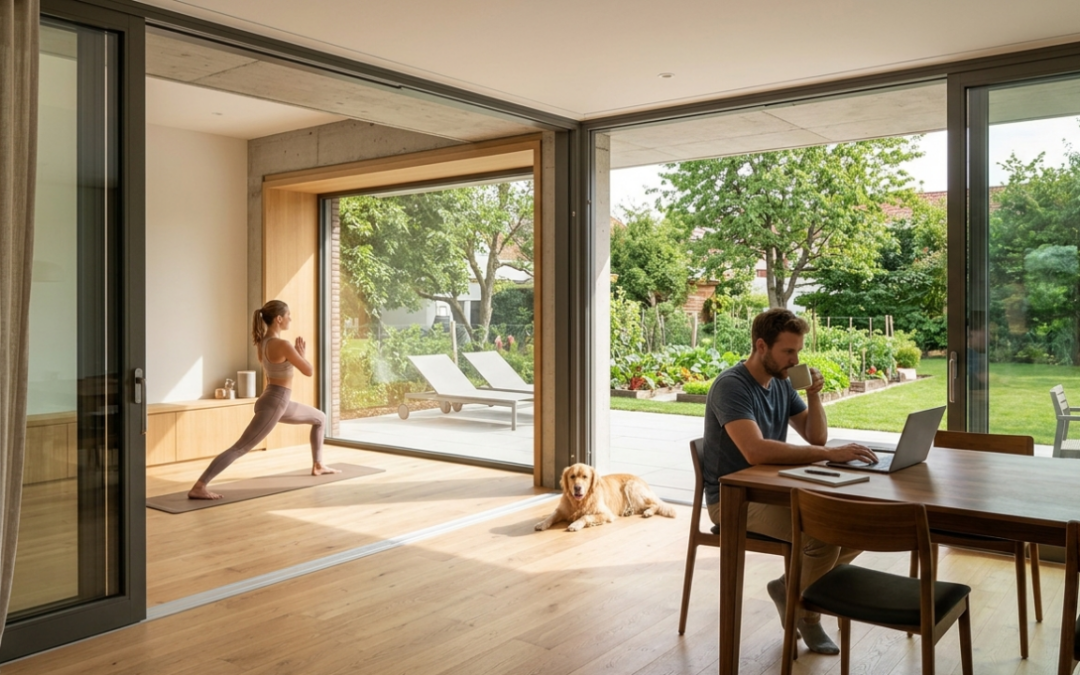
Buying a home has always carried more weight than a typical purchase. For most people, it is not just a financial transaction — it is a decision about how they want to live, what kind of environment they want to come home to every day, and what foundation they want to build the next chapter of their life on.
What has changed in recent years is how clearly buyers are holding onto that truth during the search and decision-making process. Where appearance and size used to dominate the conversation, lifestyle fit is now the question more Australians are bringing to the front. How will this home actually work for the way we live? Will it support our daily routines, our future plans, and the kind of life we are trying to build?
That shift is producing better decisions — and homeowners who feel more genuinely satisfied with those decisions for considerably longer.
Every Household Needs Something Different
One of the most honest starting points for any home search is acknowledging that there is no single right answer for everyone. Every family lives differently in ways that matter enormously when it comes to what a home needs to do.
A household where one or both adults work from home full time needs a design that accommodates that reality — with proper space for focused work that does not compete constantly with the rest of household life. A family with young children needs living areas that are easy to supervise, easy to clean, and forgiving of the energy and activity that comes with that stage. Someone who enjoys hosting regularly needs social spaces that flow well and feel generous when there are people in them. A household that values quiet and calm at the end of a long day needs a home that genuinely enables that rather than one that just looks peaceful in photos.
Because of these differences, the most useful questions a buyer can ask are rarely about features in the abstract. They are about fit — whether this specific home will genuinely support this specific household’s real daily life. Is the layout actually functional for the routines this family follows? Is there enough storage for the way this household actually operates? Will the home feel comfortable across the full range of ordinary days, not just during an inspection? Will it still meet genuine needs in five or ten years as circumstances evolve?
The answers to those questions consistently predict long-term satisfaction more reliably than any design trend or feature comparison.
Why Layout Gets More Attention the Longer You Live in a Home
There is a consistent and telling pattern among homeowners who reflect honestly on their experience. The features that seemed most important during the search process are often not the ones that end up mattering most. And one feature that consistently moves up in importance once people are actually living somewhere — often far beyond where it sat on the original wishlist — is layout.
A practical, well-thought-out layout makes daily life feel effortless in ways that are genuinely hard to fully appreciate until you have experienced the contrast. Movement between rooms is natural and intuitive. The kitchen is positioned in a way that makes meal preparation feel easy rather than logistically complicated. Open living areas flow into each other and into outdoor spaces in ways that support how the family actually spends its time. Rooms are sized and configured to serve their purposes well rather than simply to look good on a floor plan.
Buyers who make the layout a central part of their evaluation — who study floor plans carefully with real daily scenarios in mind rather than just aesthetically — consistently make better decisions. The home that flows well for your actual life is worth more in real terms than any amount of impressive finishing in a space that does not.
Natural Light Is One of Those Features That Just Keeps Giving
Ask homeowners who have been living in their homes for several years what they appreciate most, and natural light comes up with remarkable consistency. It is one of those features that is surprisingly easy to overlook during a search process and remarkably powerful in its effect on how a home feels day after day.
The quality of natural light throughout a home shapes the atmosphere of every main living area across every hour of every day. Spaces that receive good natural light throughout the day feel more open, more welcoming, and more genuinely comfortable to spend extended time in than spaces of identical size without it. They feel warmer. They feel alive. The difference between a well-lit main living area and a darker one is felt every single morning and every single afternoon — and across years of daily living, that adds up to something that matters enormously.
Many buyers who prioritise window placement, home orientation, and the design of main living areas relative to where light enters report that it was one of the best decisions they made during the planning process. It is the kind of feature that pays dividends quietly and consistently for as long as the household lives there.
Flexibility Is Worth Building In From the Start
Modern life changes faster than most people expect when they are making a long-term housing decision. Work arrangements evolve — often toward more time at home rather than less. Families grow or shift in configuration. Children move through different stages that create different space requirements. The activities a household wants to do at home expand and change as interests and circumstances develop.
Homes designed with genuine flexibility accommodate those changes naturally rather than requiring expensive and disruptive modifications every time life moves in a new direction. A spare room that can genuinely function as a home office when remote work is the priority and transition easily to a guest bedroom or nursery when that changes. A study or activity space that adapts as children grow through different ages. Living areas that can be used differently at different stages of family life without the space feeling wrong for any of them.
Buyers who think about flexibility during the planning stage consistently find themselves grateful for it as the years go on. It is not the kind of feature that generates excitement in a display home. But it is the kind that reveals its value repeatedly, every time life changes in ways that were not fully anticipated — and those moments come more often than most people expect.
Storage Surprises Almost Everyone
If there is one feature that buyers consistently underestimate during the search process and consistently appreciate after they have moved in, it is storage. The pattern is so reliable it is almost predictable. Almost nobody gets particularly excited about storage during a display home visit. Almost everybody has something to say about it once they have been living somewhere for a year.
The reason is both simple and experiential. A home without enough well-placed storage gradually becomes harder to manage as real household life fills the available space. Surfaces that should be clear accumulate the things that have nowhere else to go. The kitchen bench becomes a permanent landing zone. The garage becomes a place where things go to be stored and forgotten. Bedrooms feel smaller than they are because there is not enough organised space for belongings.
All of that creates a low-level but persistent friction in daily life. It makes the home feel slightly harder to manage than it should be. It affects how calm and comfortable the space feels to be in. And it is the kind of thing that compounds over time in ways that are hard to fully appreciate until you are living with them.
A home where storage has been genuinely thought through does the opposite — it stays organised with comparatively little effort, and the comfort and calm that creates is felt every ordinary day.
Why Thinking Ahead Makes Such a Difference
The buyers who end up most satisfied with their homes years down the track consistently share one quality — they were thinking about the future as well as the present when they made their decision. Not in a way that requires predicting exactly how life will unfold, but in a way that asks honest questions about where things might go and whether the home will keep meeting genuine needs as they evolve.
Will this home still work well for the family in five years? Can the layout accommodate changes in how the household operates without requiring major intervention? Does the design offer enough flexibility to remain genuinely right through different life stages?
These questions take more thought to work through. But they are among the most valuable a buyer can ask — because a home is a long-term commitment and the decisions made about it will be lived with for a very long time. Getting those decisions right is worth every extra hour of research and reflection it takes.
Why Simpler Often Means Better
There is a persistent idea that more features, more upgrades, and more complexity automatically produce a better home. Experience consistently tells a more nuanced story. The homes that deliver the most genuine and lasting satisfaction are very often not the most elaborate ones. They are the ones that do the important things well — that are practical, well-designed, and focused on real liveability — without adding layers of complexity that increase maintenance burden without meaningfully improving daily life.
Simple, functional homes are easier to maintain without that maintenance becoming an ongoing drain on time and resources. They are easier to keep organised because they are not generating more than the household can comfortably manage. They feel calmer and less demanding to live in. And they give the people inside them the space — physical and mental — to actually enjoy being there rather than constantly managing the home’s demands.
More Australians are recognising that simplicity done well is not a compromise. It is a sign of intelligent design — and it consistently delivers a better long-term living experience than elaborate homes that look impressive but ask more than most households want to give.
Final Thought
The way Australians choose homes is changing in a direction that reflects a more honest and more mature understanding of what makes a home genuinely good to live in. Comfort, functionality, and lifestyle fit are moving to the centre of the decision. Trend appeal and feature comparisons are taking a more appropriate supporting role.
The best home is not the biggest one or the most expensively featured. It is the one that fits your life — that supports your daily routines, grows alongside your household as circumstances change, and remains genuinely comfortable and enjoyable long after the initial excitement of moving in has settled into the familiar satisfaction of actually being home.
A home built around people rather than trends is one that keeps delivering, quietly and consistently, for a very long time. And finding — or building — that home is one of the most worthwhile things a buyer can invest their time and care in.
That is the belief at the heart of everything Granton Homes does — helping Australians create homes designed around real life, real comfort, and a lifestyle that genuinely feels worth coming home to.