
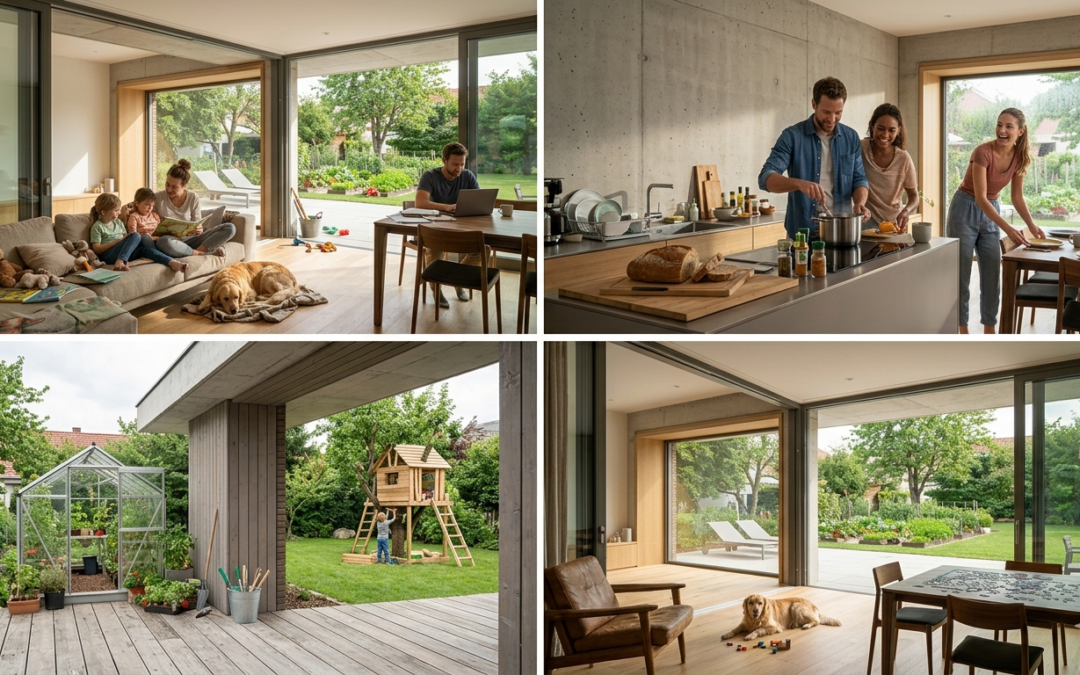
When most people begin searching for a new home, there is a particular image that tends to form in their mind. The perfect layout that works exactly right. The perfect kitchen that looks and functions exactly as imagined. The perfect location that ticks every box. The perfect design that feels complete and impressive and entirely without compromise.
That image is understandable. Buying a home is a big deal, and it makes sense to want the best possible outcome. But experienced homeowners — the ones who have been living in their homes for years and can speak honestly about what the experience is actually like — often share a perspective that catches people off guard.
The homes that bring the most genuine and lasting happiness are rarely the perfect ones. They are the practical ones. The comfortable ones. The ones that fit naturally into the rhythm of everyday life and keep doing so year after year without creating unnecessary stress or disappointment.
That distinction matters. And understanding it early in the process makes an enormous difference to the quality of the decision.
Perfection Is a Moving Target
Part of the problem with searching for the perfect home is that perfection tends to shift as you get closer to it. The more options you compare, the more you notice what each one lacks. The more you research, the more you become aware of features you did not know you wanted until you saw them somewhere else. The more time you spend in the process, the more it can start to feel like no single home quite measures up.
Every home has strengths and weaknesses. That is simply the reality. Some offer generous living areas but less storage than you would like. Others have excellent natural light but a layout that does not flow quite the way you imagined. Some are in an ideal location but require compromises on size. Some are beautifully designed but sit slightly outside the ideal budget.
The buyers who navigate this most successfully are the ones who stop searching for the home with no weaknesses and start searching for the home whose strengths genuinely matter most for the way they live. That shift — from chasing perfection to finding genuine fit — is one of the most useful mindset changes a buyer can make.
Daily Life Is What a Home Is Really For
It sounds obvious when you say it plainly, but it is easy to lose sight of during the excitement and pressure of the search process. A home is not a showpiece or an investment vehicle or a statement about success. It is first and foremost the place where daily life happens.
It is where mornings begin — where the household comes to life and prepares for whatever the day holds. It is where evenings wind down after work and school and everything else. It is where meals are shared, where family time happens, where rest and recovery occur, where the small unremarkable moments accumulate into something that ultimately feels like a life.
That is what a home is for. And it means the most important question is not which home looks most impressive or which one has the longest feature list. It is which home will make that daily life feel easier, more comfortable, and more genuinely enjoyable — not just on the first day, but consistently across the years that follow.
When buyers hold that question at the centre of the search rather than letting it be displaced by visual excitement and feature comparisons, they almost always end up in better homes.
What Comfort Actually Means in Practice
Comfort is one of those words that is easy to nod at and harder to define precisely. But when you look at what actually makes homeowners feel comfortable in their homes over the long term, some clear and consistent patterns emerge.
Functional spaces that are sized and configured to serve their purposes well rather than just to look good. Lighting — particularly natural lighting — that makes the home feel warm and welcoming throughout the day. Room sizes that feel genuinely liveable rather than impressive on a specification sheet but cramped in practice. Storage that is adequate and well-placed, keeping the home feeling organised without constant effort. The ability to move naturally between areas of the home without the layout creating friction.
None of these are particularly glamorous. You will not find them leading any marketing material. But they are the things that shape how good a home feels to live in across hundreds and thousands of ordinary days. And in that context, they are worth considerably more than features that looked impressive once and then became part of the invisible background.
Smart Space Planning Is Getting More Attention
One of the more interesting shifts in how Australian buyers are thinking about homes is the growing focus on how space is used rather than simply how much space there is. Two homes with identical floor areas can feel completely different depending on how thoughtfully that space has been planned — and more buyers are beginning to understand and act on that reality.
A well-planned home reduces the kind of clutter and disorganisation that makes daily life feel harder than it needs to be. It creates living areas that are genuinely usable rather than technically present but awkward in practice. It makes the home feel more generous and more functional without any increase in size.
This kind of smart space planning is becoming increasingly important to families and first-home buyers alike — not because they have stopped caring about space, but because they have started caring about whether the space they have actually works for them.
Why Flexibility Pays Off Over Time
A home is a long-term commitment. And life, as it turns out, changes in ways that are not always easy to predict at the time of making that commitment. Work arrangements shift. Families grow or change shape. Children move through stages that create different needs and requirements. The way a household uses its home at one point in life can look quite different from how it uses it five or ten years later.
Homes designed with genuine flexibility accommodate those changes without requiring expensive interventions every time life moves in a new direction. Rooms that can honestly serve multiple purposes — a home office that can become a guest room, a study area that adapts as children grow, a living space that can be configured differently at different stages — provide a form of long-term value that single-purpose, rigidly configured spaces simply cannot.
Flexibility is one of those qualities that is easy to overlook when present circumstances feel stable and fixed. And it is one that reveals its value clearly and repeatedly every time life changes in ways that were not fully anticipated. Planning for it during the design or buying stage is almost always worth the thought it takes.
Natural Light Does More Than Most People Realise
If there is one feature that comes up with remarkable consistency when happy homeowners are asked what they value most about their home, it is natural light. And the explanation for that consistency is not hard to find once you have spent time paying attention to the difference it makes.
Homes with genuinely good natural light feel more open, more warm, and more genuinely welcoming than homes without it — regardless of their size or the quality of their finishing. The atmosphere of a well-lit main living area throughout the day is simply different from that of a darker one, in ways that are felt every morning and every afternoon without exception.
Getting natural light right is primarily about decisions made during the design phase — orientation, window placement, how the main living areas are positioned relative to where light enters at different times of day. These decisions are easy to make correctly when addressed during planning and considerably harder and more expensive to address after the home is built. They represent one of the clearest examples of how early design decisions carry long-term consequences that are felt every day.
Thinking Past Move-In Day
One of the most valuable habits a homebuyer can develop is consistently asking not just whether they love a home today, but whether they will still be glad they chose it five or ten years from now. These are different questions — and the gap between their answers is where a lot of housing regret originates.
The excitement of buying a new home is real and genuine. But it is temporary. What replaces it, once the novelty has settled into familiarity, is the daily experience of living in the space — and that experience is shaped by practical qualities that are sometimes hard to fully evaluate in the emotional atmosphere of inspections and comparisons.
Buyers who make a habit of asking the longer-term question — whether a home will continue to meet their genuine needs as life evolves, whether it offers enough flexibility to adapt to changes they can anticipate and some they cannot — consistently make decisions that hold up better. The extra thought takes a little more time. The payoff is years of greater satisfaction.
Why Simpler Homes Often Deliver More
The idea that bigger and more elaborately featured automatically means better has been giving way in recent years to a more nuanced and more honest understanding. The homes that consistently deliver the most genuine long-term satisfaction are often surprisingly straightforward — not in the sense of being plain or lacking quality, but in the sense of being designed around what the household actually needs rather than around what looks most impressive.
Simpler homes are easier to maintain without that maintenance becoming an ongoing drain. They are easier to keep organised and comfortable without constant effort. They feel calmer and less demanding to live in. They allow the people inside them to actually enjoy being there rather than perpetually managing the home’s complexity and upkeep.
That is not settling for less. It is choosing differently — and choosing well. The home that does what it needs to do with genuine quality and thoughtfulness, without layering on unnecessary complexity, is very often the one that people feel most grateful for across the full span of years they spend in it.
Final Thought
The goal of buying a home should never really be perfection. Perfection is unachievable and the pursuit of it tends to generate more stress than satisfaction. The real goal is finding a home that fits your life — that supports your daily routines, adapts to your future, makes ordinary days feel easier, and continues to do all of those things well for a very long time.
The most successful homebuyers understand that everyday living matters more than first impressions. That comfort and practicality deliver more lasting satisfaction than impressive features that fade into the background once routine takes over. That a home does not need to be perfect to be genuinely wonderful to live in — it just needs to be right for the people inside it.
When comfort, functionality, and genuine lifestyle fit come together well, something quietly remarkable happens. A house stops being a property and becomes a home. And that transformation — from impressive to genuinely liveable — is worth every bit of thought and care it takes to achieve.
That is what Granton Homes is focused on helping every client experience — homes designed not around perfection, but around the real people who will live in them and the real life that will unfold inside them every day.