
Building a home is the kind of milestone that most people look forward to for years. The idea of creating a space that is genuinely yours — designed around your lifestyle, your priorities, and your plans for the future — is something worth feeling excited about. And for many people who go through the process well, it delivers exactly that.
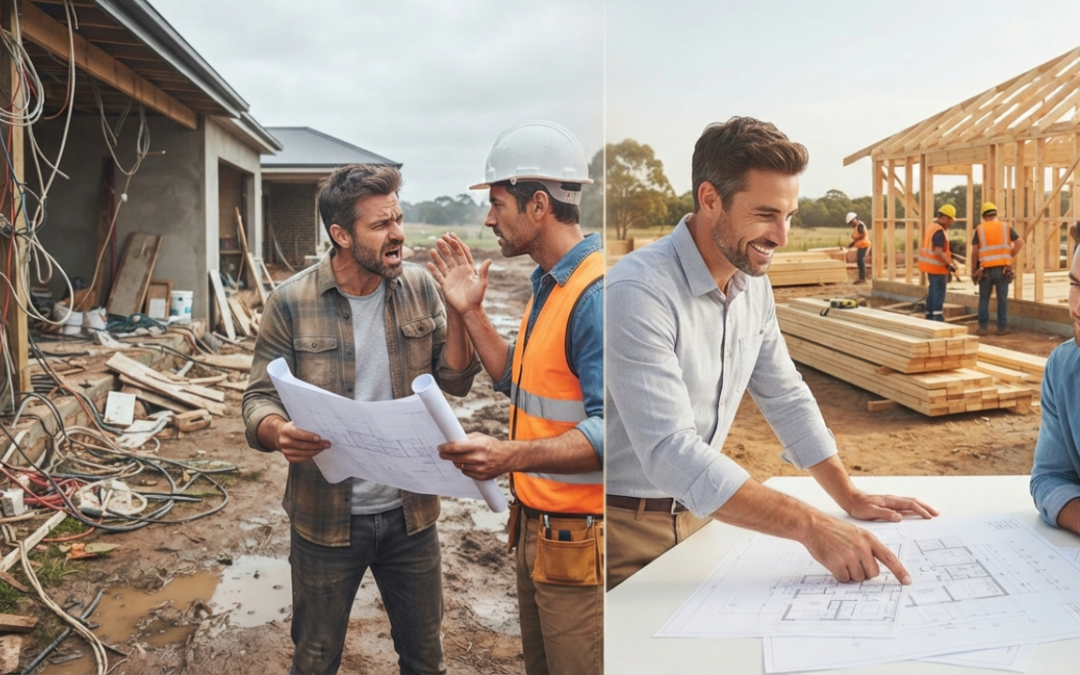
But talk to enough homeowners who have been through it, and you will also hear a different side of the experience. For a significant number of people, building a home was more stressful than they expected. And what is interesting is that the stress, more often than not, did not come from the construction itself. It came from everything that happened before construction started — the decisions that needed to be made, the comparisons that needed to happen, the uncertainty about whether the choices being made were the right ones.
After spending time following Australian homeowner discussions and researching different builders, the same challenges come up again and again. The encouraging thing is that most of them are not inevitable. With the right planning and the right questions asked early, most of the stress that makes home building feel overwhelming can be significantly reduced.
The Challenge of Too Many Options and Not Enough Clarity
One of the most consistent things first-time homebuyers describe in the early stages of their research is feeling genuinely overwhelmed. Not because the process is impossibly complicated, but because the sheer volume of information and options makes it hard to know where to start or how to evaluate what matters.
There are dozens of floor plans across any given builder’s range. Multiple façade styles that each have their own appeal. Upgrade packages and inclusions variations that make the base-price comparison considerably more complex than it initially appears. Different community locations with different trade-offs. And across all of that, a constant sense that you might be missing something important if you do not compare absolutely everything.
The practical solution is to stop trying to compare everything and start by getting genuinely clear on what matters most to your specific household.
Before looking at any floor plan in detail, answer the questions that will act as the filter for everything that follows. Does anyone work from home, and if so, how central is a functional workspace to the design? Is extra storage a genuine daily need or more of a general preference? Does the household entertain guests regularly in a way that makes open, flowing social spaces a real requirement? Is the family at a stage where growth is planned and the design needs to accommodate that? What daily routines — cooking, family time, relaxation — are most central to how the household actually uses its home?
With clear answers to those questions, comparing builders and floor plans becomes a much more focused and much more manageable exercise. Options that do not meet the household’s genuine priorities become easy to set aside regardless of how appealing they look in other respects. The comparison narrows from an overwhelming breadth of options to a much more navigable set of choices.
The Gap Between Looking Good and Feeling Practical
Display homes are designed to be inspiring. That is their function — to show what a home design can look like when it is presented at its absolute best. And they succeed at it. Walking through a well-staged display home in a nicely presented design creates a genuine emotional response that can feel almost like a decision in itself.
The problem is that the experience of living in a home is nothing like the experience of walking through it for the first time when everything is staged and optimised for impression. And the features that create the strongest emotional response during an inspection are not always the features that matter most once daily life has taken over.
Many homeowners describe discovering this gap only after they moved in. The kitchen that looked stunning from a certain angle turns out to have a workflow that makes meal preparation slightly more effortful than it needs to be. The living area that felt spacious during the inspection turns out to be less flexible for the full range of daily household activities than it appeared. The storage that seemed adequate during the display home visit turns out to be insufficient for the real daily accumulation of a family’s belongings.
The most effective way to close that gap during the research process is to shift the frame from impression to practicality when evaluating any home.
Think about kitchen workflow — not how the kitchen looks, but how it functions during the kind of meal preparation that actually happens in your household. Think about laundry placement — how convenient the positioning is for the daily rhythm of managing household washing, not whether it looks tidy in the display configuration. Think about storage — whether it is genuinely adequate for the household’s real needs rather than for the staged version. Think about natural lighting throughout the day — not just whether the room is bright during the inspection, but how it will be during the ordinary hours when the household spends the most time there.
A home that feels genuinely practical in these everyday terms will continue to feel comfortable long after the initial excitement of moving in has settled into routine. That is the quality worth evaluating and prioritising.
Why Comparing Only on Price Creates Problems Later
Price is a genuinely important factor in any home building decision. What you can afford is a real constraint, and it shapes what is possible from the very beginning. Ignoring it or treating it as a secondary consideration would be unrealistic advice.
But when price becomes the primary or essentially the only basis for comparison between builders, the decisions it produces frequently look different in practice from how they looked on paper. Two homes with similar headline prices can offer genuinely different value depending on what is actually included at that price, how efficiently the floor plan has been designed, how much flexibility exists in the process, and what the overall quality of the building experience and the finished home turns out to be.
Standard inclusions — what is genuinely in the base package versus what requires additional investment to achieve a functional and comfortable result — vary significantly between builders and can affect the actual total cost substantially. Floor plan efficiency — how thoughtfully the available space has been designed — affects the daily experience of living in the home far more than the raw square metreage. Energy-efficient design features affect running costs over the full span of ownership in ways that the initial price comparison does not capture. The quality of communication and support throughout the construction process affects how stressful or smooth the experience of building turns out to be.
Looking at the overall value across all of these dimensions — rather than at headline price alone — consistently produces better-informed decisions and more satisfying long-term outcomes.
Planning for the Future, Not Just the Present
One of the most consistent themes across homeowner accounts that reflect any form of regret about their building decisions is some version of the same thing — they optimised the home for the household as it was at the time of building, and did not give enough thought to where the household was likely to be across the full span of ownership.
This is an easy mistake to make because present needs are concrete and immediate while future needs require imagination and honest forward thinking. But the consequences are real. A home designed purely around current circumstances can start to reveal its limitations sooner than expected as life changes in the ways it always does.
Families grow and their space requirements change at every stage. Children become teenagers who need more privacy and independence than they did as young children. People begin working from home in ways that make proper workspace not a luxury but a daily necessity. Households start thinking about accessibility and longer-term comfort as they move into later life stages.
A flexible floor plan with genuine adaptability built into its design handles those transitions far more gracefully than one that was rigidly configured around a single moment in time. Rooms that can genuinely serve different purposes as needs change without requiring structural intervention. Designs that remain sensible and functional across different household configurations. Spaces that were planned with some awareness of the changes likely to come rather than purely around what is needed today.
Thinking about the household you will be across the full span of ownership — not just the one you are right now — is one of the most valuable things any buyer can bring to the planning process.
How to Think About Granton Homes in Your Research
If Granton Homes is currently on your shortlist — as it is for many Australians who are in the process of researching their building options — the most useful approach is to engage with them the same way you should engage with any builder you are seriously considering.
Rather than starting from a question like which builder is objectively the best, start from questions that are specific to your own household’s priorities and circumstances. Do the home designs Granton Homes offers include floor plans that genuinely match your household’s real daily lifestyle needs? Are the standard inclusions at the price points you are considering suitable for what your household needs to live comfortably? Can floor plans be adjusted to better fit specific requirements, and what does that variation process involve? Does the experience of engaging with the builder during the research phase feel like the kind of communication and transparency that would make the building process itself less stressful?
These are the conversations that produce genuinely useful information for the specific decision you are trying to make. They go considerably further than brochure comparisons and headline price figures in giving you a real sense of whether a particular builder is the right fit for your household specifically.
Research Is One of the Best Investments in the Process
The homeowners who seem most satisfied with their decisions and most settled in the homes they built consistently share one quality — they invested real time and effort in research before making their commitment. Not because the process required extraordinary amounts of time, but because they gave it the serious, focused attention that a decision of this scale genuinely deserves.
They compared home designs with real daily life scenarios in mind rather than abstract preferences. They visited display homes in person and evaluated them with specific practical questions rather than general impressions. They read a range of experiences from people who had already been through the process and were living with their decisions. They prepared questions before conversations with builders and asked them — including the ones that felt basic or obvious — because the answers turned out to be useful. And they made their final decision based on their own household’s genuine priorities rather than on someone else’s recommendation or the loudest opinion they encountered online.
That approach — patient, specific, genuinely focused on what the household actually needs — is what consistently produces confident decisions and satisfying homes.
Final Thought
Building a home is about more than construction. It is about creating a place where daily life unfolds — where ordinary mornings and evenings happen, where the household finds comfort and routine and the particular kind of ease that comes from living somewhere that genuinely fits.
The stress that characterises some home building experiences is not inevitable. Most of it is traceable to decisions made under pressure, comparisons that were too narrow, or planning that did not look far enough ahead. And most of it can be significantly reduced by approaching the process with genuine preparation, honest self-assessment of priorities, and the patience to research carefully before committing to anything.
Whether you are exploring Granton Homes or comparing a range of Australian builders, that preparation is always the right starting point. There may not be a perfect builder for everyone. But there is absolutely a builder that is the right fit for your specific goals, budget, and lifestyle — and finding that fit is a genuinely achievable goal for any buyer who approaches the research with care.
When planning comes first, confidence follows. And that combination makes the entire home building journey significantly more rewarding.